
N-able Discloses Critical MailAssure SSRF Flaw Found During Hosted Cloud Breach Investigation
Key Facts
- The critical vulnerabilities are listed below - - CVE-2026-134624 (CVSS score: 9.3) - A server-side request forgery (SSRF) vulnerability in N-able MailAssure's LDAP synchronization connection check that could allow an authenticated API user to connect to arbitrary internal hosts and ports, determine which are reachable, and send crafted data to internal services.
- - CVE-2026-133968 (CVSS score: 9.8) - A path traversal vulnerability in MONAI Label that could allow an unauthenticated remote attacker to write arbitrary files outside the intended datastore directory, potentially resulting in remote code execution.
- The terms combine a company name with words like fund, invoice, billing, and LLC." Telemetry data gathered by Previdian from its sensors has recorded 52 HTTP requests containing explicit ARTEX markers between October 18 and November 15, 2026, from 10 source IP addresses.
- "Further investigation of these sources identified 3,651 related HTTP records involving application discovery, authentication probing, remote code execution attempts, path traversal and attempts to retrieve sensitive configuration data," Ryan Dewhurst, founder and CEO of Previdian, said.
- The company says it has found no evidence that customer data was compromised, including tenants' mailboxes, and no sign of exploitation beyond that one server since the fix was implemented.
N-able disclosed a critical server-side request forgery vulnerability in MailAssure yesterday after discovering it during an investigation into the breach of its Mail Assure and SpamExperts Hosted Cloud email filtering service. The flaw, tracked as CVE-2026-134624, carries a CVSS 4.0 score of 9.3 and affects builds earlier than 20261121.1943. An authenticated API user could exploit the LDAP synchronization connection check to connect to arbitrary internal hosts and ports, determine reachability, and send crafted data to internal services. The hosted platform is already patched, requiring no action from Hosted Cloud users, and the company says it found no evidence that customer data or tenant mailboxes were compromised.
Exploitation Chain Targets MONAI Label
The intrusion activity also targeted an unspecified server running MONAI Label, an open-source medical imaging AI application. Attackers exploited a path traversal vulnerability in that software, tracked as CVE-2026-133968 with a CVSS score of 9.8, to write arbitrary files outside the intended datastore directory and achieve remote code execution in approximately 11 minutes. Previdian telemetry recorded 52 HTTP requests containing explicit ARTEX markers between October 18 and November 15, 2026, originating from 10 source IP addresses. Further analysis of those sources revealed 3,651 related HTTP records involving application discovery, authentication probing, remote code execution attempts, path traversal, and attempts to retrieve sensitive configuration data, according to Previdian founder and CEO Ryan Dewhurst. Some attacks unsuccessfully attempted to brute-force a Redis instance at one university and a GPU server at another.
AI-Driven Campaign Aims at Financial Theft
NorForge attributes the activity to a threat actor designated AIA0001, which has targeted organizations primarily in the U.S., Japan, and Australia to deploy web shells and access e-commerce and payment infrastructure for monetization. The operation leverages AI agents that plan, execute, and adjust their approach as they learn, without the operator choosing each next step. The end goals center on establishing persistent access and financial theft.
Sources & References
- On the hunt for ARTEX: understanding agentic attacks in AWS environments | Datadog Security Labs. Primary research blog. https://securitylabs.datadoghq.com/articles/artex-agentic-attacks-aws-environments/
- Source referenced in coverage https://nvd.nist.gov/vuln/detail/cve-2026-134624
- CVE-2026-133968 — NIST National Vulnerability Database entry. https://nvd.nist.gov/vuln/detail/CVE-2026-133968
- CVE-2026-134624 — Git advisory. https://github.com/advisories/CVE-2026-134624
- CVE-2026-133968 — Git advisory. https://github.com/advisories/CVE-2026-133968
- CVE-2026-134624 — National Vulnerability Database
- CVE-2026-133968 — National Vulnerability Database

SecurityXP delivers cybersecurity news, vulnerability analysis, data breach reports, and threat intelligence.
Security Digest
The most important cybersecurity stories, CVE alerts, and threat intelligence — one concise email. Unsubscribe anytime.
Related Articles
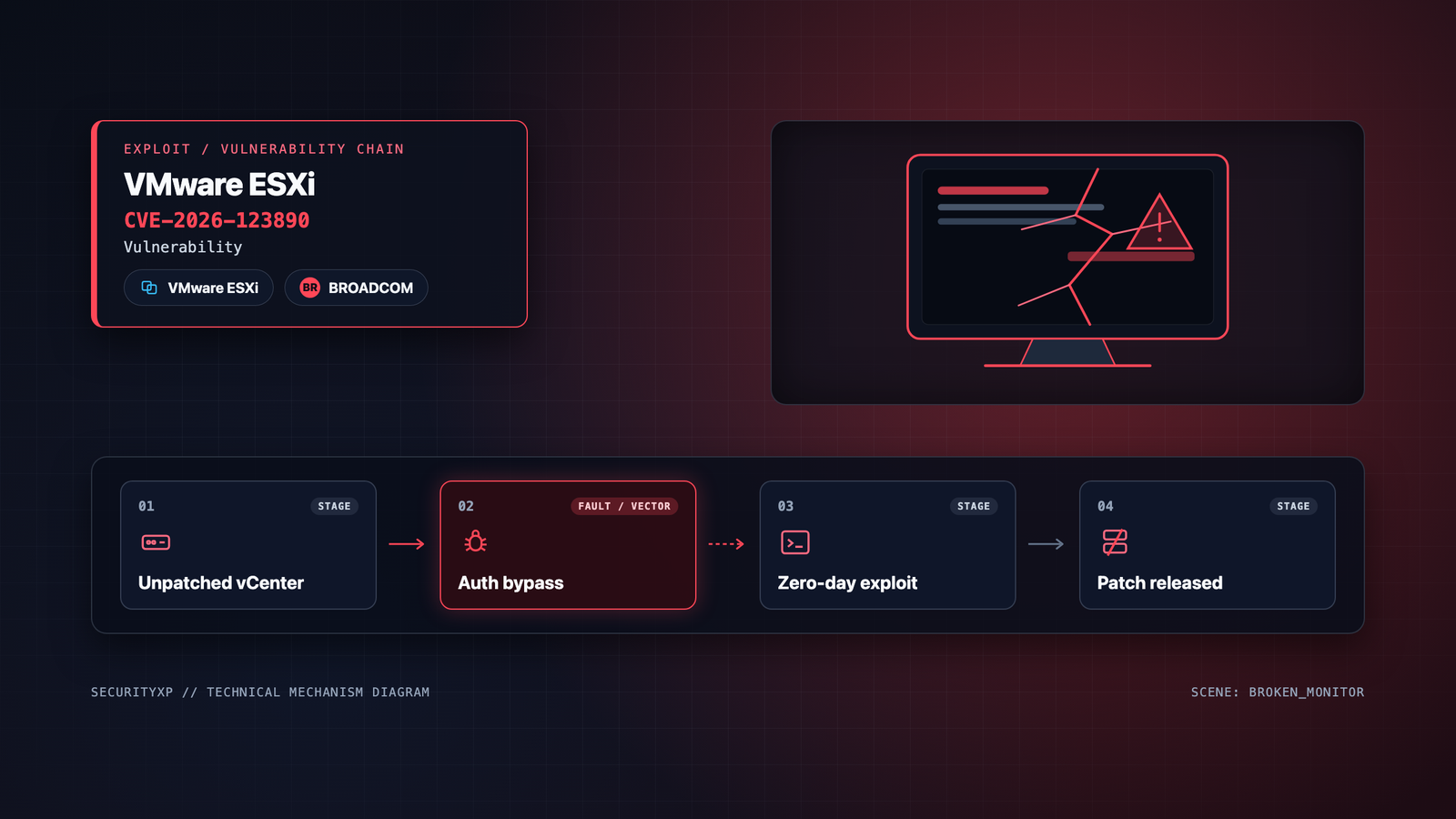
VMware vCenter Authentication Bypass Exploited as Zero-Day for Over Two Months Before Patch
Broadcom's VMSA-2026-0009 fixes CVE-2026-123890, a vCenter authentication bypass exploited as a zero-day. Affected versions, fixed builds and hunting guidance.
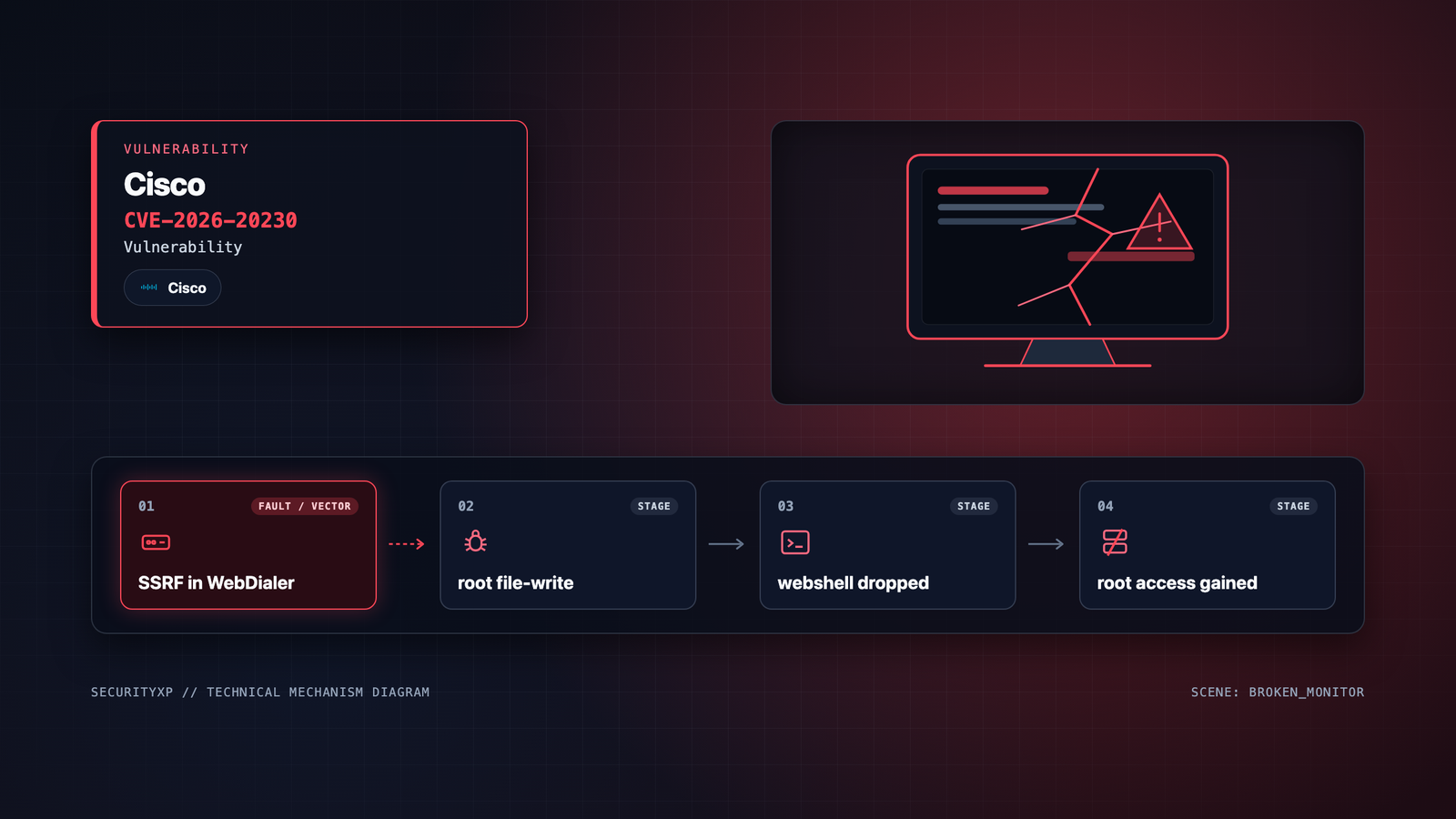
Cisco Unified CM Flaw CVE-2026-20230 Actively Exploited in the Wild
Cisco Unified Communications Manager has a serious vulnerability, tracked as CVE-2026-20230 (CVSS score of 8.6), that attackers are already exploiting. The...
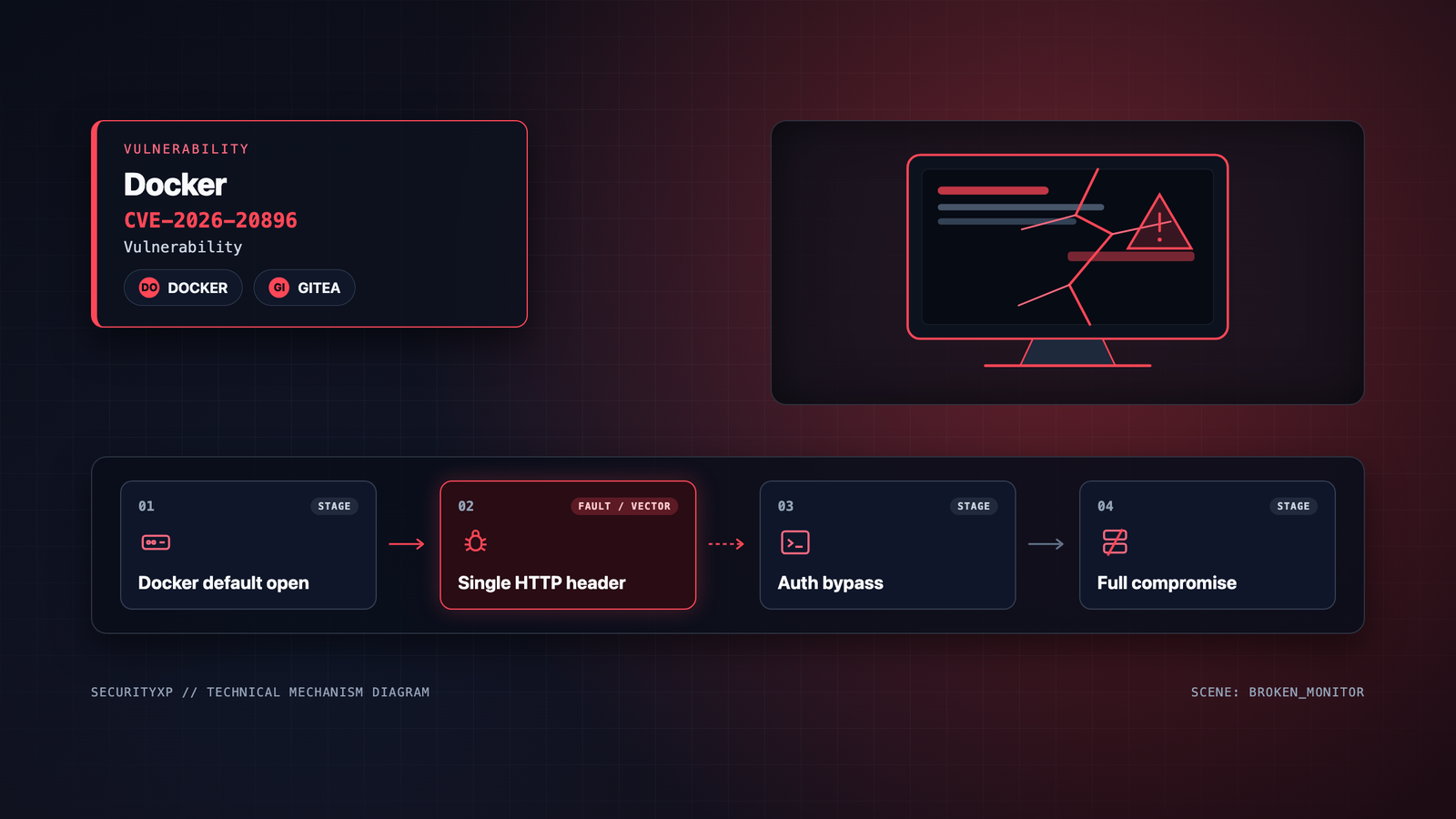
Critical Gitea Flaw Under Active Exploitation, Researchers Warn Vulnerability (CVE-2026-20896)
Specific to Gitea’s official Docker images, the critical-severity security defect is tracked as CVE-2026-20896 (CVSS score of 9.8) and can be exploited with...
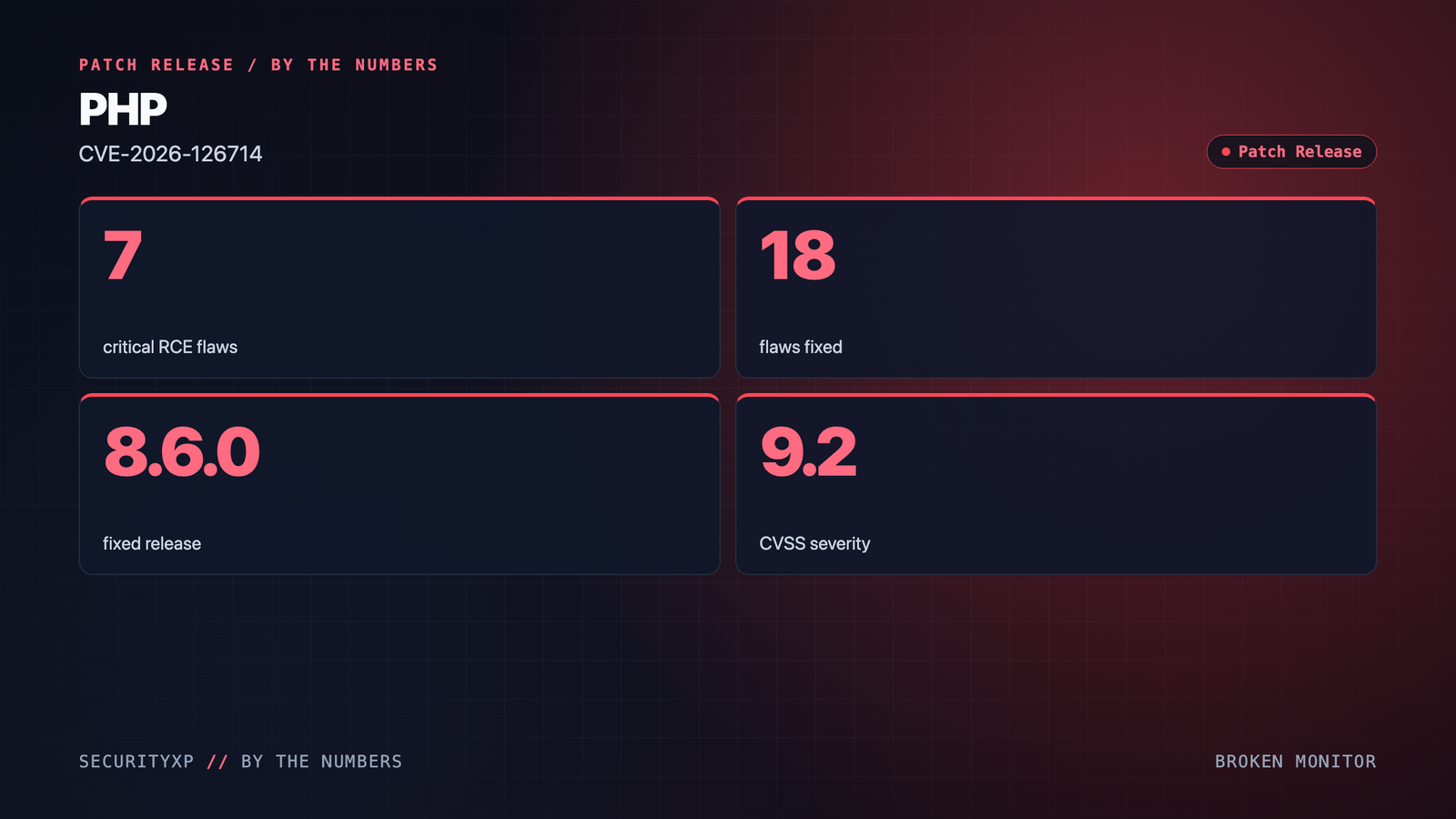
PHP 8.6.0 Carries the Fix for CVE-2026-126714, the 9.2-Rated Flaw October's Releases Left Open
PHP 8.6.0, released today, includes the fix for CVE-2026-126714, a flaw that PHP's maintainers rate 9.2 out of 10 on the CVSS 4.0 scale.