1Password Discloses GitHub Account Breach Exposing Customer Data and Source Code
Key Facts
- 1Password began investigating the incident on November 19, 2026, after detecting access to an employee's corporate GitHub account.
- The attacker used the account to access source code and push malicious code to backend services.
- A limited amount of customer account data was copied, including names, email addresses and non-secret metadata.
- Customer vault contents, vault keys and account recovery keys were not affected.
- 1Password disabled the affected GitHub account, revoked access and rotated potentially exposed internal credentials.
1Password disclosed on November 25 that an attacker gained access to an employee’s corporate GitHub account and used it to reach company backend systems. The actor accessed source code, pushed malicious code to backend services and copied a limited amount of customer account information from a subset of customers.
The exposed records included names and email addresses, account and user identifiers, account creation and last sign-in times, public keys, Secure Remote Password protocol parameters, tokens contained in certain emailed invitation or recovery links, and other non-secret internal metadata. The company said the tokens did not grant account access by themselves.
1Password said customer vault contents, the items inside them, vault-protection keys and account recovery keys were not affected. The company does not hold customers’ account passwords or secret keys, and it said there was no impact to service availability or product security.
The attacker also copied source code from private repositories and gained access to the CI/CD system. According to 1Password, the source code contained no user secrets. CI/CD did contain infrastructure-related credentials, all of which were rotated or revoked as a precaution.
For containment, 1Password disabled the affected GitHub account, revoked the stolen token, removed attacker-created access, rotated potentially exposed credentials and brought in independent cybersecurity experts. It also lengthened invitation and recovery codes from six numeric digits to ten alphanumeric characters. The company said customers do not need to change their 1Password accounts, but should watch for phishing messages referencing unexpected invitations or account recovery requests.
Sources & References
- 1Password's official incident report covering the GitHub account compromise, affected data, containment and customer guidance. https://1password.com/blog/update-on-nov-2026-security-incident

SecurityXP delivers cybersecurity news, vulnerability analysis, data breach reports, and threat intelligence.
Security Digest
The most important cybersecurity stories, CVE alerts, and threat intelligence — one concise email. Unsubscribe anytime.
Related Articles
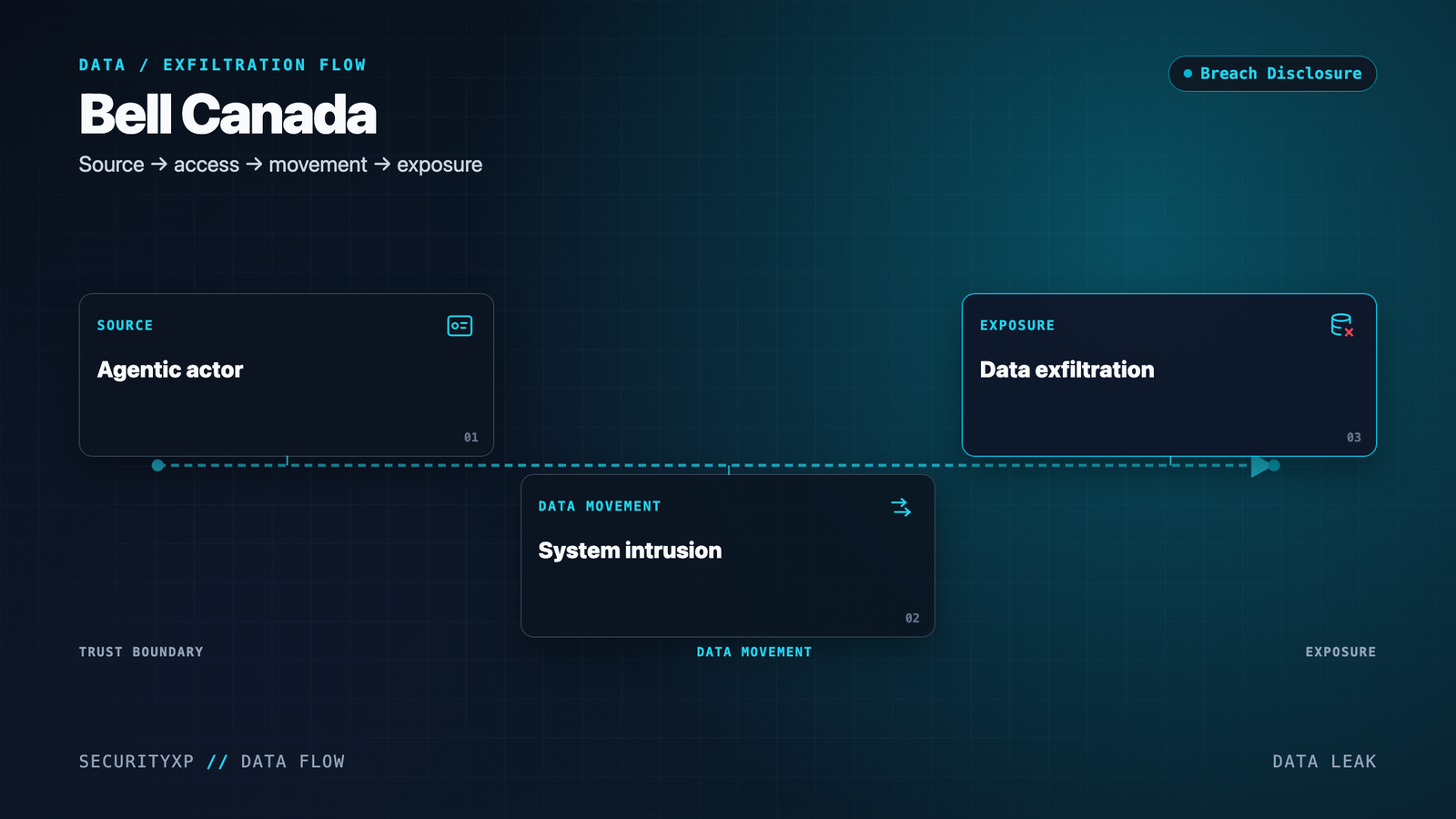
Bell Canada Confirms "Agentic" Threat Actor Breached Systems and Stole Enterprise Customer Data
Bell Canada says an "agentic" threat actor accessed a pre-production Maximo environment on November 17 and exfiltrated enterprise customer data, but has not attributed the attack.
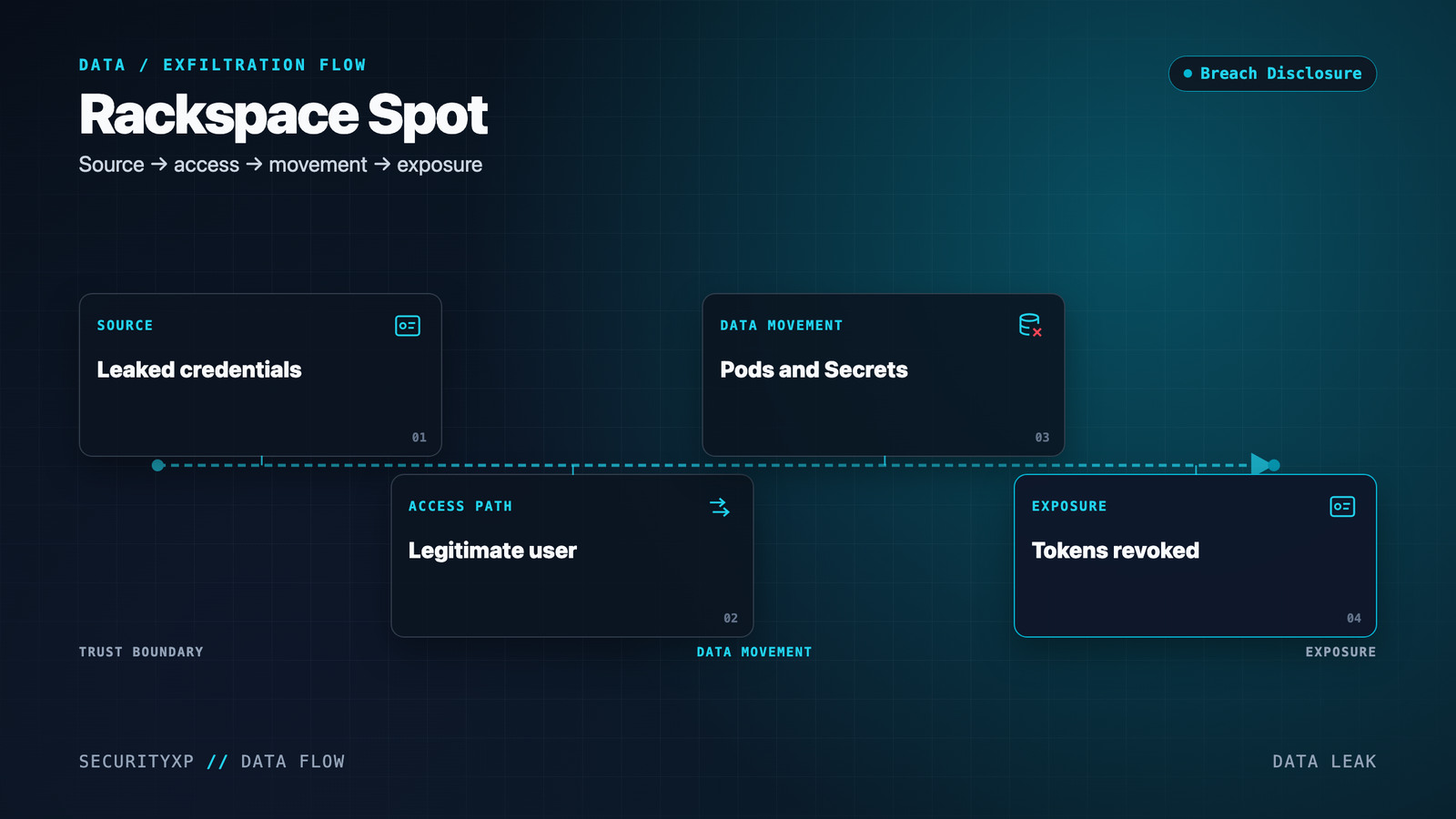
Rackspace Spot Breach Exposed Kubernetes Secrets Through Leaked Credentials
Rackspace says leaked credentials let an attacker act as legitimate users in some Spot customer organizations, create pods and read Kubernetes Secrets between 00:20 and 22:00 UTC on November 17.
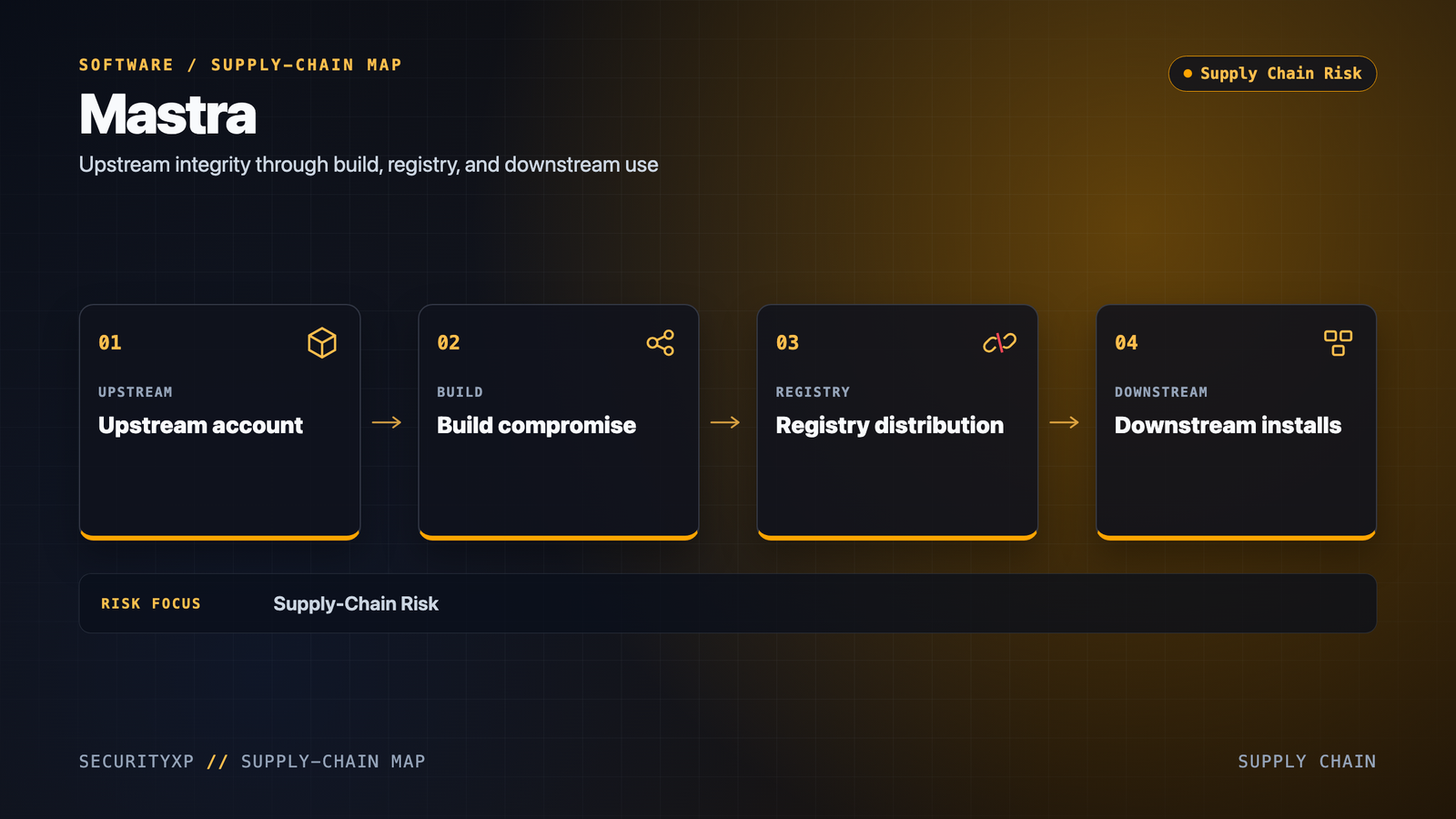
Mastra npm packages compromised in 'easy-day-js' supply chain attack
By exploiting npm’s install-time script execution, attackers gained the ability to harvest browser data from Chrome, Edge, and Brave, extract credentials...
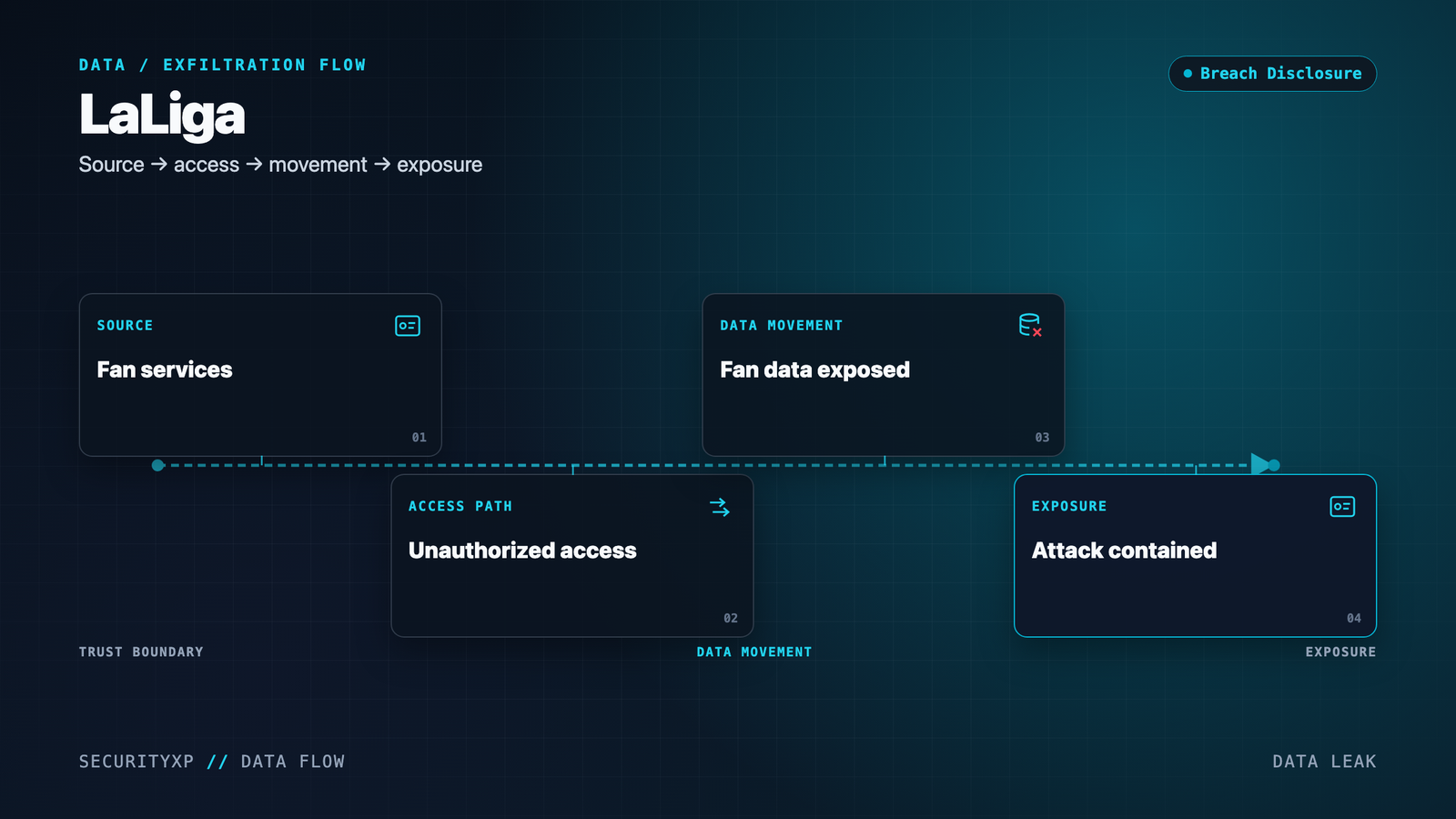
LaLiga Confirms Fan Data Breach Across Club Digital Services
LaLiga says hackers stole personal information from a platform serving fans and several clubs between November 14 and 16; the attack was contained and no other systems were affected.