
GeoServer RCE chain probes seen in the wild two days after disclosure
Key Facts
- Advisories for CVE-2026-120705 and CVE-2026-129243 were published on November 24, 2026.
- Attackers sent error-based exploit probes to validate that the server is vulnerable by creating and invoking stored queries.
- Affected GeoServer versions are 3.0.0 to 3.0.1, 2.28.0 to 2.28.5, and 2.27.6 and earlier.
- Patched GeoServer releases are 3.0.2, 2.28.6, and 2.27.7.
- Where patching is not immediately possible, restrict access to the host.
Attackers are probing two GeoServer flaws that can be chained with other bugs for unauthenticated remote code execution, two days after advisories were published on November 24, 2026. The actively targeted issues are CVE-2026-120705 and CVE-2026-129243.
“Attackers sent error-based exploit probes to validate that the server is vulnerable by creating and invoking stored queries,” the preemptive exposure management firm said in an X post today. The wording describes tests for vulnerability, not a claim that every probe ended in successful command execution.
At disclosure, GeoServer said it was unaware of any active exploitation. The later probes mark a change in that picture. For administrators, the important point is the timing: the warning arrived first, and reported probing followed two days later.
The chain behind the alerts
The broader chain was reported to the project in August by Jonah Burgess, a senior security researcher at Rapid7 who uses the handle CryptoCat. The public proof-of-concept repository describes a pre-authentication GeoServer RCE chain involving CVE-2026-129244, CVE-2026-129243, CVE-2026-120705, CVE-2026-129245 and CVE-2026-129242.
The repository identifies WFS stored queries, a forged remember-me cookie and HSQLDB deserialization as the chain’s mechanisms. It says the chain is fixed in 3.0.2, 2.28.6 and 2.27.7. The research collection also references CVE-2026-120704, although that identifier is not among the five CVEs named in the proof-of-concept chain.
The source material includes primary research from CryptoCat’s Blog and Eye Research, alongside GeoServer security advisories and release pages. Those advisories describe a predictable remember-me key that allows administrator session forgery, unauthenticated WFS GetFeatureById XML injection, and service security rules bypassed with a prefixed service name such as x/WFS.
Other advisories cover deserialization in JDBC user and role services that allows administrator code execution, remote code execution through SQLite JDBC extension loading in GeoServer JDBC security configuration, and a WFS stored query exception that discloses the data directory path. The collection is broader than the two flaws named in the probing report.
From stored queries to command execution
The reported probes are error-based: attackers create and invoke stored queries to test whether the server is vulnerable. That is the visible activity in the exposure management firm’s post. The proof of concept supplies the wider chain in which stored queries are one element of a pre-authentication route to code execution.
The JDBC portion is more direct. The attacker, acting as admin, points a JDBC user service at an uploaded HSQLDB database. The bundled driver deserialises a stored value that runs commands. This step reaches code execution in the administrator context described by the advisory, rather than stopping at an error or a disclosed path.
A forged remember-me cookie is another element named in the chain description. The related advisory says a predictable remember-me key allows administrator session forgery. The proof of concept presents that cookie alongside stored queries and HSQLDB deserialization, not as a standalone substitute for the rest of the chain.
Affected versions and fixes
The advisories for both actively probed flaws were published on November 24, 2026. They affect GeoServer versions 3.0.0 to 3.0.1, 2.28.0 to 2.28.5, and 2.27.6 and earlier.
For CVE-2026-120705, the listed fixes are org.geoserver:gs-wfs-core versions 3.0.2, 2.28.6, and 2.27.7, and org.geotools:gt-metadata versions 35.2, 34.6, and 33.7. For CVE-2026-129243, org.geoserver:gs-ows is fixed in GeoServer versions 3.0.2, 2.28.6, and 2.27.7.
Each affected release line has a corresponding patched release: 2.27.7 for 2.27.6 and earlier, 2.28.6 for 2.28.0 to 2.28.5, and 3.0.2 for 3.0.0 to 3.0.1. The GeoTools metadata entries matter too: CVE-2026-120705 includes fixes for org.geotools:gt-metadata as well as for GeoServer’s WFS core package.
Patching is the immediate response
GeoServer’s message at disclosure was direct: “If you are responsible for a GeoServer instance, the short version is: please update to GeoServer 3.0.2, GeoServer 2.28.6, or GeoServer 2.27.7.” At the time, GeoServer was unaware of any active exploitation.
In light of active exploitation of two of the flaws, users are advised to update to GeoServer versions 2.27.7, 2.28.6, and 3.0.2 released over the past month as soon as possible. The version guidance has not changed; the reported probing has made it more urgent.
Where patching is not immediately possible, the stated mitigation is to restrict access to the host. That is the fallback in the guidance, not a replacement for the patched releases. The two probed flaws are the immediate signal, while the five-vulnerability proof of concept explains why the surrounding chain matters.
Sources & References
- GeoServer Pre-Authentication RCE via WFS and HSQLDB - CryptoCat's Blog. Primary research blog. https://cryptocat.me/blog/research/analysis/geoserver_preauth_rce/
- Unauthenticated remote code execution vulnerability in GeoServer - Eye Research. Primary research blog. https://labs.eye.security/unauthenticated-remote-code-execution-vulnerability-in-geoserver/
- Predictable remember-me key allows administrator session forgery · Advisory · geoserver/geoserver · GitHub. Primary github release. https://github.com/geoserver/geoserver/security/advisories/GHSA-hgm3-wq4h-8vvq
- Release GeoServer 2.27.7 · geoserver/geoserver · GitHub. Primary github release. https://github.com/geoserver/geoserver/releases/tag/2.27.7
- Release GeoServer 2.28.6 · geoserver/geoserver · GitHub. Primary github release. https://github.com/geoserver/geoserver/releases/tag/2.28.6
- CVE-2026-120705 — National Vulnerability Database
- CVE-2026-129243 — National Vulnerability Database
- CVE-2026-129244 — National Vulnerability Database
- CVE-2026-129245 — National Vulnerability Database
- CVE-2026-120704 — National Vulnerability Database
- CVE-2026-129242 — National Vulnerability Database

SecurityXP delivers cybersecurity news, vulnerability analysis, data breach reports, and threat intelligence.
Security Digest
The most important cybersecurity stories, CVE alerts, and threat intelligence — one concise email. Unsubscribe anytime.
Related Articles
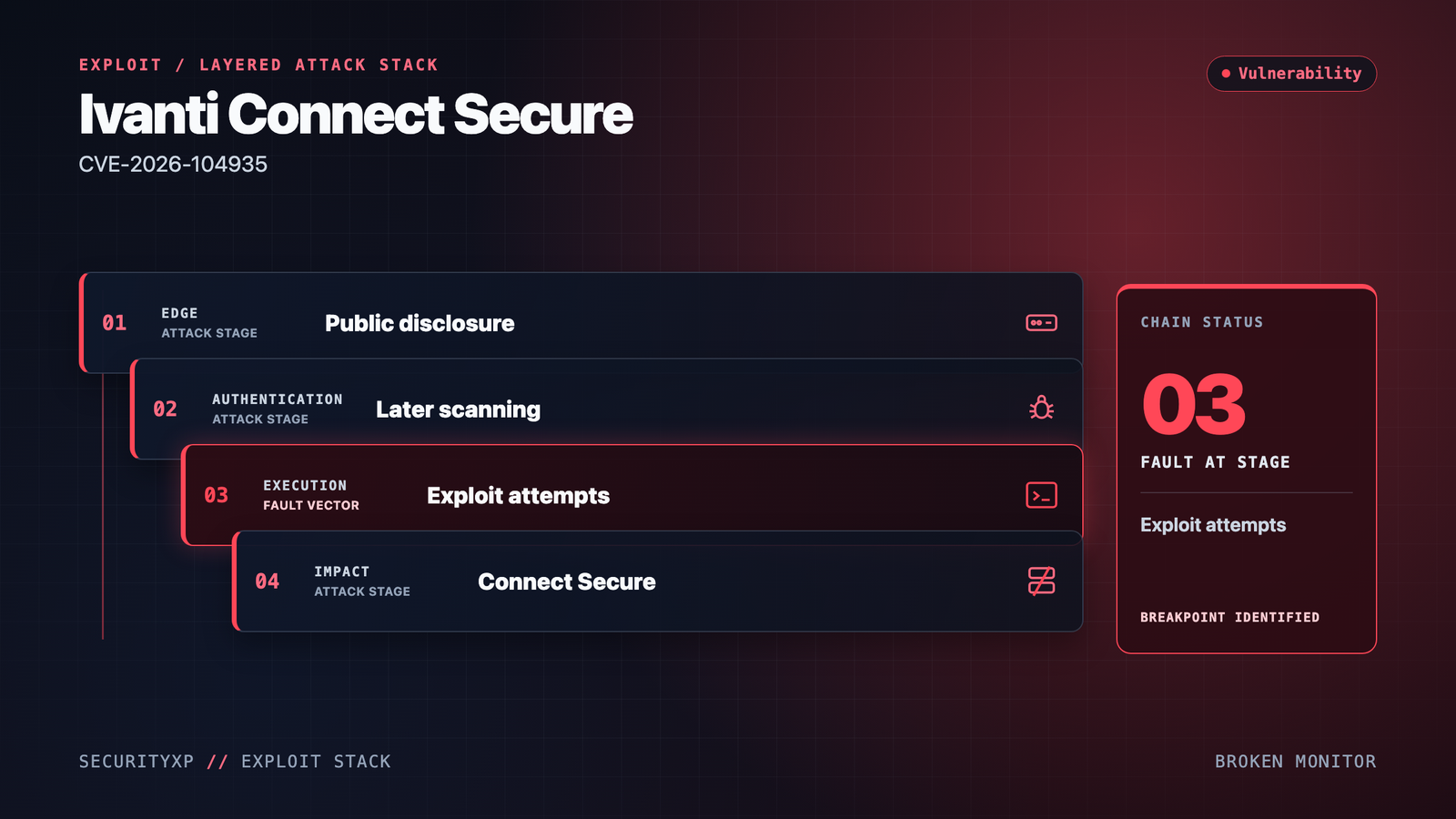
Ivanti Connect Secure Zero-Day Exploitation Attempts Confirmed After Disclosure
F5 Labs recorded 46 attempts against CVE-2026-104935 after disclosure, with short bursts from four IPs and a wider decline in October’s leading attack category.
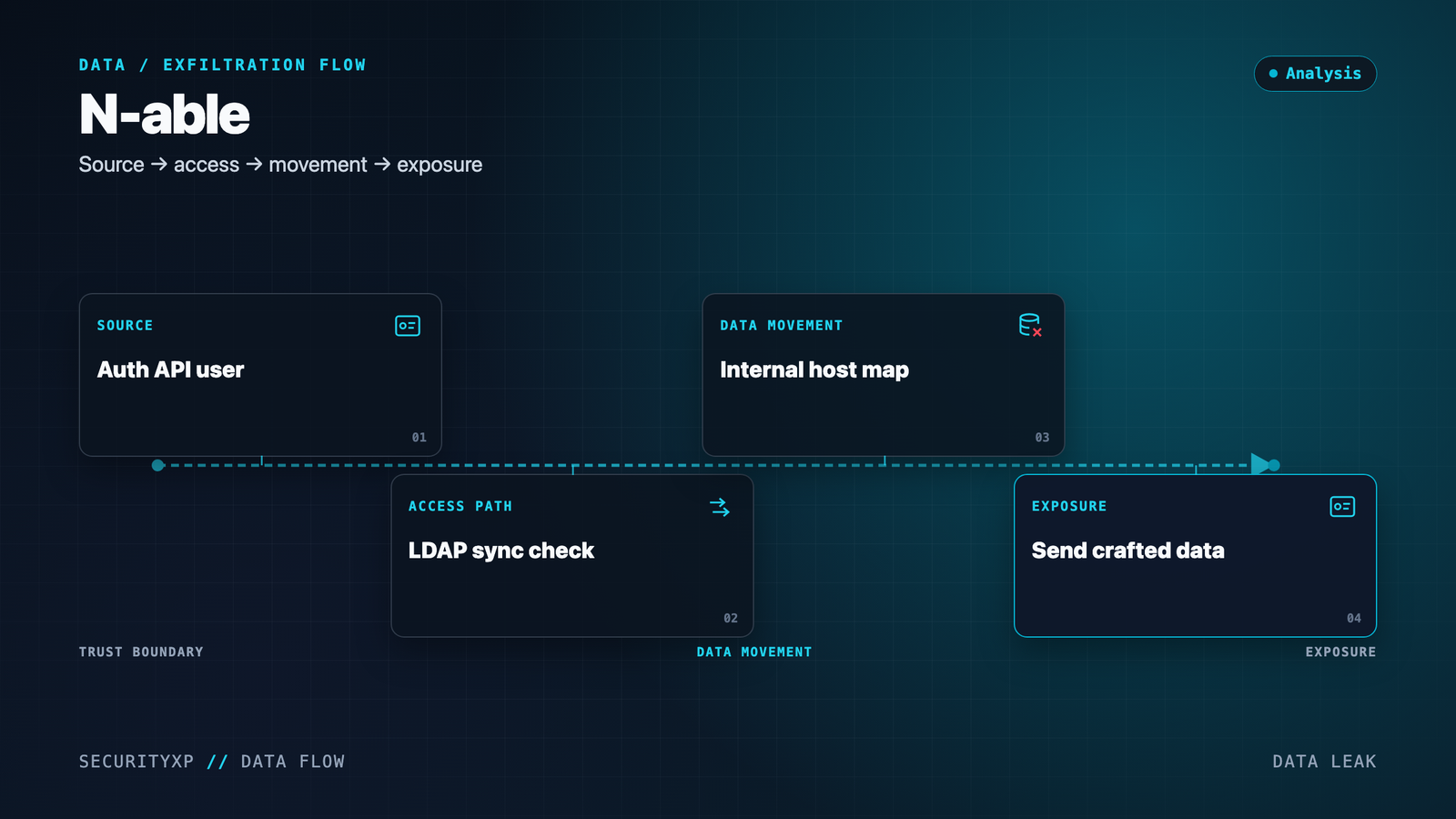
N-able Discloses Critical MailAssure SSRF Flaw Found During Hosted Cloud Breach Investigation
N-able disclosed a critical server-side request forgery vulnerability in MailAssure yesterday after discovering it during an investigation into the breach…
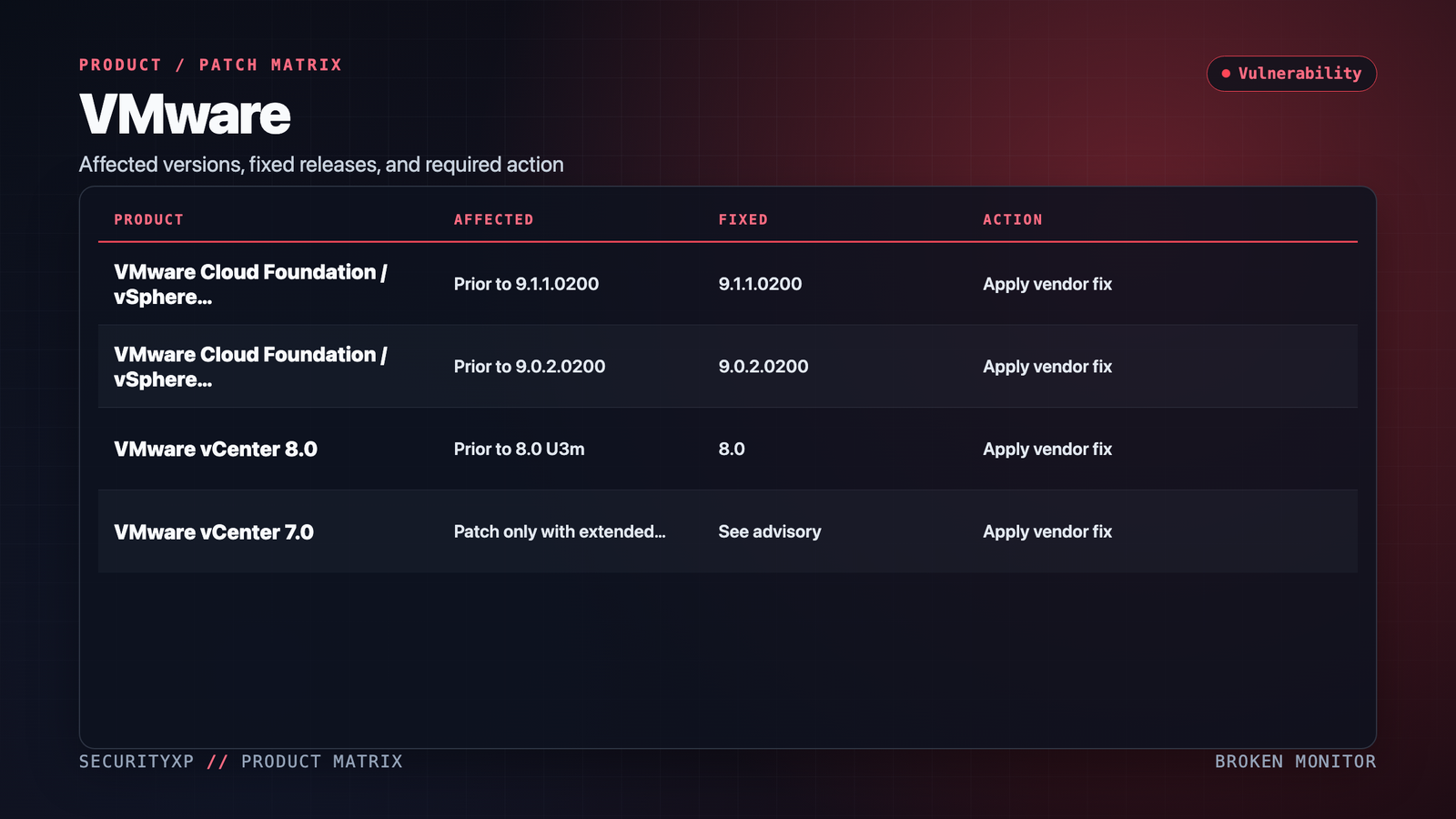
VMware vCenter Authentication Bypass Exploited as Zero-Day for Over Two Months Before Patch
Broadcom's VMSA-2026-0009 fixes CVE-2026-123890, a vCenter authentication bypass exploited as a zero-day. Affected versions, fixed builds and hunting guidance.
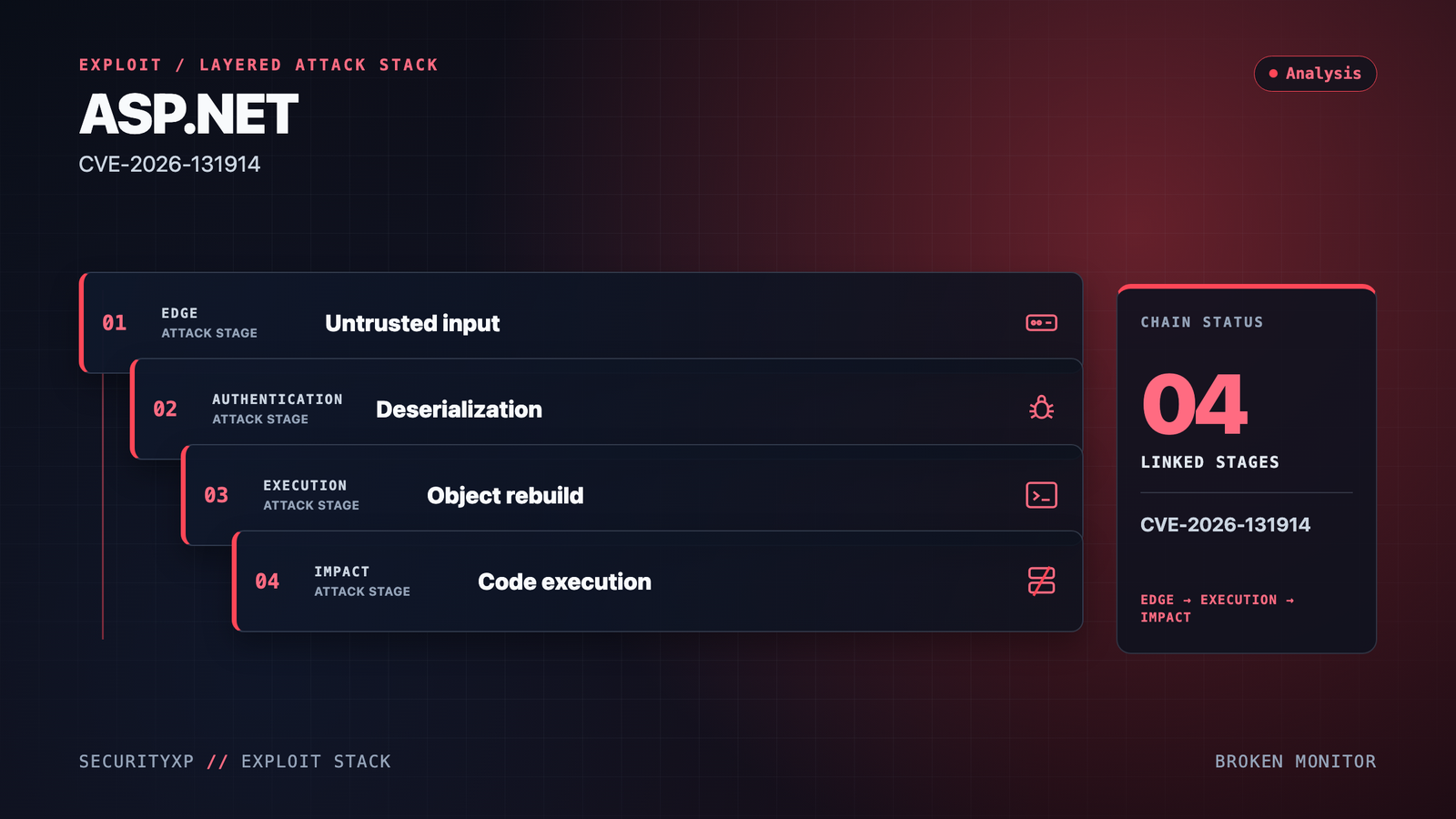
A Critical Deserialization Flaw in a Legacy ASP.NET Anti-CSRF Library, Already Exploited in the Wild
Researchers have urged users to discontinue a legacy ASP.NET anti-CSRF library called Idunno.AntiCsrf, which ships as Idunno.AntiCsrf.dll.