
One backtick in a Dokploy database password is enough for authenticated host RCE, rated 9.9
Key Facts
- oss-sec mailing list archives Re: Dokploy: the validator allows the backtick — a member's database password change is host RCE, 9.9 on the vendor's own vector (v0.31.0, live-proven) From: Aaron Rainbolt <arraybolt3 () gmail com> Date: Sat, 21 Nov 2026 23:21:01 -0600 On Sat, Nov 21, 2026 at 11:06 PM Solar Designer <solar () openwall com> wrote: Hi, I know that many of you in here would rather not see more postings from knell.
- The database password validator (DATABASE_PASSWORD_REGEX, packages/server/src/db/schema/utils.ts:51-52, in the code since v0.29.0) bans $, !, both quotes, backslash, slash and space.
- Authenticated RCE via Database Password Command Substitution · Advisory · Dokploy/dokploy · GitHub.
- I also question whether this issue was worth singling out, given how many other security issues were being fixed by the project concurrently - it's tens of "fix(security)" lines in v0.31.1 release notes.
- Prior to 0.31.1, the database password validation used by the MySQL, PostgreSQL, MariaDB, MongoDB, and Redis change-password procedures permits backticks, and the procedures interpolate attacker-controlled passwords into Bash command strings.
oss-sec mailing list archives Re: Dokploy: the validator allows the backtick, a member’s database password change is host RCE, 9.9 on the vendor’s own vector (v0.31.0, live-proven) From: Aaron Rainbolt <arraybolt3 () gmail com> Date: Sat, 21 Nov 2026 23:21:01 -0600 On Sat, Nov 21, 2026 at 11:06 PM Solar Designer <solar () openwall com> wrote: Hi, I know that many of you in here would rather not see more postings from knell. The database password validator (DATABASE_PASSWORD_REGEX, packages/server/src/db/schema/utils.ts:51-52, in the code since v0.29.0) bans $, !, both quotes, backslash, slash and space. The issue is tracked as CVE-2026-129987 (rated up to CVSS 9.9). Affected deployments include No release contains that rewrite; v0.31.0, the current release and the installed base, is the vulnerable code, and the validator is unchanged on every branch.
Technical Mechanism
Authenticated RCE via Database Password Command Substitution · Advisory · Dokploy/dokploy · GitHub. Prior to 0.31.1, the database password validation used by the MySQL, PostgreSQL, MariaDB, MongoDB, and Redis change-password procedures permits backticks, and the procedures interpolate attacker-controlled passwords into Bash command strings.
Root Cause and Trust Boundary
I also question whether this issue was worth singling out, given how many other security issues were being fixed by the project concurrently - it’s tens of “fix(security)” lines in v0.31.1 release notes. No release contains that rewrite; v0.31.0, the current release and the installed base, is the vulnerable code, and the validator is unchanged on every branch. One posting after the v0.31.1 release summarizing all the issues may have been more appropriate.
Tested against dokploy/dokploy v0.31.0 (official image, digest sha256:f836f0ab…0953): 1. Live proof, against our own rig only (official v0.31.0 image, localhost-bound): a benign password changed cleanly (200); a $(id) password was rejected by the validator (400), the control showing the guard alive and incomplete; the backtick password returned 200 and left a canary file reading uid=0(root) gid=0(root) inside the server container.
Fixes and Defensive Takeaways
This issue is fixed in version 0.31.1.
Sources & References
- oss-sec: Re: Dokploy: the validator allows the backtick — a member's database password change is host RCE, 9.9 on the vendor's own vector (v0.31.0, live-proven). Primary research blog. https://seclists.org/oss-sec/2026/q4/809
- Authenticated RCE via Database Password Command Substitution · Advisory · Dokploy/dokploy · GitHub. Primary github release. https://github.com/Dokploy/dokploy/security/advisories/GHSA-9932-qg8x-pr32
- fix(security): database changePassword command injection (all 5 DB types) by Siumauricio · Pull Request #5910 · Dokploy/dokploy · GitHub. Primary github release. https://github.com/Dokploy/dokploy/pull/5910
- CVE-2026-129987 — NIST National Vulnerability Database entry. https://nvd.nist.gov/vuln/detail/CVE-2026-129987
- CVE-2026-129987 — Git advisory. https://github.com/advisories/CVE-2026-129987
- CVE-2026-129987 — National Vulnerability Database

SecurityXP delivers cybersecurity news, vulnerability analysis, data breach reports, and threat intelligence.
Security Digest
The most important cybersecurity stories, CVE alerts, and threat intelligence — one concise email. Unsubscribe anytime.
Related Articles
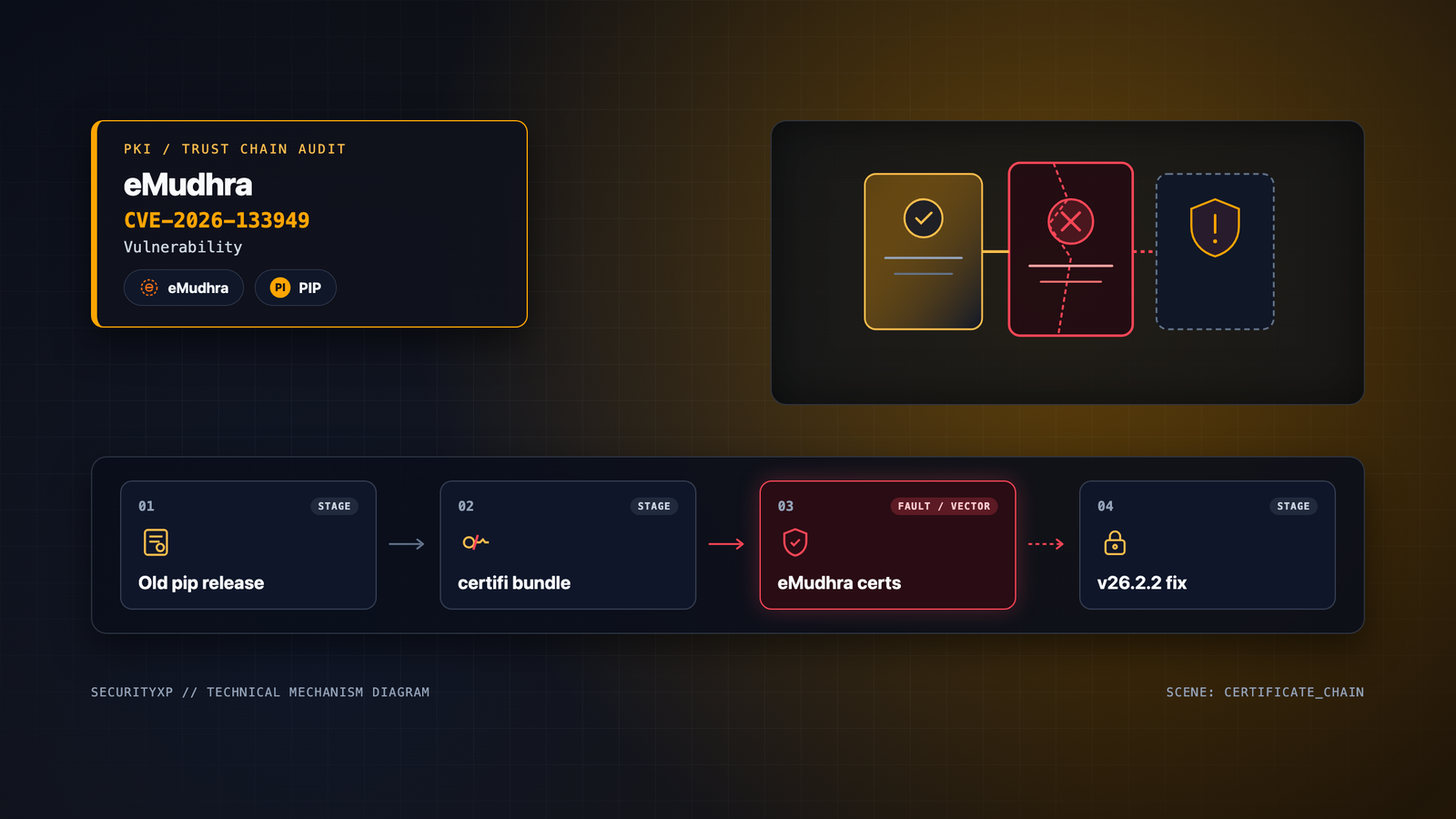
pip Before v26.2.2 Bundles Compromised eMudhra Certificates in certifi (CVE-2026-133949, CVSS 9.3)
pip releases earlier than v26.2.2 ship a certifi bundle that contains the compromised eMudhra certificates.
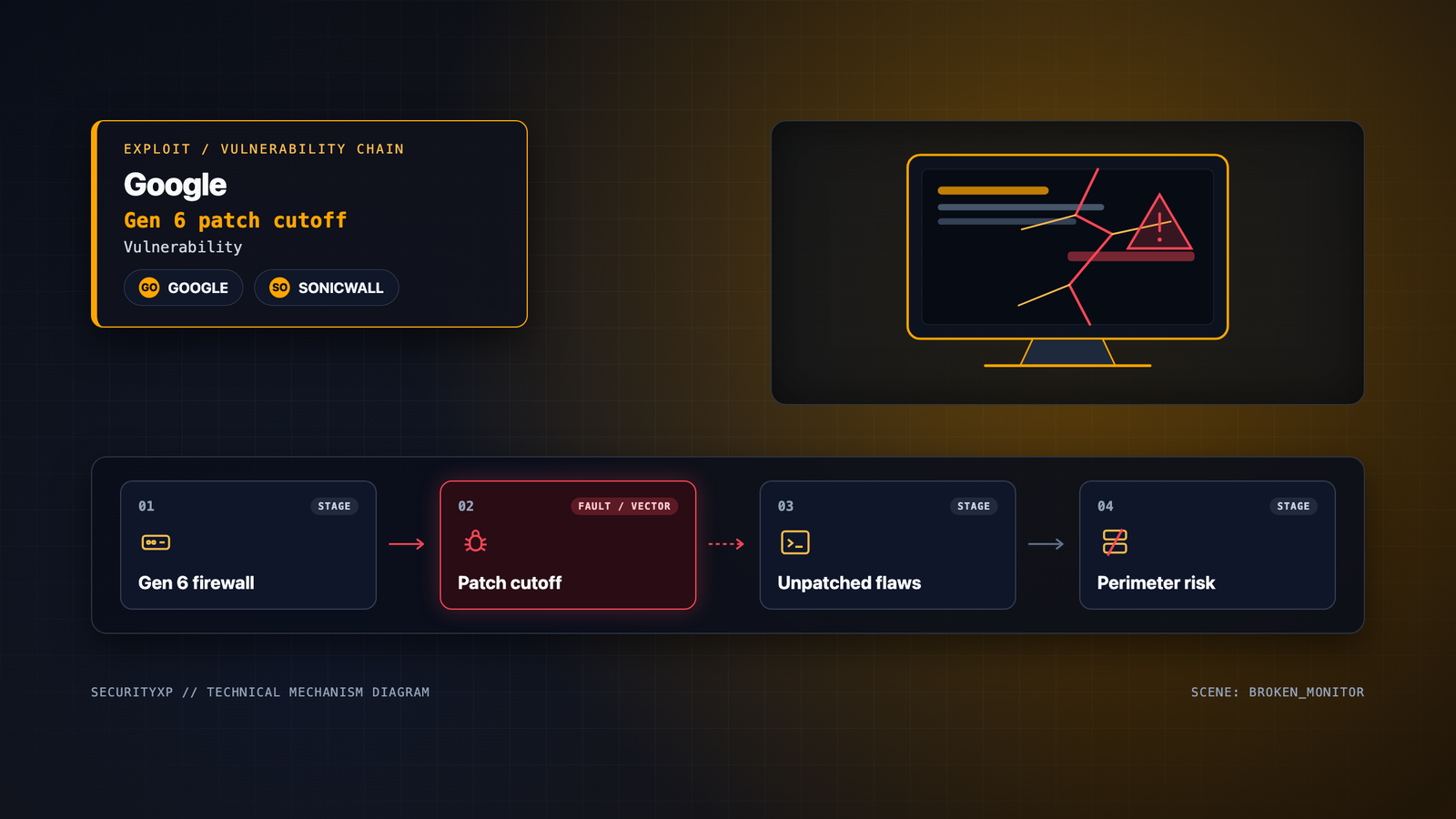
SonicWall Ends Gen 6 Firewall Patching, Even for Critical Flaws
Google Mandiant’s M-Trends report, published in March 2026, estimated the mean time to exploit vulnerabilities at -7 days, meaning exploitation on average…
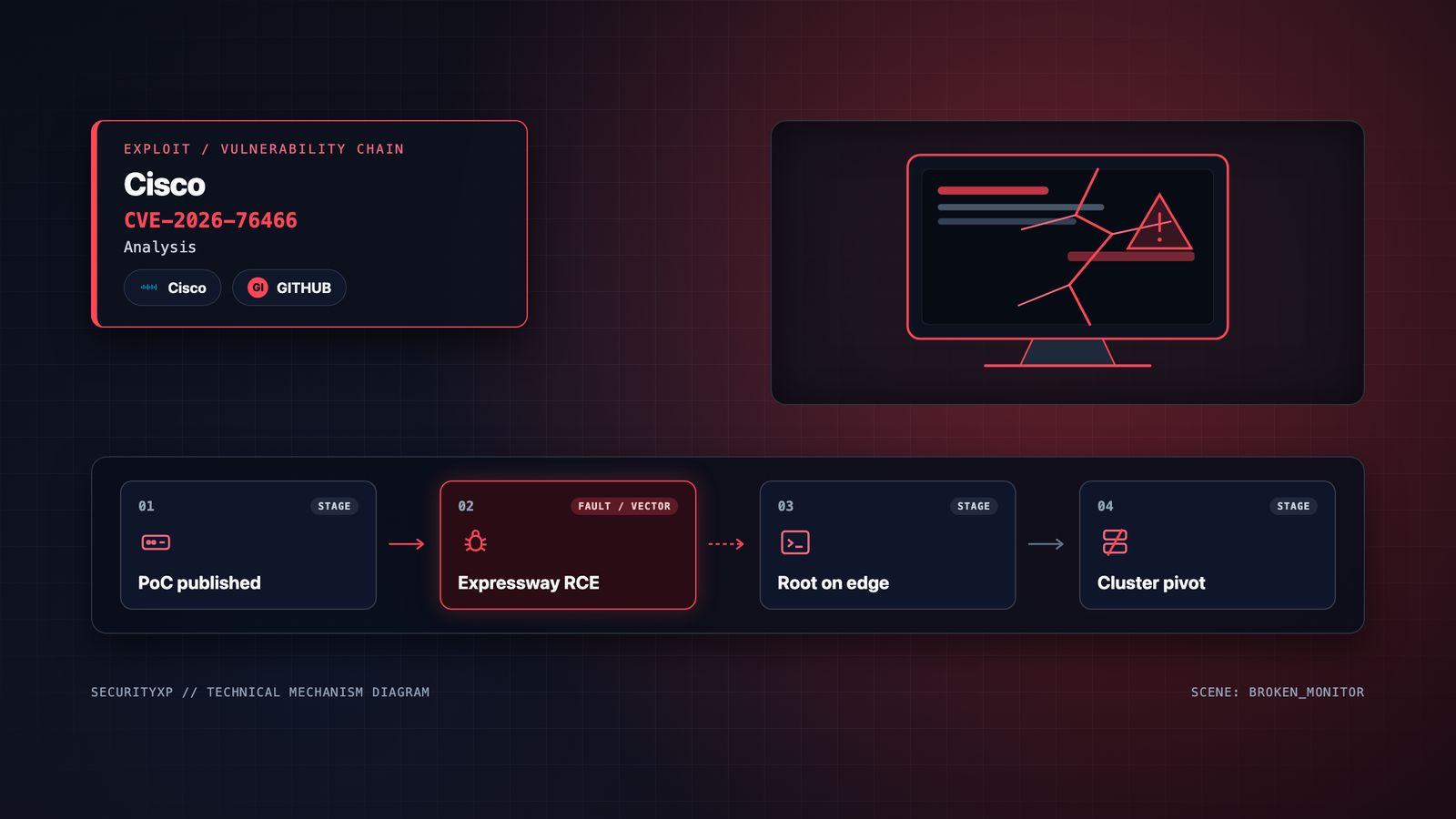
Cisco Expressway Flaw Exploited Shortly After PoC Release to Breach Russian Organization
Attackers used CVE-2026-76466, a CVSS 9.8 Cisco Expressway flaw, to breach a Russian organization soon after a public PoC, F6 reports.
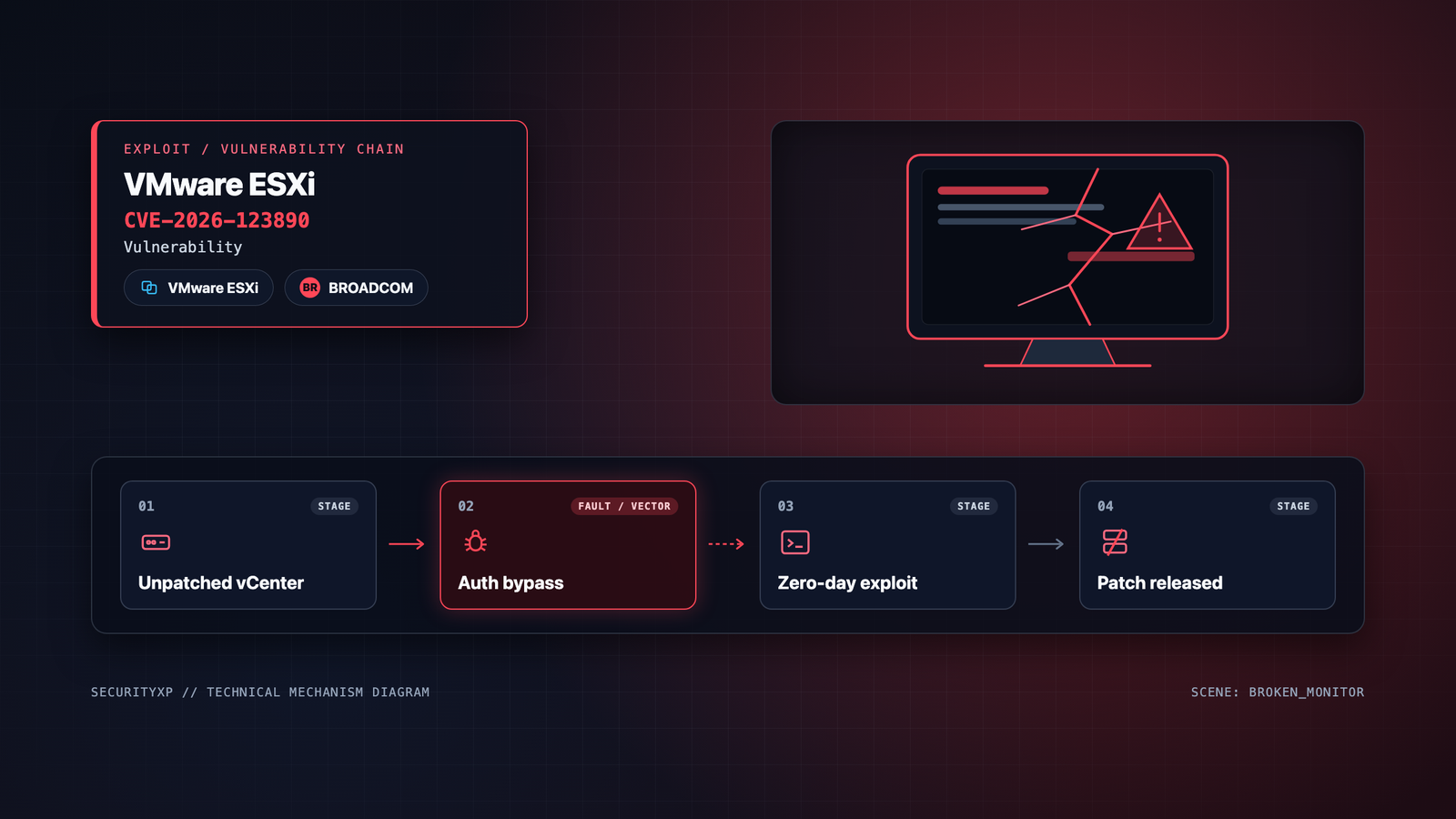
VMware vCenter Authentication Bypass Exploited as Zero-Day for Over Two Months Before Patch
Broadcom's VMSA-2026-0009 fixes CVE-2026-123890, a vCenter authentication bypass exploited as a zero-day. Affected versions, fixed builds and hunting guidance.