
DRDO & IIT Delhi Demo 100km QKD
For the first time in the country, a team of scientists from the Defence Research and Development Organisation (DRDO) and the Indian Institute of Technology (IIT) Delhi successfully demonstrated a Quantum Key Distribution link between Prayagraj and Vindhyachal in Uttar Pradesh, spanning over 100 kilometers. This technological breakthrough was made using a commercial-grade optical fibre that was already on the market. With this achievement, the country has demonstrated its own secure key transfer technology, which can be used to bootstrap a military-grade communication security key hierarchy. At sifted key rates of up to 10 KHz, the performance parameters were measured and found to be consistently within the reported international standards. Security agencies will be able to plan a suitable quantum communication network with an indigenous technology backbone thanks to this technology.
Dr. G Satheesh Reddy, Secretary of Defense R&D and Chairman of DRDO, congratulated the scientists and faculty of DRDO and IIT Delhi on the successful demonstration of this technology. He mentioned this in his message to the scientific community as one of the shining examples of synergetic research between the DRDO and the Indian Institute of Technology, Delhi. Professor Rangan Banerjee, Director of IIT Delhi, also congratulated the IIT Delhi faculty and DRDO scientists involved in this development for their dedicated efforts to improve the country’s technological capability.
Before this last year, QKD was performed between two DRDO Labs as well.
 Secure communications are critical for defence and strategic agencies around the world, and periodic distribution of encryption keys is a must in this context. Sharing keys over the air or over wired links necessitates encryption, which necessitates the pre-sharing of encryption keys. Quantum communication provides a reliable means of securely sharing keys. The project for the development of this technology was undertaken by the Defence Research and Development Organisation (DRDO).
A project milestone was reached last year when DRDO’s Quantum Key Distribution (QKD) technology was tested in Hyderabad between two DRDO labs, DRDL and RCI, to demonstrate secure communication.
CAIR in Bengaluru and DYSL-QT in Mumbai developed the technology. Quantum communication was tested under realistic conditions using a time-bin Quantum Key Distribution (QKD) scheme. The setup also validated the detection of a third party attempting to gain access to the communication. At over 12kms range and 10dB attenuation over fibre optic channel, quantum-based security against eavesdropping was validated for the deployed system.
To generate photons without depolarization, a continuous wave laser source was used. The timing accuracy used in the setup was in the picosecond range. The Single photon avalanche detector (SPAD) recorded photon arrivals, and a key rate in the kbps range was achieved with a low Quantum bit error rate.
Data acquisition, time synchronisation, post-processing, determining Quantum bit error rate, and extracting other important parameters were all developed using software.
 The DRDO’s work will be used to help start-ups and small businesses in the field of quantum information technologies. It will also be used to define standards and crypto policies that can be used in a unified Cipher Policy Committee (CPC) framework to provide more secure and practical key management for current and future military cryptographic systems.

Automated and analyst-reviewed threat intelligence briefings tracking active exploitation campaigns, CVE disclosures, and extortion group activity.
Security Digest
The most important cybersecurity stories, CVE alerts, and threat intelligence — one concise email. Unsubscribe anytime.
Related Articles

Malicious Microsoft agent-framework Releases on PyPI Run a Credential Stealer on Every Python Start
Malicious versions of the Microsoft agent-framework PyPI package shipped a credential stealer that runs on every Python start, researchers found.
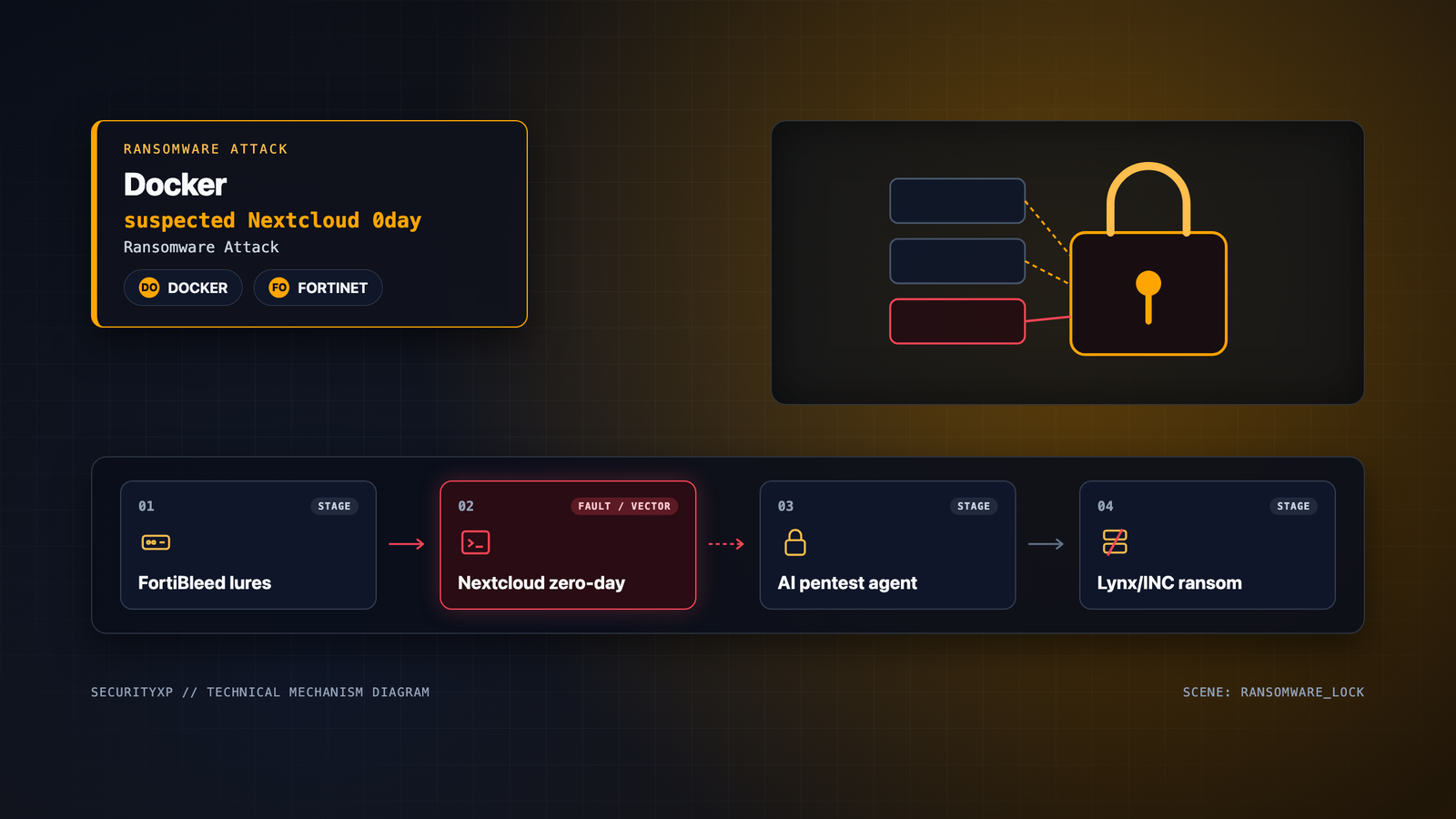
SOCRadar links FortiBleed campaign targeting manufacturers to Lynx and INC ransomware attacks
The hacker likely already found and exploited a zero-day vulnerability in Nextcloud, an open-source content collaboration platform. They also built ‘PENTEST...

Chinese-linked hackers targeted US, Canadian research facilities for a year: Google Threat Alert
Between September 2023 and November 2025, the hackers sought information related to defense intelligence, military strategy in the Indo-Pacific, artificial...
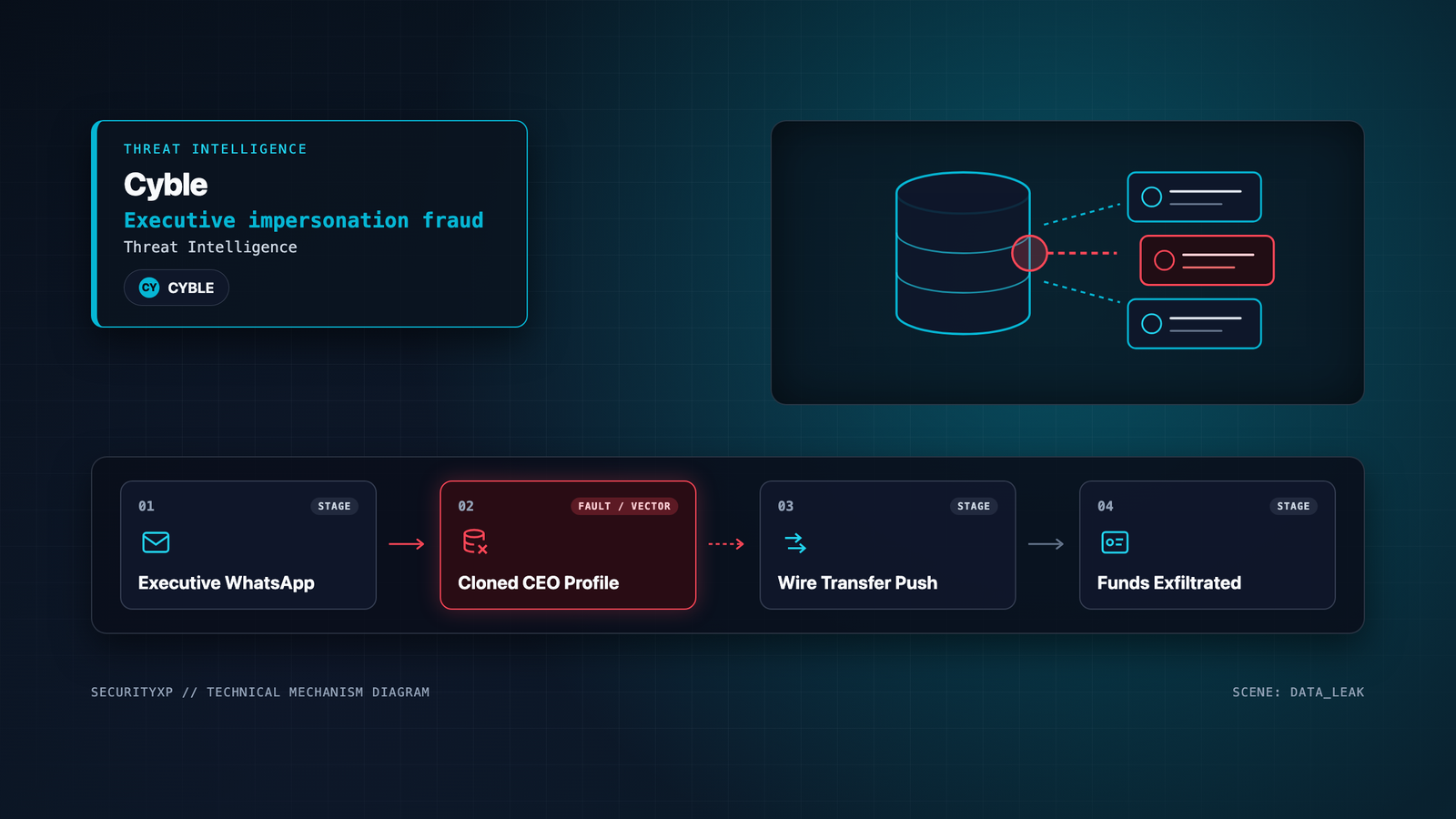
Gulf Executives Face WhatsApp Impersonation
It starts with a message. A senior executive at a Dubai energy firm opens WhatsApp and sees what looks like a text from their CEO.