
AuditTeam's 'Forced Audit': OpsAgent 5.2.8 Implant and Leak Site Behind the 'Audit & Consulting Fee'
Key Facts
- DeXpose reported on June 25, 2026 that AuditTeam claimed responsibility for an attack on a Russian organization and listed it on its Tor-based leak site.
- Open sources first identified AuditTeam in March 2026 via dbdigest.com.
- The OpsAgent main implant is version 5.2.8 and is described as rivaling Cobalt Strike in functionality.
- The C2 set includes two CloudFront subdomains, IP 157.20.104[.]111, and a GitHub page; the actor deleted the legacy C2 domain from the repository on September 29, 2026.
- Attribution markers include the unique ransom note format and "Audit & Consulting fee" terminology, the Tor-based leak site, and remediation reports.
AuditTeam entered the public record in March 2026, when open sources first identified the group via dbdigest.com. By June 25, 2026, DeXpose reported that the group had claimed responsibility for an attack on a Russian organization and listed it on its Tor-based leak site. Those two dates frame the available account: an initial identification in the spring, followed by a public claim of responsibility in the summer.
The group’s public-facing language is unusual. The phrase “Audit & Consulting fee” is part of the group’s ransom note terminology, which is described as unique to this group. The leak site is Tor-based and lists targeted organizations. The same material also points to remediation reports as part of the group’s operational philosophy, a detail that distinguishes AuditTeam from conventional ransomware groups. The phrase “forced audit” captures that presentation: an intrusion framed as an audit, with a fee attached.
What the record establishes
The record is specific about dates, terminology, and infrastructure, and it is narrower than a full campaign history. It does not provide a count of victims, a timeline of intrusions beyond the June 25 claim, or a technical narrative of initial access. What it does provide is a set of indicators tied to the OpsAgent framework and a set of attribution markers tied to AuditTeam’s public behavior.
That split matters. The indicators describe tooling. The ransom note format, the Tor-based leak site, and the remediation reports describe presentation and operating style. The assessment that AuditTeam masks ransomware as consulting rests on bringing those two layers together, not on any single artifact.
The OpsAgent 5.2.8 implant
The OpsAgent main implant is version 5.2.8. The published description says it rivals Cobalt Strike in functionality. That comparison is a functional one, not a claim that the code is derived from Cobalt Strike. It places OpsAgent in the category of a maintained framework rather than a disposable payload.
The stager layer is represented by five file hashes: d3e49dceb89a25f5da4ff0c42e996857, bd4c327ad208cb722ad25e43ea3f35fc, 5d1425ab3dad1d2de053f69529d227e1, f0d5752054f6b7af1325ea340c4326d0, and 83768e994c6bb72d0b430b98a71ec8d6. A sixth hash, 109cdc24ccd4872a3e4bf6f2d4f3c3d4, is the driver of a legitimate antivirus product; on disk it appears as kvcore.sys under both C:\Windows\Sysnative\drivers\kvcore.sys and C:\Windows\System32\drivers\kvcore.sys. The separation between stager hashes and the driver hash is important: the driver hash is described as belonging to a legitimate antivirus product, so its presence is not, by itself, evidence of OpsAgent. Context is required.
The implant writes artifacts named syscache.dat to five locations: C:\ProgramData\Microsoft\Windows\Caches\syscache.dat, C:\Users{username}\AppData\Local\Microsoft\Windows\Caches\syscache.dat, C:\Users{username}\AppData\Local\Microsoft\CLR_v4.0\syscache.dat, {modulepath}\syscache.dat, and {TempPath}\syscache.dat. The implant also writes C:\Users\Public\kv_dbg.log. These are concrete search terms for incident responders, but they are also artifacts that can be copied or imitated. A match should be treated as a lead, not a conclusion.
Command-and-control and the GitHub page
The C2 layer includes two CloudFront CDN subdomains, d19v1tntmz2i98[.]cloudfront[.]net and d35htktbyt7nxc[.]cloudfront[.]net, and IP 157.20.104[.]111. A GitHub page at hxxps://github[.]com/RonaldCMalcolm1983/staticPage serves as additional C2. The commit history shows ongoing updates until September 29, 2026, when the actor deleted the legacy C2 domain from the repository.
That commit history is the most time-specific part of the infrastructure record. It extends the group’s observed activity beyond the June 25 claim and shows maintenance of a repository tied to C2. The deletion on September 29, 2026 is a change in the public repository, not a statement that the infrastructure stopped being used.
The “forced audit” model and its limits
The attribution case rests on three published elements: the ransom note format and its “Audit & Consulting fee” terminology, which is unique to this group; the Tor-based leak site listing targeted organizations; and remediation reports that distinguish AuditTeam from conventional ransomware groups. Those elements support the “forced audit” description. They do not, on their own, establish the full scope of the group’s operations or the identity of its operators.
The OpsAgent indicators add technical weight. A framework described as rivaling Cobalt Strike in functionality, with staged payloads, a driver component, multiple file-path artifacts, CloudFront-based C2, and a GitHub repository, is not a minimal commodity tool. The record supports treating OpsAgent as an engineered toolset. It does not support claims about the number of victims, the group’s revenue, or its links to other actors.
For defenders, the practical value is in the published details: the hashes, the file paths, the domains, the IP, and the GitHub page. The analytical value is in the framing. AuditTeam’s “forced audit” is not just a label for a leak site. It is a presentation strategy that pairs a fee with a report, and the record shows why that strategy belongs in the same assessment as the implant’s technical indicators.
Sources & References
- Threat Category: Mobile threats | Securelist. Primary research blog. https://securelist.com/threat-category/mobile-threats/
- Threat Category: Secure environment (IoT) | Securelist. Primary research blog. https://securelist.com/threat-category/secure-environment/
- Threat Category: Web threats | Securelist. Primary research blog. https://securelist.com/threat-category/web-threats/
- Threat Category: Vulnerabilities and exploits | Securelist. Primary research blog. https://securelist.com/threat-category/vulnerabilities-and-exploits/
- Threat Category: Industrial threats | Securelist. Primary research blog. https://securelist.com/threat-category/industrial-threats/

SecurityXP delivers cybersecurity news, vulnerability analysis, data breach reports, and threat intelligence.
Security Digest
The most important cybersecurity stories, CVE alerts, and threat intelligence — one concise email. Unsubscribe anytime.
Related Articles
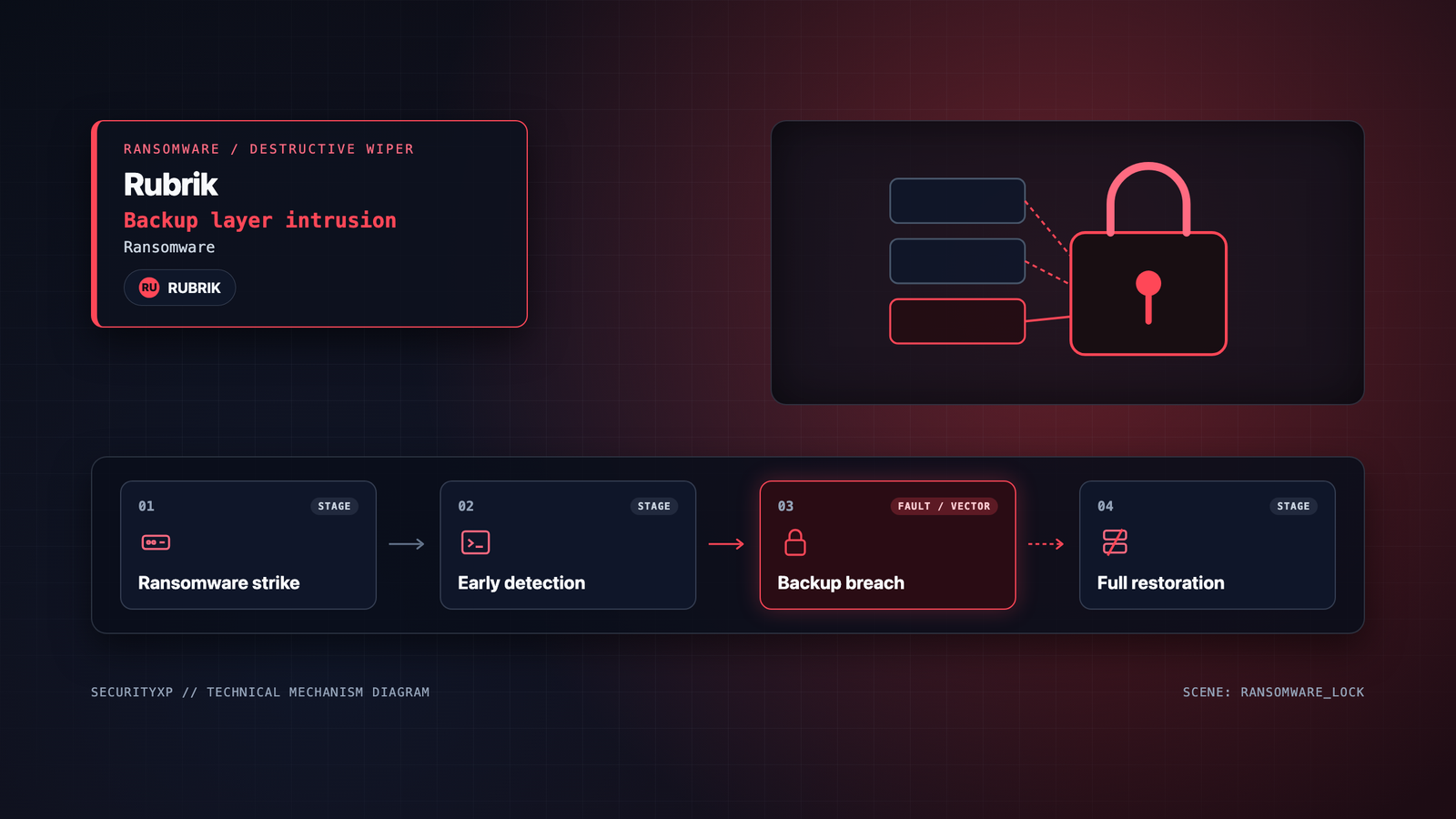
Ransomware Recovery Stretches to a Median of 20 Days as Attackers Push Into the Backup Layer
Organizations hit by ransomware need a median of 20 days to achieve full restoration, and 28% take more than six weeks to return to normal, according to Rubrik's 2026 report.
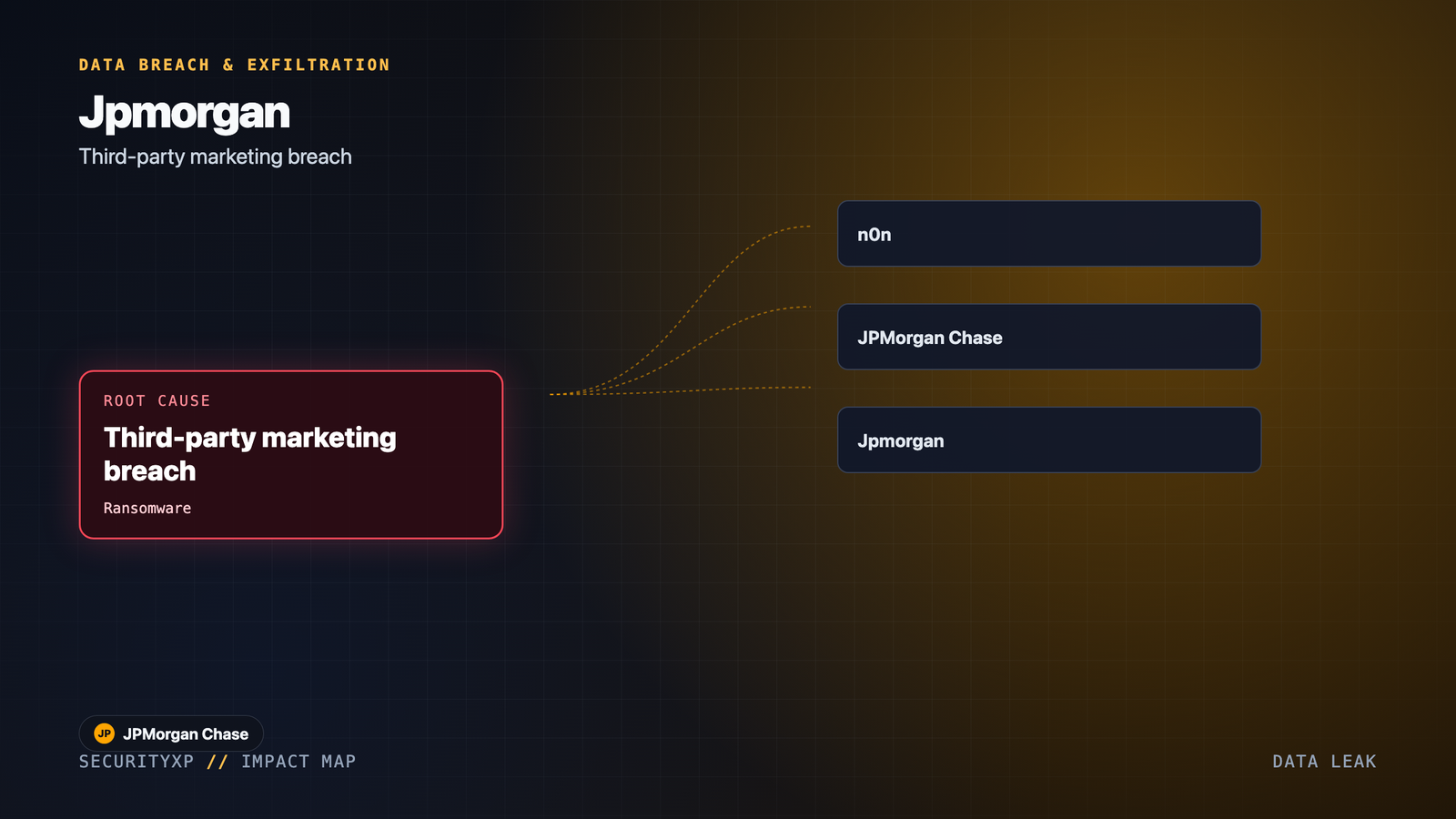
n0n Publishes 16,000 JPMorgan Reserve Card Emails After Vendor Breach
Roughly 16,000 customer email addresses have been published in a dataset apparently linked to JPMorgan Chase's invitation-only Reserve card program…
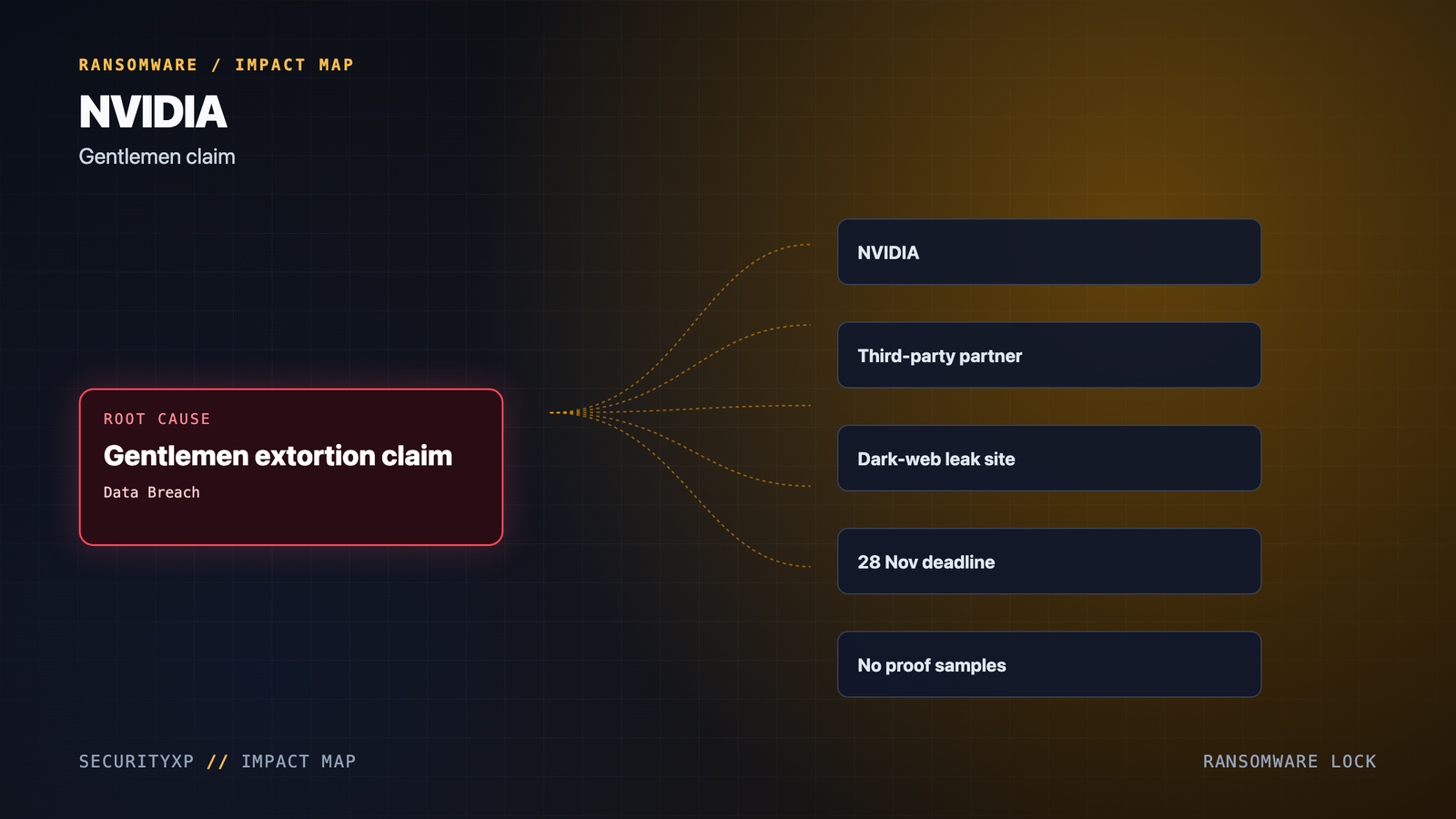
Nvidia Investigating Gentlemen Ransomware Group's Claim of Stolen Data
Nvidia is investigating an incident that may have affected a third-party partner after the Gentlemen ransomware group added the chipmaker to its dark web…
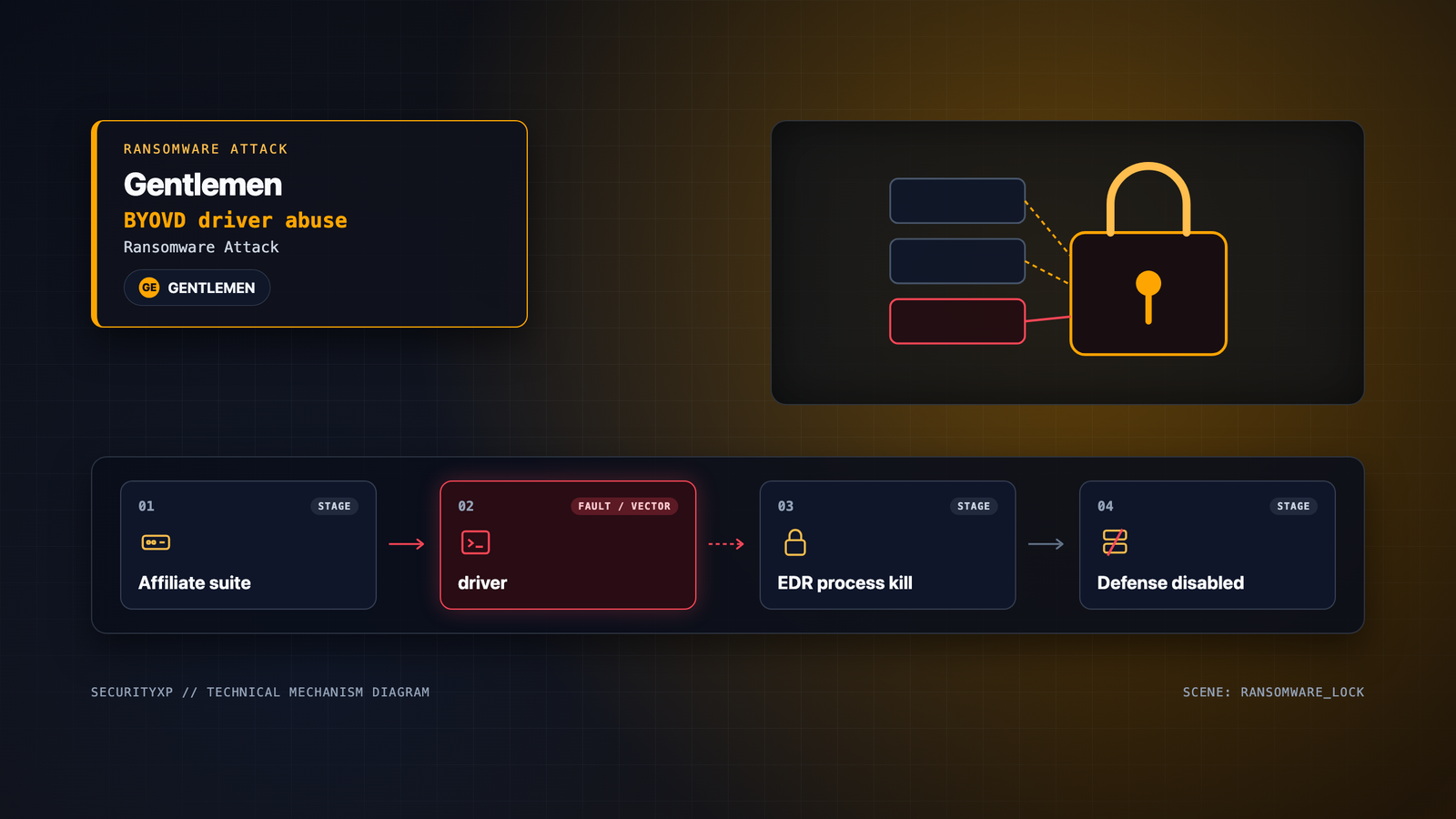
GentleKiller Ransomware Abuses Vulnerable Drivers to Disable 400+ EDR Security Processes
ESET says the Gentlemen RaaS gang's GentleKiller framework uses eight vulnerable drivers to kill more than 400 processes from 48 security products. Here is how it works and what to block.