
Registry Gap: 65 Attacks Hit 305 Hospitals, 12 Drew No Breach Filing
Key Facts
- At least 65 cyberattacks disrupted patient care at 305 hospitals across 36 states, the District of Columbia and Guam between January 2022 and September 2026.
- Ambulances were diverted in 26 of 65 attacks, or 40%; surgeries, treatments or appointments were canceled or postponed in 28; and staff worked on paper in 58, or 89%.
- Of 55 attacks in the analysis that began at least a year earlier, 12, or 22%, had no related registry filing.
- Healthcare organizations reported a record 776 data breaches to federal regulators in 2025, with hacking accounting for 81% of reported breaches between 2022 and 2025.
At least 65 cyberattacks disrupted patient care at U.S. hospitals and health systems between January 2022 and September 2026, affecting at least 305 hospitals across 36 states, the District of Columbia and Guam, according to an analysis described by Andrew Reed, associate director at The Health Management Academy.
The figure measures more than exposed data. It tracks what happened to care when systems went down: ambulances diverted, procedures postponed and clinics closed. The Department of Health and Human Services’ breach registry captures some of these events, but not the operational harm. That leaves a gap between the public record and the disruption described in the analysis.
Care disruption, not just data exposure
The analysis links the 65 attacks to a range of operational consequences. Ambulances were diverted to other hospitals in 26 of the 65 attacks, or 40%. Surgeries, treatments or appointments were canceled or postponed in 28 incidents. In 58 attacks, or 89%, electronic records or other clinical systems went offline, and staff worked on paper.
Those categories describe different kinds of strain: diverted demand, postponed care and paper-based work. The analysis counts each as a consequence of an attack, not merely as a technical outage.
In one incident, staff switched to paper charts, and all 35 of the center’s statewide clinics were forced to close until March 2, according to CNN and the Mississippi Free Press. Reed described the incident in a recent blog post. The example shows how a single attack can reach beyond one facility.
What the registry captures, and what it misses
HHS’ breach registry records incidents involving exposed patient data affecting at least 500 people. That threshold and focus make the registry a record of reported breaches involving patient data, not a full account of care disruption. It does not capture operational consequences such as diverted ambulances, canceled procedures or closed clinics.
This is the core of the registry gap. An attack can force a hospital to divert ambulances or postpone care without producing a registry entry that reflects those effects. The registry may still record a breach if patient data was exposed and the incident met the reporting threshold, but the operational consequences described in the analysis fall outside what the registry is designed to show.
A filing gap among older incidents
The analysis also identifies a filing gap. Of 55 attacks in the analysis that began at least a year earlier, 12, or 22%, had no related registry filing. That means 12 of those 55 older incidents did not appear in the registry, even though the analysis included them as attacks that disrupted care.
The finding does not explain why those 12 incidents lacked a filing. The analysis does not say whether the incidents fell below the 500-person threshold, whether they were reported through another channel, or whether they were not reported at all. What the data show is narrower: among the 55 older attacks in the analysis, 12 had no related registry filing.
That limit matters for interpretation. The 22% figure describes the subset of 55 attacks, not all 65. It also does not establish that every attack in the analysis should have produced a registry entry. The registry’s scope is patient-data breaches affecting at least 500 people, while the analysis counts care disruption. The two measures overlap, but they are not the same.
Record breach volume
The filing gap appears alongside record reported breach volume. Healthcare organizations reported a record 776 data breaches to federal regulators in 2025. Hacking accounted for 81% of reported breaches between 2022 and 2025.
Those figures describe reported breaches, not the operational consequences counted in the analysis. The 776 total is a record for 2025. The 81% share covers 2022 through 2025. Together, they show that hacking made up most reported breaches in that period and that reported breach volume reached a record in 2025.
The comparison is not one-to-one. A reported breach may or may not have disrupted care. An attack that disrupted care may or may not appear in the registry. The analysis described by Reed counts the latter; the registry counts the former under its own criteria.
What the numbers show
The numbers point to a consistent theme: cyberattacks against hospitals can disrupt care in ways that a breach registry does not fully capture. Across 65 attacks, the analysis counts 26 incidents with ambulance diversions, 28 with canceled or postponed surgeries, treatments or appointments, and 58 with paper records. It also finds 12 of 55 older attacks with no related registry filing.
The record 776 breaches reported in 2025 and the 81% hacking share from 2022 to 2025 add context about scale. They do not replace the operational counts. The public record of breaches and the operational record of disruption are related, but they are not the same record.
Sources & References
- The Health Management Academy analysis of 65 cyberattacks that disrupted U.S. hospital care between January 2022 and September 2026. https://hmacademy.com/blog/hospital-cyberattacks-disrupted-care
- Industrial Cyber report on the Health Management Academy analysis. https://industrialcyber.co/medical/health-management-academy-details-hospital-cyberattacks-leading-to-care-disruption-and-prolonged-system-outages/

SecurityXP delivers cybersecurity news, vulnerability analysis, data breach reports, and threat intelligence.
Security Digest
The most important cybersecurity stories, CVE alerts, and threat intelligence — one concise email. Unsubscribe anytime.
Related Articles

Highland Shores Children's Aid Says Intruder Took Personal Files in July Breach
An Ontario children's aid society says an intruder accessed its network on July 6 and took files with names, SINs, medical and child-welfare records. Regulators and police were notified.

Cold Relic Reused Stolen Google Workspace Data to Breach a Second U.S. Organization
Google says Cold Relic reused stolen identities and Workspace data from an earlier breach to compromise a second U.S. organization.
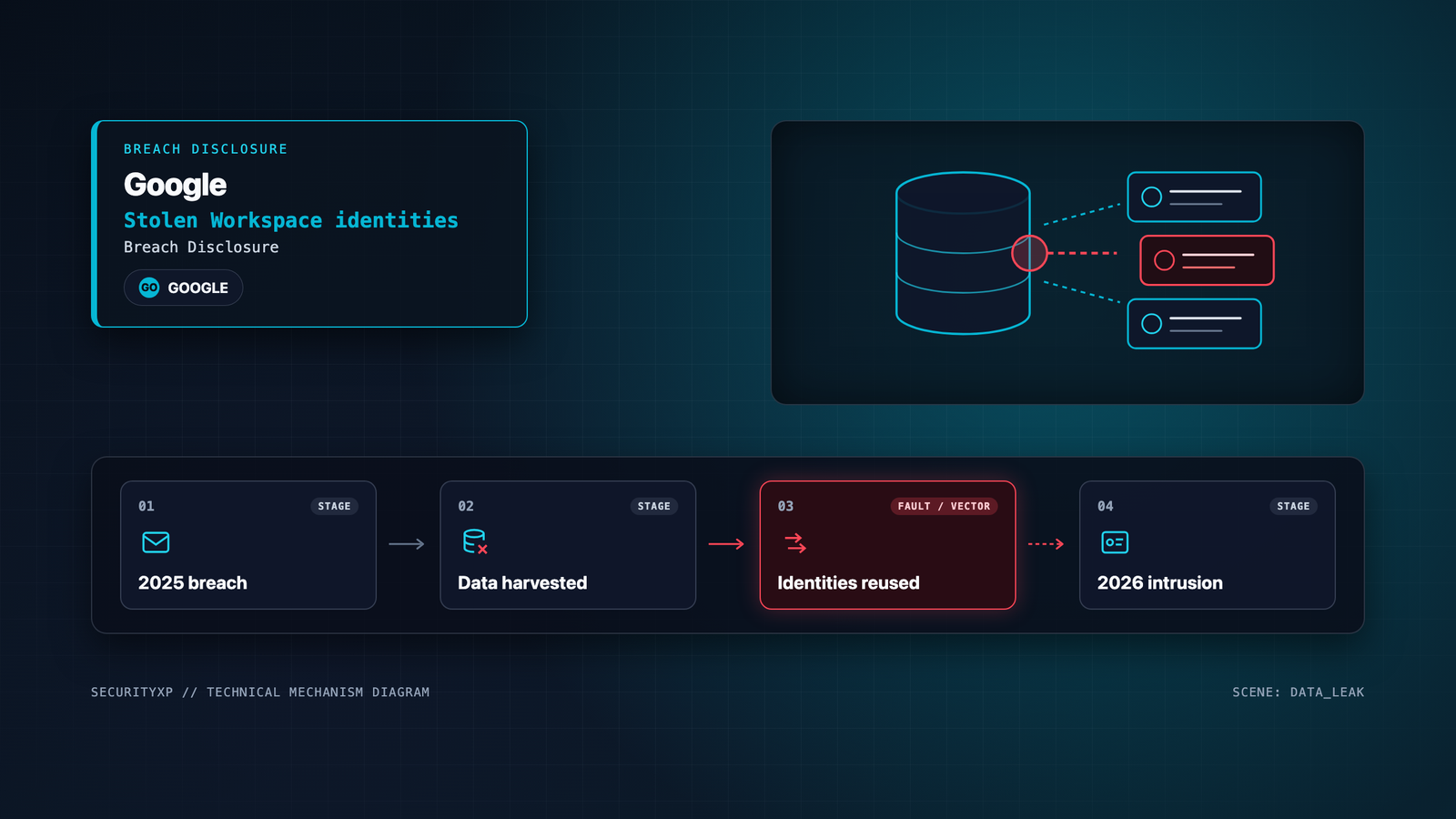
Cold Relic Reused Stolen Google Workspace Data to Breach a Second U.S. Organization
Google says Cold Relic reused stolen identities and Workspace data from an earlier breach to compromise a second U.S. organization.
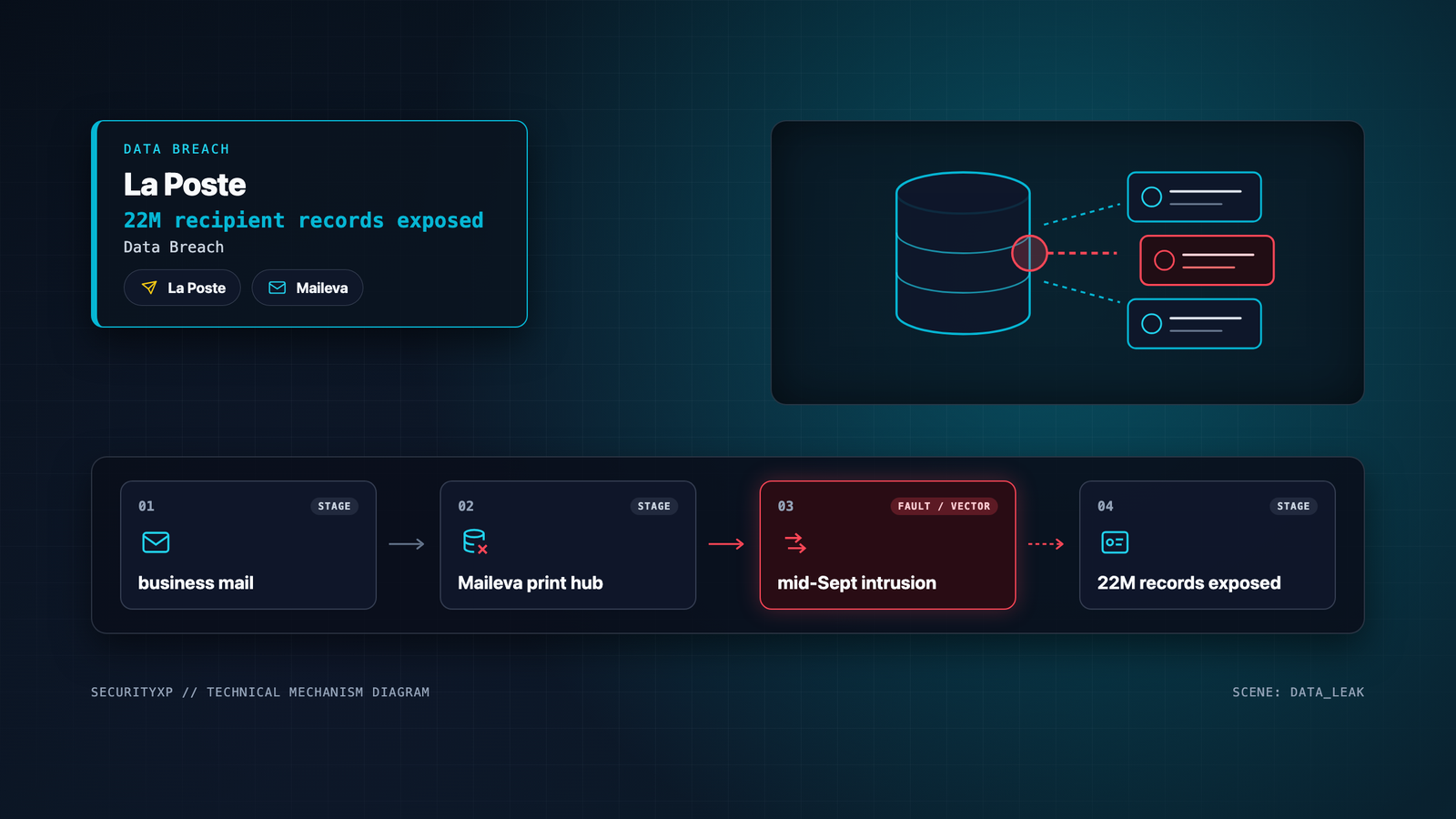
La Poste Subsidiary Maileva Discloses Breach of 22 Million Recipients' Names and Addresses
Maileva, a Docaposte subsidiary of La Poste, confirmed a mid-September intrusion that exposed first names, last names, and postal addresses for 22 million mail recipients.