
Apache Roller Widens Actively Exploited RCE Flaw to Versions 4.0.0–6.1.4
Key Facts
- CVE-2026-129448 carries a CVSS score of 9.8 and is an unauthenticated deserialization flaw in Apache Roller's XML-RPC endpoint that could lead to remote code execution.
- The Apache Software Foundation says the flaw is under active exploitation in the wild.
- The new notice expands the affected range to Apache Roller 4.0.0 through 6.1.4; the same flaw as CVE-2026-82384 (CVSS score: 9.8), patched in September 2026, listed only Apache Roller 6.1.5 as affected.
- The XML-RPC endpoint accepts vendor extension types and deserializes them before authenticating the requester.
- In April, CISA flagged a 13-year-old Apache ActiveMQ vulnerability (CVE-2026-34197) as exploited in attacks and ordered federal agencies to secure their systems within two weeks.
What the Foundation changed
Apache Roller is an open-source, Java-based blogging platform. According to the Apache Software Foundation (ASF), a critical flaw in it is now under active exploitation in the wild.
The flaw is tracked as CVE-2026-129448, with a CVSS score of 9.8. It is a case of unauthenticated deserialization in the XML-RPC endpoint, and the Foundation’s description puts remote code execution within reach of someone who never logs in.
The maintainers’ own sentence is the one to keep:
“Deserialization of Untrusted Data in Apache Roller versions 4.0.0 through 6.1.4 allows an unauthenticated remote attacker to execute arbitrary code.”
Read the range in that sentence. 4.0.0 through 6.1.4 is not one branch and not the current release line. It is a span of releases reaching back to 4.0.0, every one of them named as affected.
The Foundation attached a second fact to the same notice, and it is easy to skim past. The vulnerability is the same as CVE-2026-82384, also scored 9.8, which was patched in September 2026. That earlier advisory listed only Apache Roller 6.1.5 as affected. Two identifiers now describe one defect. The new notice expands the affected range to 4.0.0 through 6.1.4, and the guidance is blunt: administrators should not rely solely on the scope of the earlier advisory.
The order of operations at the endpoint
One sentence in the notice describes a sequence, and the sequence is the vulnerability. The XML-RPC endpoint “accepts vendor extension types and deserializes them before authenticating the requester.”
Put plainly: the endpoint inspects the data it has been handed and rebuilds it into objects, and it does that first. It asks who sent the data second. Deserialization reconstructs objects from bytes, and the code that runs during reconstruction follows the shape of the input rather than the intent of the service. Work done before authentication is work done on behalf of a stranger.
That ordering removes the usual consolation. When a flaw requires credentials, an operator can at least reason about who holds accounts and how they are issued. Here there is nothing to reason about. The attacker needs a reachable endpoint, and the endpoint is the feature that was published on purpose.
Why the range matters more than the score
A 9.8 draws attention, and it should. But a score is a severity judgment, while the version range is the part that decides whether a particular installation is in the fight. Administrators who read the September advisory and scoped their work to 6.1.5 now have a different answer to check against, and the difference reaches back to 4.0.0.
Inventory is where these corrections do their damage. Old installations are usually the ones nobody has opened in a while: a departmental blog, a retired intranet, a service someone stood up for a project that ended. Those are precisely the systems that a narrow version scope leaves outside the ticket queue, and precisely the systems that a widened scope pulls back in.
Two identifiers create a second kind of gap. Records exist for CVE-2026-129448 and CVE-2026-82384 in the NIST National Vulnerability Database and in Microsoft’s advisory set. A scanner, a ticket, or an asset register keyed to one identifier will not necessarily surface the other, so both are worth searching, and both are worth writing into the same change request.
One detail deserves a check rather than an assumption. The September advisory named 6.1.5 as the affected release; the current range stops one release earlier, at 6.1.4. Administrators planning work should read the current advisory directly and confirm which release they are moving to before they schedule the upgrade.
The ActiveMQ comparison
Comparisons are cheap, but one is worth making. In April, the US Cybersecurity and Infrastructure Security Agency (CISA) flagged a 13-year-old Apache ActiveMQ vulnerability (CVE-2026-34197) as exploited in attacks and ordered federal agencies to secure their systems within two weeks.
Set that beside the Roller notice. Old code, active exploitation, a deadline counted in days rather than quarters. The cases are different in their particulars, different project, different defect, different origin, but they invite the same response: find the installations, rank them by who can reach them, and move on the ones that face the open internet.
What the record does not say
What is available here does not name the attackers, the targets, or the mechanics of the attacks that have been observed. It does not describe a campaign, a motive, or a count of exposed installations. It does not name the release that carries the fix.
These gaps are ordinary at this stage of a disclosure, and they are not a reason to wait. The scope of a vulnerability does not shrink because the reporting is thin, and the version range in this notice is already wider than the one published in September.
The practical reading fits in a few lines. Treat 4.0.0 through 6.1.4 as exposed. Treat the September scope as superseded. Search both CVE identifiers. And expect the record to change again, because the one thing this notice has already shown is that the first version of an advisory can be too narrow.
Sources & References
- CVE-2026-129448 — NIST National Vulnerability Database entry. https://nvd.nist.gov/vuln/detail/CVE-2026-129448
- CVE-2026-82384 — NIST National Vulnerability Database entry. https://nvd.nist.gov/vuln/detail/CVE-2026-82384
- CVE-2026-34197 — NIST National Vulnerability Database entry. https://nvd.nist.gov/vuln/detail/CVE-2026-34197
- CVE-2026-129448 — Microsoft advisory. https://msrc.microsoft.com/update-guide/vulnerability/CVE-2026-129448
- CVE-2026-82384 — Microsoft advisory. https://msrc.microsoft.com/update-guide/vulnerability/CVE-2026-82384
- CVE-2026-129448 — National Vulnerability Database
- CVE-2026-82384 — National Vulnerability Database
- CVE-2026-34197 — National Vulnerability Database

SecurityXP delivers cybersecurity news, vulnerability analysis, data breach reports, and threat intelligence.
Security Digest
The most important cybersecurity stories, CVE alerts, and threat intelligence — one concise email. Unsubscribe anytime.
Related Articles
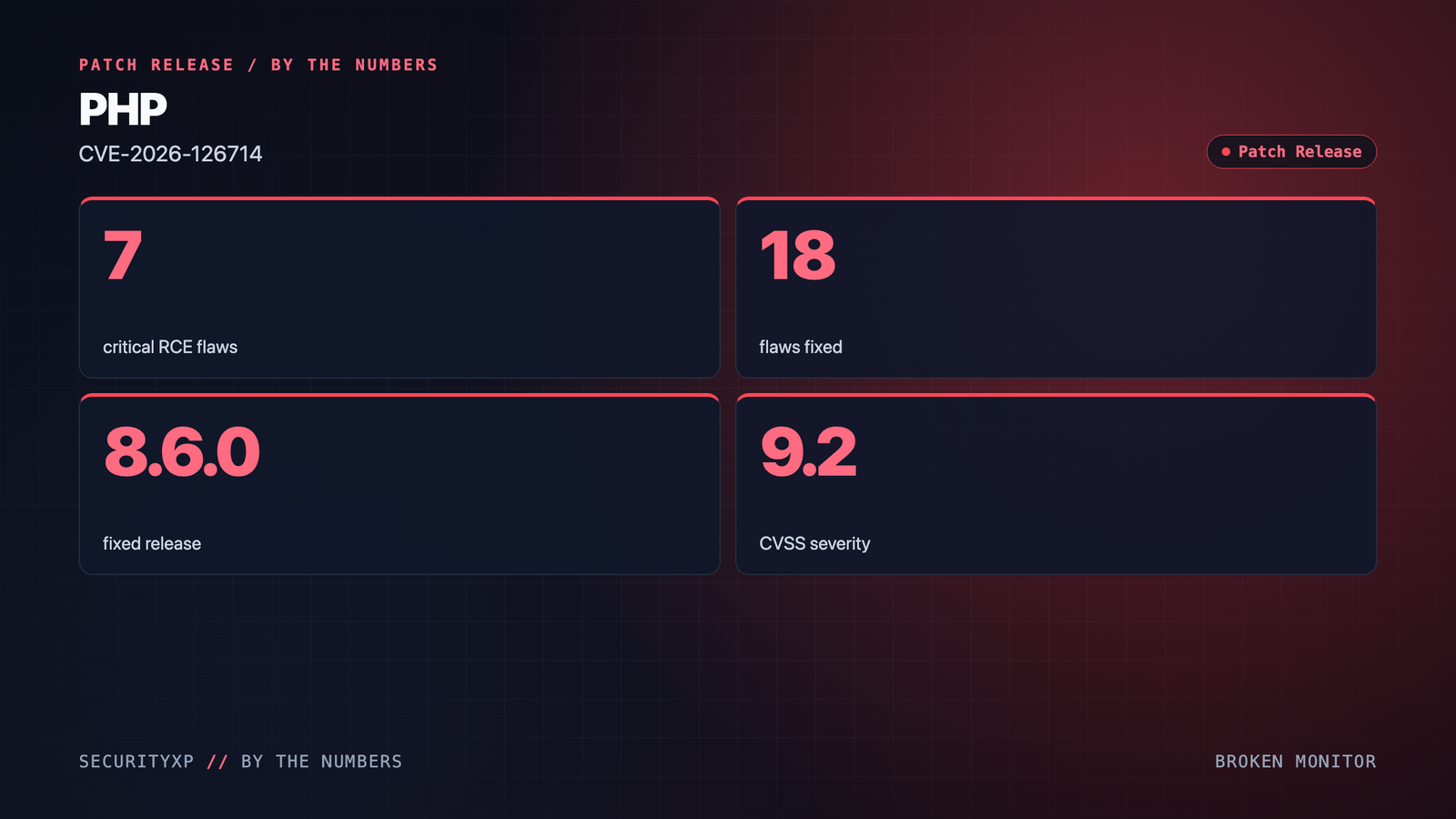
PHP 8.6.0 Carries the Fix for CVE-2026-126714, the 9.2-Rated Flaw October's Releases Left Open
PHP 8.6.0, released today, includes the fix for CVE-2026-126714, a flaw that PHP's maintainers rate 9.2 out of 10 on the CVSS 4.0 scale.
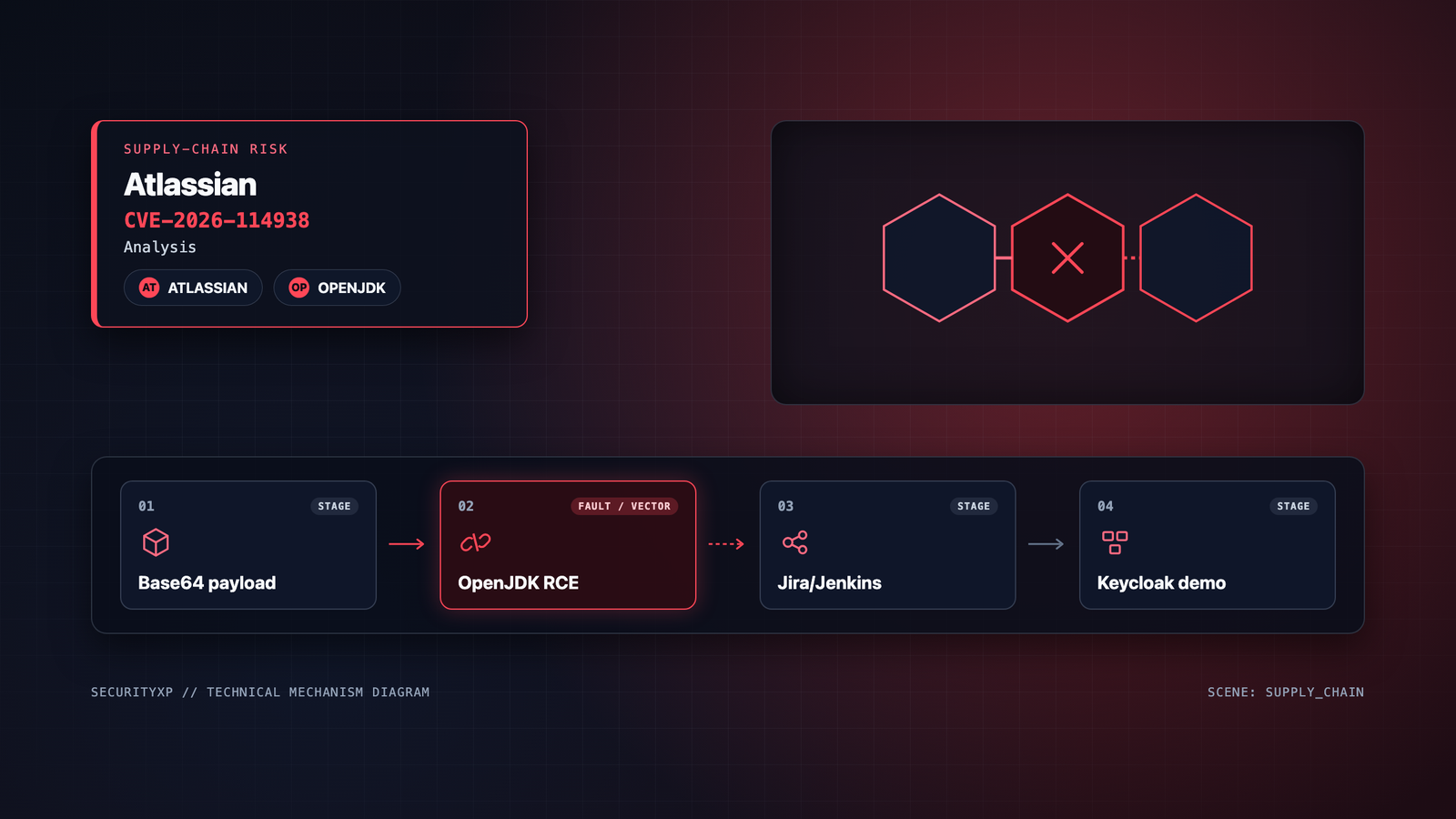
Java4Shell: What the CVE-2026-114938 Demonstrations in Jira, Jenkins and Keycloak Actually Show
JFrog and Semgrep analyses show how CVE-2026-114938 turns an OpenJDK Base64 decoder flaw into RCE — and CISA, Canada and Korea have issued urgent patch advisories.
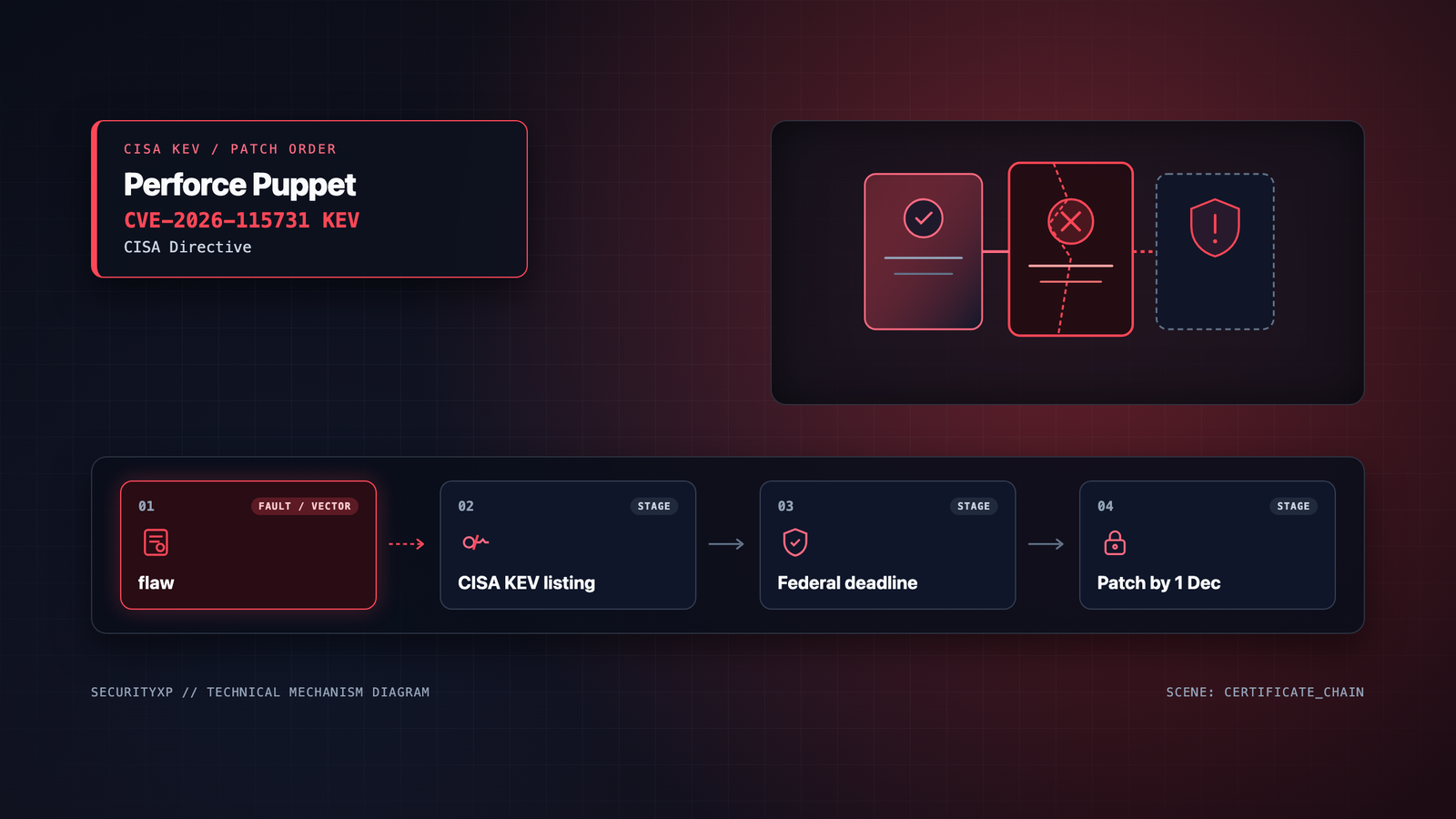
CISA Orders Federal Agencies to Patch Exploited Puppet Enterprise RCE by December 1
On Tuesday, the US Cybersecurity and Infrastructure Security Agency added CVE-2026-115731 to its Known Exploited Vulnerabilities catalog.
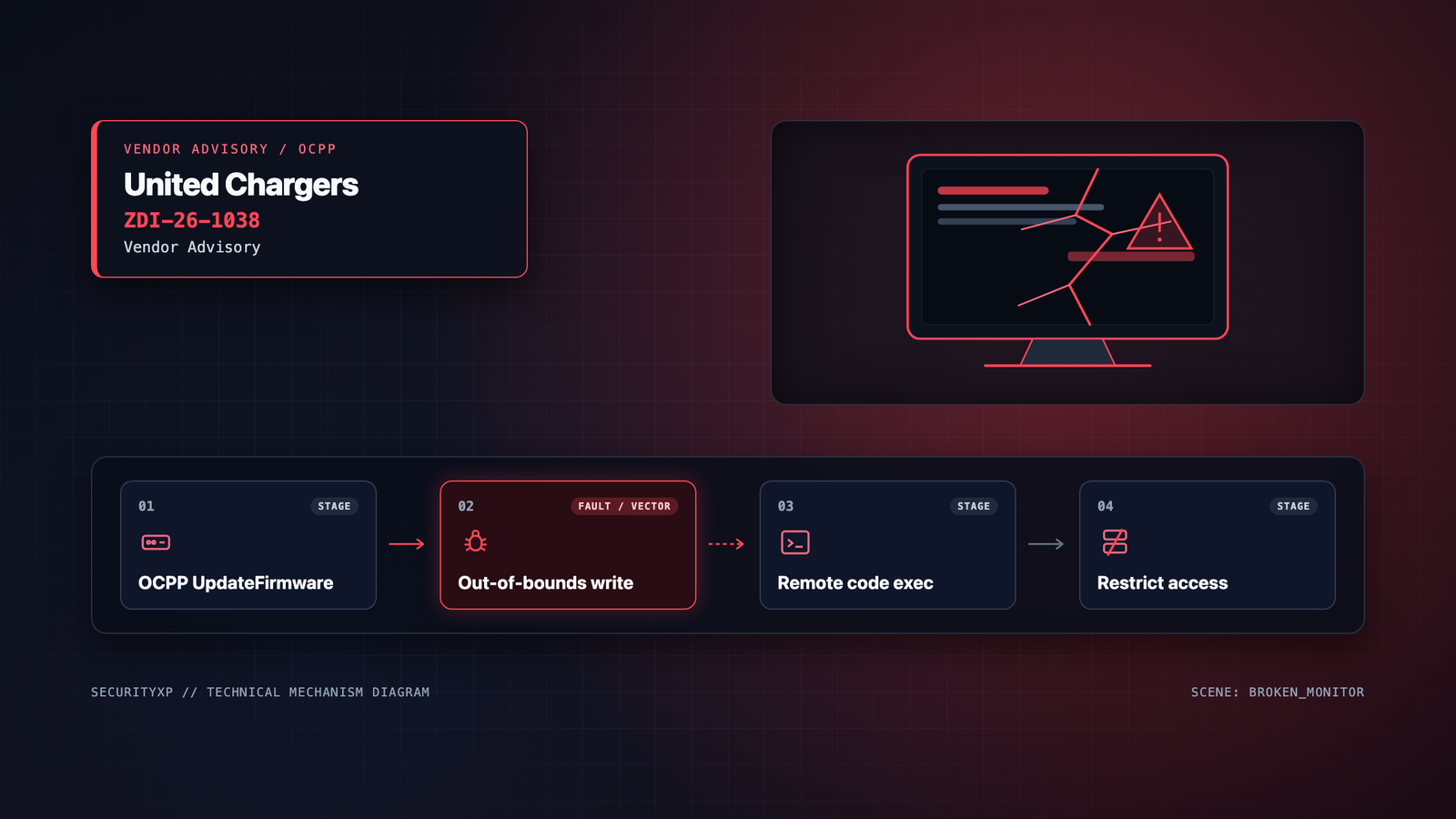
Grizzl-E Smart 40A Charger Flaw Lets a Nearby, Unauthenticated Attacker Run Code
The Zero Day Initiative's advisory on the United Chargers Grizzl-E Smart 40A EV charger is short, and one sentence carries the weight: the vulnerability…