
Researcher Publishes Code-Execution Proofs for PostgreSQL, MySQL, Oracle and ClickHouse
Key Facts
- In PostgreSQL, CVE-2026-116331 allows an account that can create database objects to run code as the operating system user that runs the database.
- MySQL's CVE-2026-101786 sits in the query optimizer and affects Server and Cluster versions 26.7.0 to 26.7.1.
- Oracle patched the Oracle Text bug, CVE-2026-114819, rated 9.9, earlier this week in its November update; the GraphQL flaw CVE-2026-91609 was fixed in the October update.
- ClickHouse's integer-overflow write is reached by setting format_binary_max_string_size to zero, and the researcher reproduced a shell on version 26.7.5.10.
- The open-source fix is in version 26.9 and later, backported to the 26.8, 26.7, 26.6 and 26.3 release lines starting with builds 26.8.3.41, 26.7.7.30, 26.6.5.55 and 26.3.32.8.
Five flaws, four engines, one research release
A researcher has published proof-of-concept exploits for five code-execution flaws in PostgreSQL, MySQL, Oracle and ClickHouse. Four of the five carry CVE identifiers. All five now have vendor fixes. The full chains have not been independently reproduced, and the research reports no sign that any flaw was used in an attack.
Both caveats deserve to stay attached to the story. A proof of concept shows that a path exists. Independent reproduction shows how wide it is, and how much work stands between a demonstration and something that spreads on its own.
What is unusual is the packaging: one release, four engines, five flaws. With one exception, the pattern repeats. A small permission inside the database turns into command execution outside it.
PostgreSQL: creating objects, running commands
In PostgreSQL, CVE-2026-116331 allows an account that can create database objects to run code as the operating system user that runs the database. That is a short sentence describing a long fall.
The permission to create objects is not superuser. That is precisely why it can live in a role definition for years without anyone flagging it. The flaw removes the distance between defining things inside a database and running programs on the host.
The CVE record credits the researcher. PostgreSQL’s security advisory is the primary description of the bug and the versions it touches, and it is the document administrators should check against their inventory.
MySQL: a small account, an optimizer bug
MySQL’s flaw, CVE-2026-101786, sits in the query optimizer and affects Server and Cluster versions 26.7.0 to 26.7.1. The researcher reached code execution on the 26.7.0 image using an account that could create only temporary tables and could not read existing ones. That is narrower access than most hardening checklists bother to remove, and it is the detail worth reading twice: the account did not need to see a single row.
The report also describes a chain that runs from CVE-2026-116331 to CVE-2026-101786, the PostgreSQL flaw first and the MySQL flaw second. Chains like that assume two engines within reach of the same attacker, and they change how patching should be read. The second engine’s version stops being a separate line on a spreadsheet and becomes a condition of the first engine’s safety.
Oracle: a 9.9, and a path with no login
Oracle patched the Oracle Text bug, CVE-2026-114819, rated 9.9, earlier this week in its November update. The GraphQL flaw, CVE-2026-91609, was fixed in the October update. Two flaws, two patch cycles. An organisation that applied October’s update and stopped there has the GraphQL fix and not the Text fix.
The separate Oracle chain reported by the researcher needs no login at all. That is the shortest entry in the set, and the least dependent on what an administrator granted to whom, which makes it the hardest one to design around with permissions alone.
A rating of 9.9 puts the Text flaw near the top of the scale. Numbers like that tend to get patches applied quickly once somebody reads them. Reading them is the step that lags.
ClickHouse: one option, one overflow, one shell
ClickHouse’s flaw is an integer-overflow write in how the engine reads a binary row format. It is reached by a user who sets a single option, format_binary_max_string_size, to zero. The researcher reproduced a shell on version 26.7.5.10.
The open-source fix is in version 26.9 and later, and was backported to the 26.8, 26.7, 26.6 and 26.3 release lines starting with builds 26.8.3.41, 26.7.7.30, 26.6.5.55 and 26.3.32.8. Four backport lines are a map of where the software still runs. Anyone comparing a fleet against the fix should compare build numbers rather than major versions, because 26.7 now covers both a vulnerable build and a patched one.
What the pattern suggests
Read together, the findings make an argument about privilege that has little to do with passwords. In three of the four engines, the way in is a grant that sounds administrative but is not: permission to create an object, to create a temporary table, to set a session option. None of those is superuser. Each was enough.
The defensive translation is unglamorous. Inventory who holds object-creation and temporary-table rights. Watch the session settings that decide how stored data gets parsed. Let the vendor advisories, not the research posts, define which build counts as fixed, and check build numbers rather than version families.
The caveats from the opening still hold: no independent reproduction, no reported sign of use in an attack. They argue for a measured response, not a slow one. A 9.9 rating, a chain that needs no login, and a shell reproduced from a single session option are the kind of items that reward being closed this week rather than next quarter.
Sources & References
- PostgreSQL: CVE-2026-116331: PostgreSQL min/max aggregate type confusion executes arbitrary code. Primary vendor advisory. https://www.postgresql.org/support/security/CVE-2026-116331/
- Oracle Critical Security Patch Update Advisory - November 2026. Primary vendor advisory. https://www.oracle.com/security-alerts/cspunov2026.html
- Oracle Critical Patch Update Advisory - October 2026. Primary vendor advisory. https://www.oracle.com/security-alerts/cpuoct2026.html
- Narrow Grants, Wide Engines: Reaching Native Database Attack Surface from Minimal SQL Roles | depthfirst. Primary research blog. https://depthfirst.com/research/narrow-grants-wide-engines
- CVE-2026-116331 — NIST National Vulnerability Database entry. https://nvd.nist.gov/vuln/detail/CVE-2026-116331
- CVE-2026-116331 — National Vulnerability Database
- CVE-2026-101786 — National Vulnerability Database
- CVE-2026-114819 — National Vulnerability Database
- CVE-2026-91609 — National Vulnerability Database

SecurityXP delivers cybersecurity news, vulnerability analysis, data breach reports, and threat intelligence.
Security Digest
The most important cybersecurity stories, CVE alerts, and threat intelligence — one concise email. Unsubscribe anytime.
Related Articles
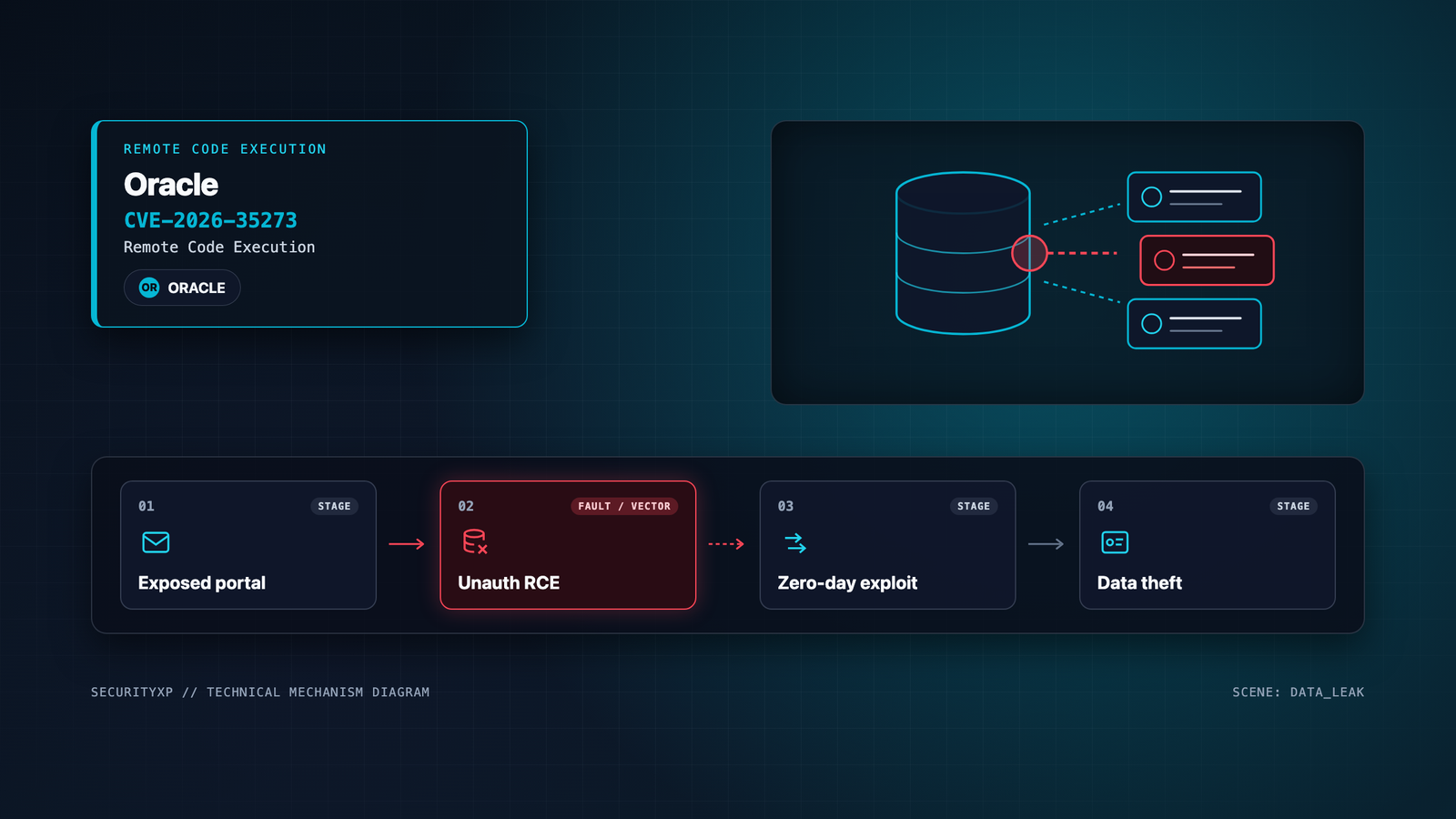
Oracle mitigates PeopleSoft zero-day exploited in data theft attacks
Oracle has issued mitigations for a critical PeopleSoft zero-day (CVE-2026-35273) enabling unauthenticated RCE, actively exploited in ShinyHunters data theft.
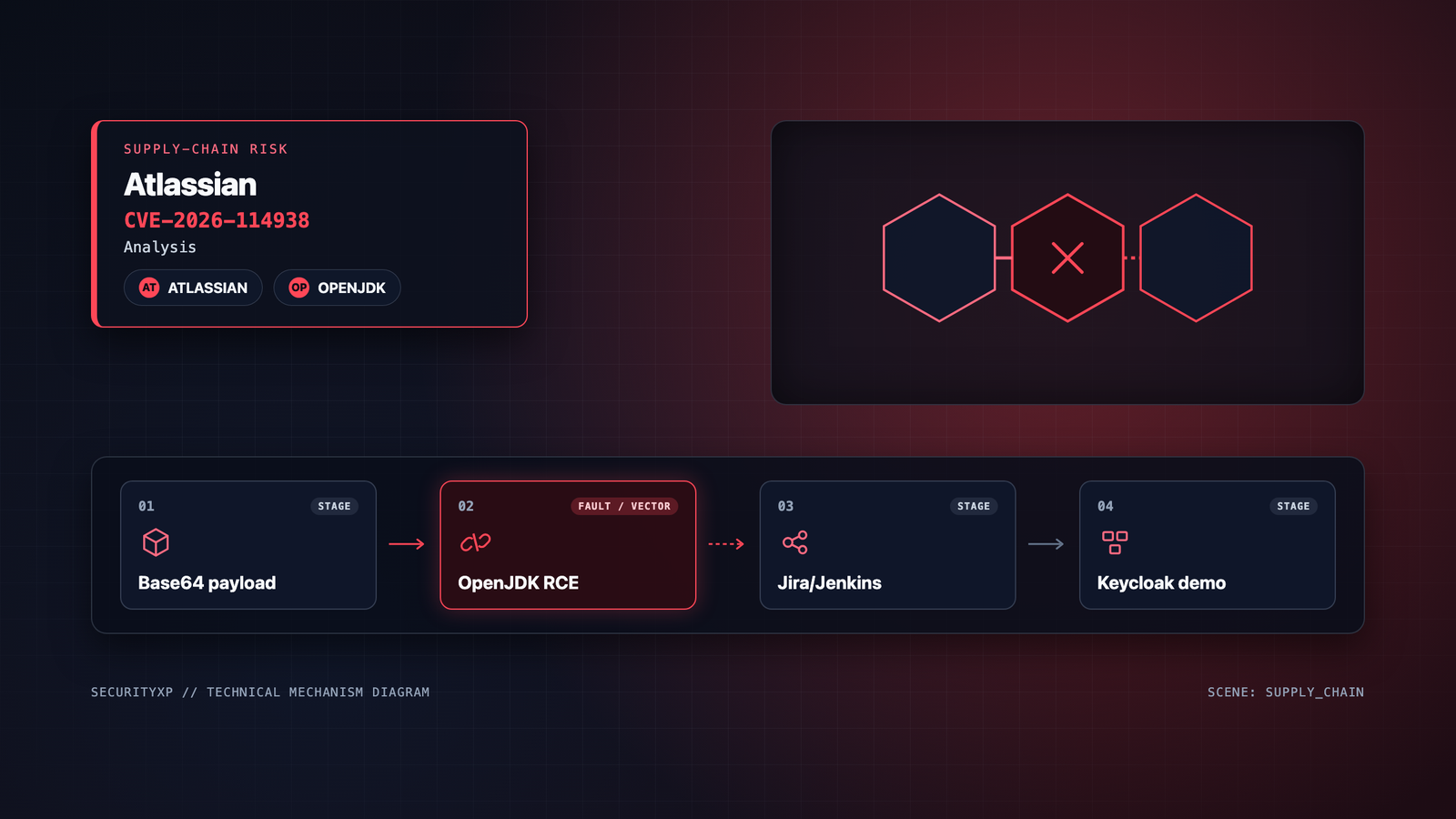
Java4Shell: What the CVE-2026-114938 Demonstrations in Jira, Jenkins and Keycloak Actually Show
JFrog and Semgrep analyses show how CVE-2026-114938 turns an OpenJDK Base64 decoder flaw into RCE — and CISA, Canada and Korea have issued urgent patch advisories.
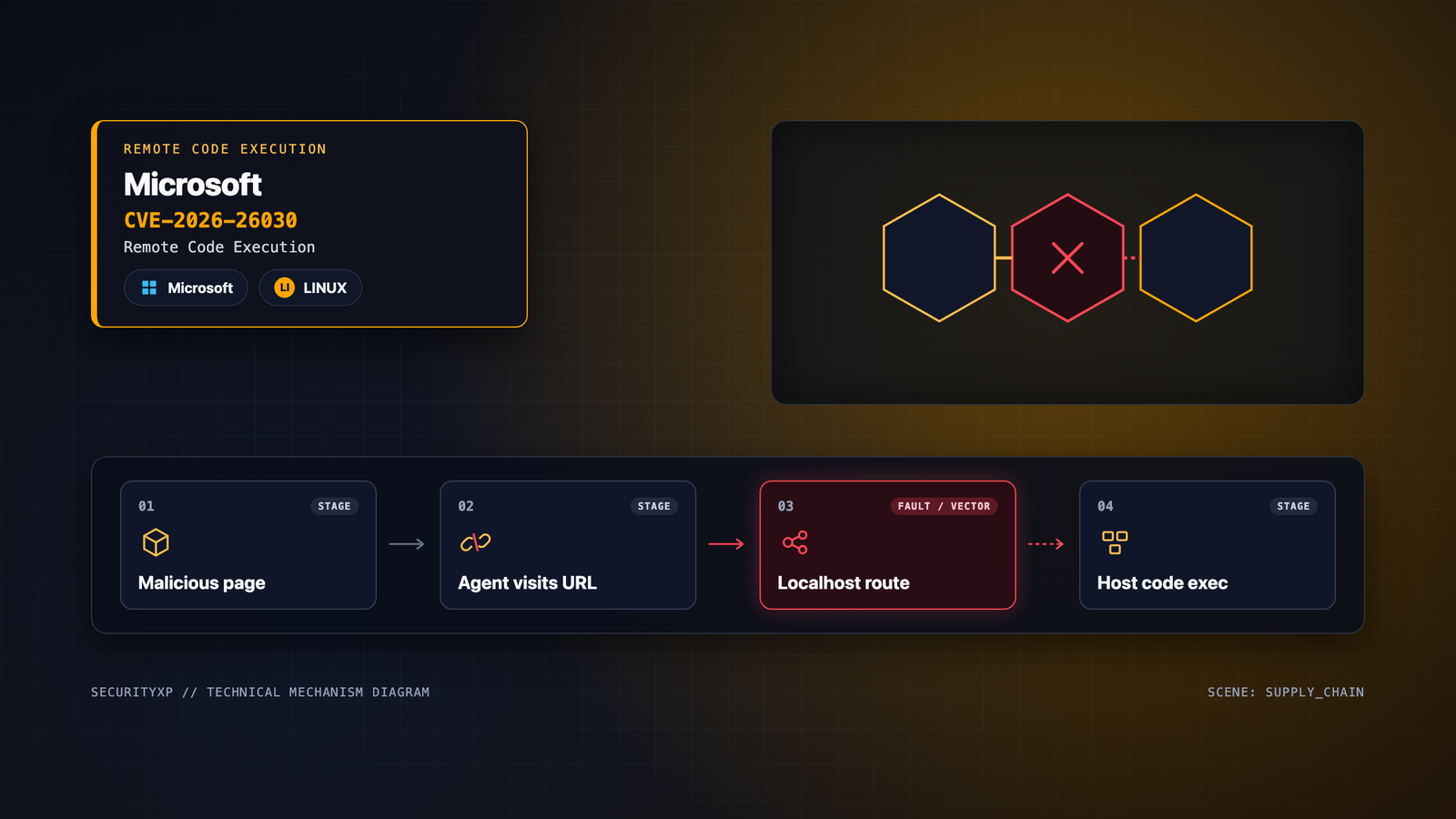
AutoJack Attack Lets One Web Page Hijack AI Agent for Host Code Execution
Microsoft made a similar localhost argument in its Semantic Kernel RCE research, tracked as CVE-2026-26030 and CVE-2026-25592. The issue is tracked as...
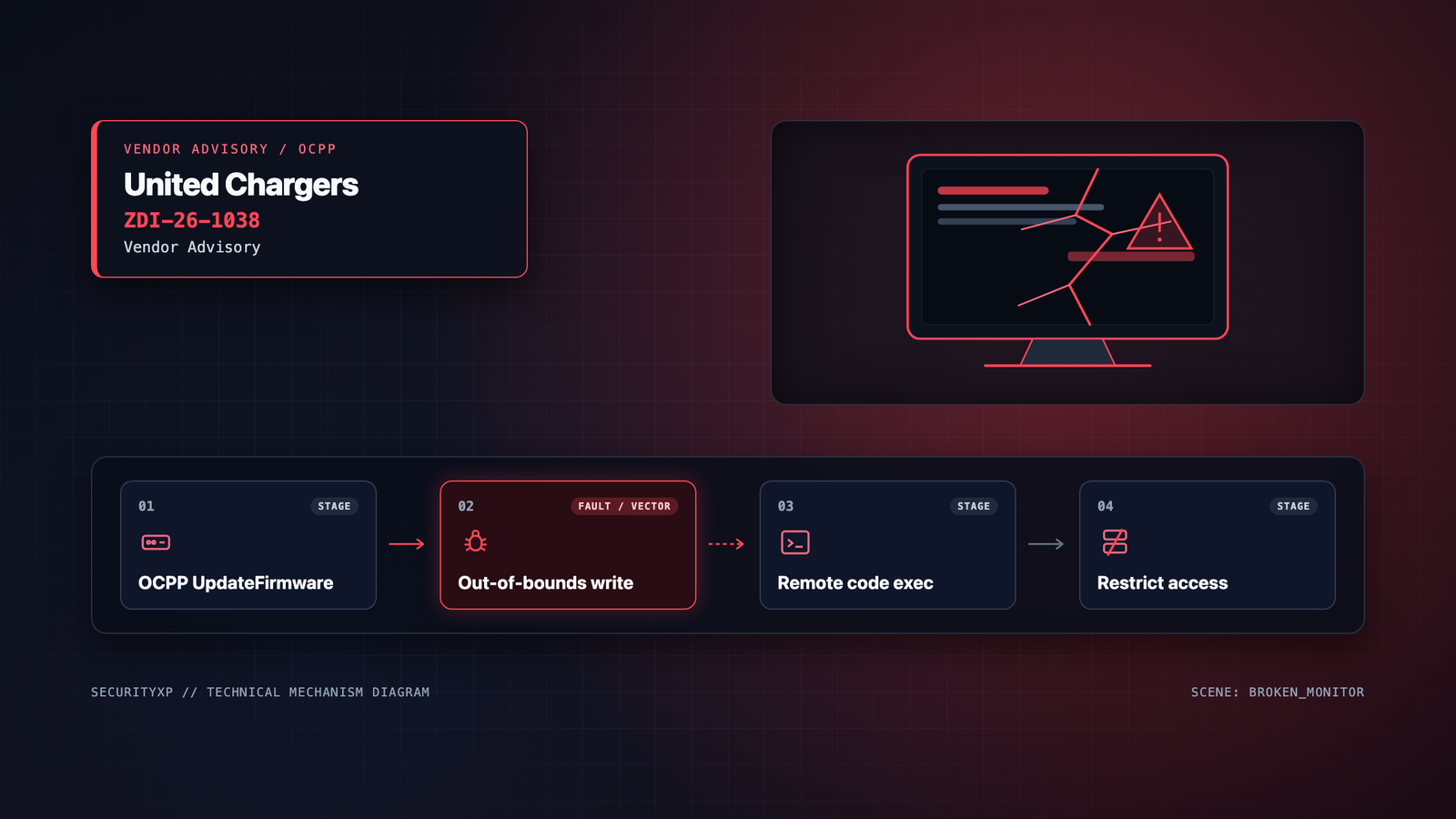
Grizzl-E Smart 40A Charger Flaw Lets a Nearby, Unauthenticated Attacker Run Code
The Zero Day Initiative's advisory on the United Chargers Grizzl-E Smart 40A EV charger is short, and one sentence carries the weight: the vulnerability…