
Grizzl-E Smart 40A Charger Flaw Lets a Nearby, Unauthenticated Attacker Run Code
Key Facts
- The vulnerability allows network-adjacent attackers to execute arbitrary code on affected installations of United Chargers Grizzl-E Smart 40A EV chargers.
- Authentication is not required to exploit the vulnerability, and the flaw exists in the handling of OCPP UpdateFirmware requests.
- ZDI reported the issue to the vendor on 2026-11-06 and coordinated public release of the advisory on 2026-11-19; the advisory was updated the same day.
- The only salient mitigation named in the advisory is to restrict interaction with the product.
- Credit goes to Autocrypt: Hoyong Jin, Jaewoo Jeong, Chanhyeok Jung, Minsoo Son and Kisang Choi.
The Zero Day Initiative’s advisory on the United Chargers Grizzl-E Smart 40A EV charger is short, and one sentence carries the weight: the vulnerability allows network-adjacent attackers to execute arbitrary code on affected installations. The advisory adds that authentication is not required. The flaw is an out-of-bounds write in the handling of OCPP UpdateFirmware requests.
What the advisory records
The full title reads “(0Day) (Pwn2Own) United Chargers Grizzl-E Smart 40A OCPP UpdateFirmware Out-Of-Bounds Write Remote Code Execution Vulnerability.” The (0Day) and (Pwn2Own) labels are part of that title as published. The advisory records a coordinated public release and an update on the same day. The supplied material indexes it as ZDI-26-1038.
Three details do most of the descriptive work. Impact: arbitrary code execution on affected installations. Position: network-adjacent. Entry point: a firmware update request. The supplied material gives no CVE identifier and no firmware version range, so the advisory’s own wording is the whole of what a reader has to work from.
The title uses “Remote Code Execution” for the outcome while the impact statement places the attacker within network-adjacent range. The two phrases describe different things: what the attacker gets, and where the attacker must stand to get it.
Where the flaw sits
An out-of-bounds write is a memory-safety error: the code writes data outside the buffer it set out to fill. What follows depends on what shares memory with that buffer, which is why the class is treated seriously even when the trigger looks narrow. The advisory does not describe the size of the overwrite, the field of the request that carries it, or whether a single message is enough. Those are gaps in the text rather than conclusions about the device, and they leave the practical question open for anyone reading the advisory cold.
A write by itself is not code execution. Turning one into control of a device normally requires the written data to land somewhere that is later used as an address or a pointer, and that step is where the difficulty of exploitation lives. The title asserts remote code execution; the advisory text supplied here does not walk through the chain that reaches it.
Naming UpdateFirmware handling narrows things usefully. Firmware update logic exists to take in instructions and data and act on them; that is the point of the feature, and it is why the path draws attention. Code that processes an update request runs on input the device did not write, before any decision about whether to apply the update. The advisory stops at naming that path. It does not say what the handling does with a request before the write happens, and it offers no code-level workaround.
Two qualifiers worth reading closely
“Network-adjacent” describes an attacker holding a position on the same local network, or one hop from it, rather than someone routing in from the open internet. The advisory chooses that word over “remote,” and the choice moves the threat model toward whoever shares a network segment with the charger.
“Authentication is not required” is the second qualifier, and it removes the usual gate. No credential, key or session stands between the attacker and the vulnerable path. Put the two together and the picture is a nearby party, with no account and no secret, reaching update handling that writes past the end of a buffer.
Neither qualifier says anything about how many devices are exposed, and the supplied material makes no estimate. What they do is set the shape of the risk: local reach, no credentials, code execution.
Timeline and credit
| Date | Event | |, , |, , -| | 2026-11-06 | Vulnerability reported to vendor | | 2026-11-19 | Coordinated public release of advisory | | 2026-11-19 | Advisory updated |
Reporting to public release took thirteen days, and the advisory was updated on the day it went public. Credit for the find goes to Autocrypt: Hoyong Jin, Jaewoo Jeong, Chanhyeok Jung, Minsoo Son and Kisang Choi.
The one mitigation offered
The advisory gives a single mitigation, quoted in full: “Given the nature of the vulnerability, the only salient mitigation strategy is to restrict interaction with the product.” That is blunt, and it is meant literally. It points to no setting, no signature and no fixed version. It says keep the product away from parties that should not be talking to it.
In plain terms, restricting interaction means controlling who can reach the charger and which messages it will accept. For an operator, that frames the problem as one of exposure rather than detection. The advisory’s own position is that there is no other salient control to apply, and the supplied text describes no vendor fix.
The record is complete on the points these advisories normally fix in place: product, impact, trigger, credit, dates. What it withholds is the engineering detail that would let a reader rebuild the bug. For a charger whose update handling sits on a local network, the advice is also the bottom line: restrict who can interact with it, and treat the update path as the part that matters.
Sources & References
- Published Advisories - TrendAI™ Zero Day Initiative™ (ZDI). Primary vendor advisory. http://www.zerodayinitiative.com/advisories/published/
- Source referenced in coverage http://www.zerodayinitiative.com/advisories/ZDI-26-1038/

SecurityXP delivers cybersecurity news, vulnerability analysis, data breach reports, and threat intelligence.
Security Digest
The most important cybersecurity stories, CVE alerts, and threat intelligence — one concise email. Unsubscribe anytime.
Related Articles
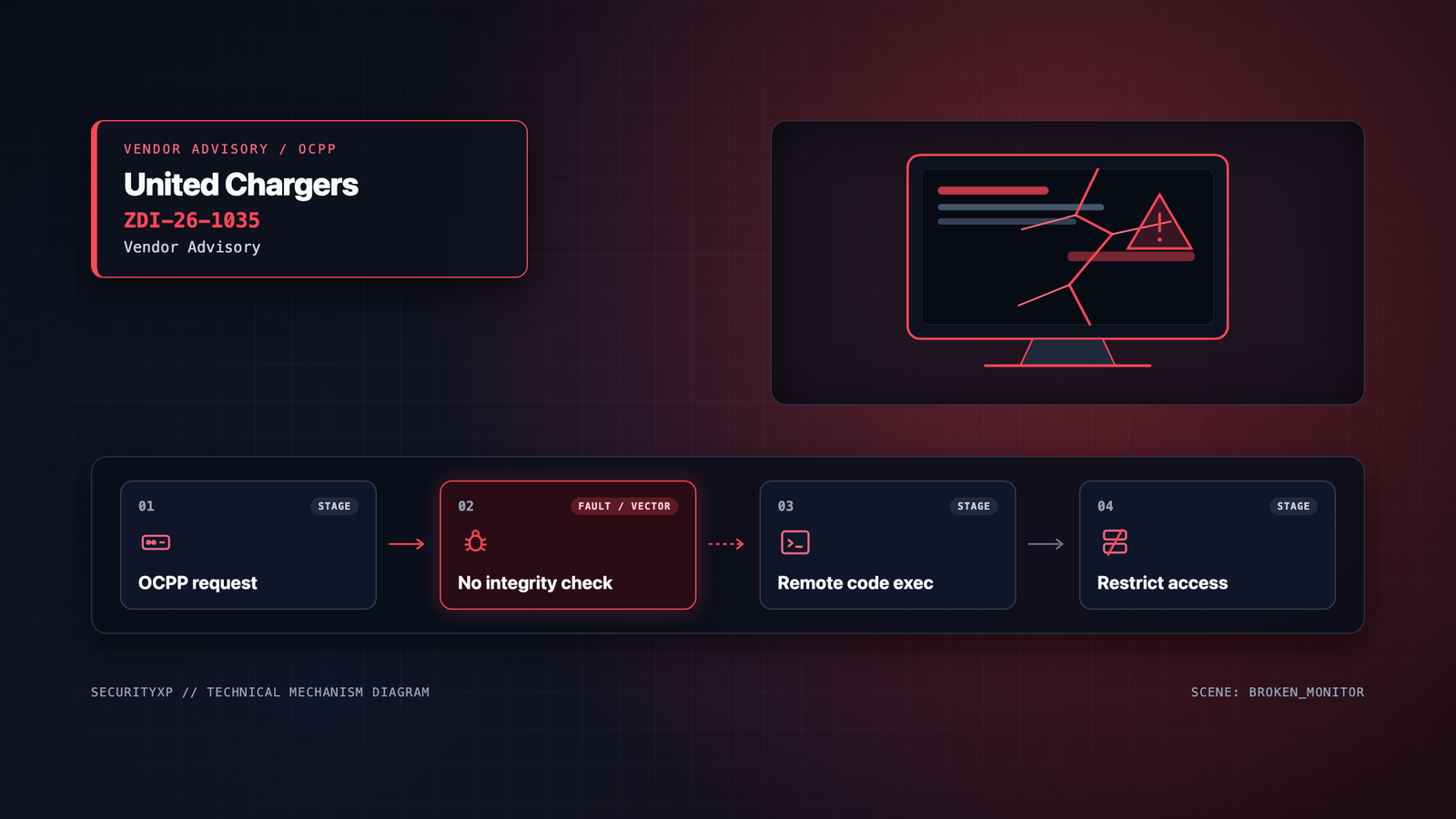
Grizzl-E Smart Charger Flaw Lets Network-Adjacent Attackers Run Code With No Login
The Zero Day Initiative has published advisory ZDI-26-1035, covering a vulnerability in the United Chargers Grizzl-E Smart 40A, a networked…
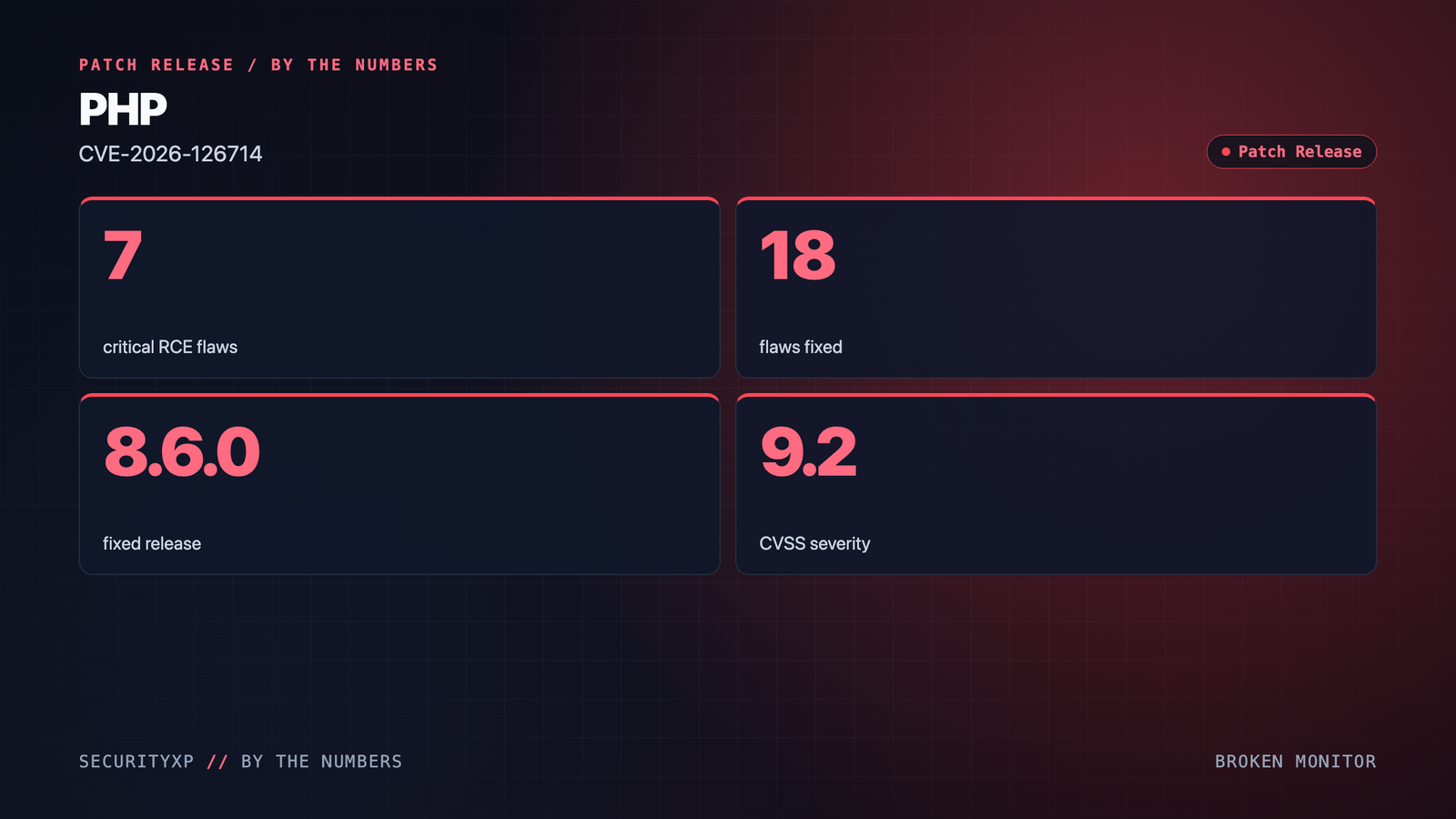
PHP 8.6.0 Carries the Fix for CVE-2026-126714, the 9.2-Rated Flaw October's Releases Left Open
PHP 8.6.0, released today, includes the fix for CVE-2026-126714, a flaw that PHP's maintainers rate 9.2 out of 10 on the CVSS 4.0 scale.
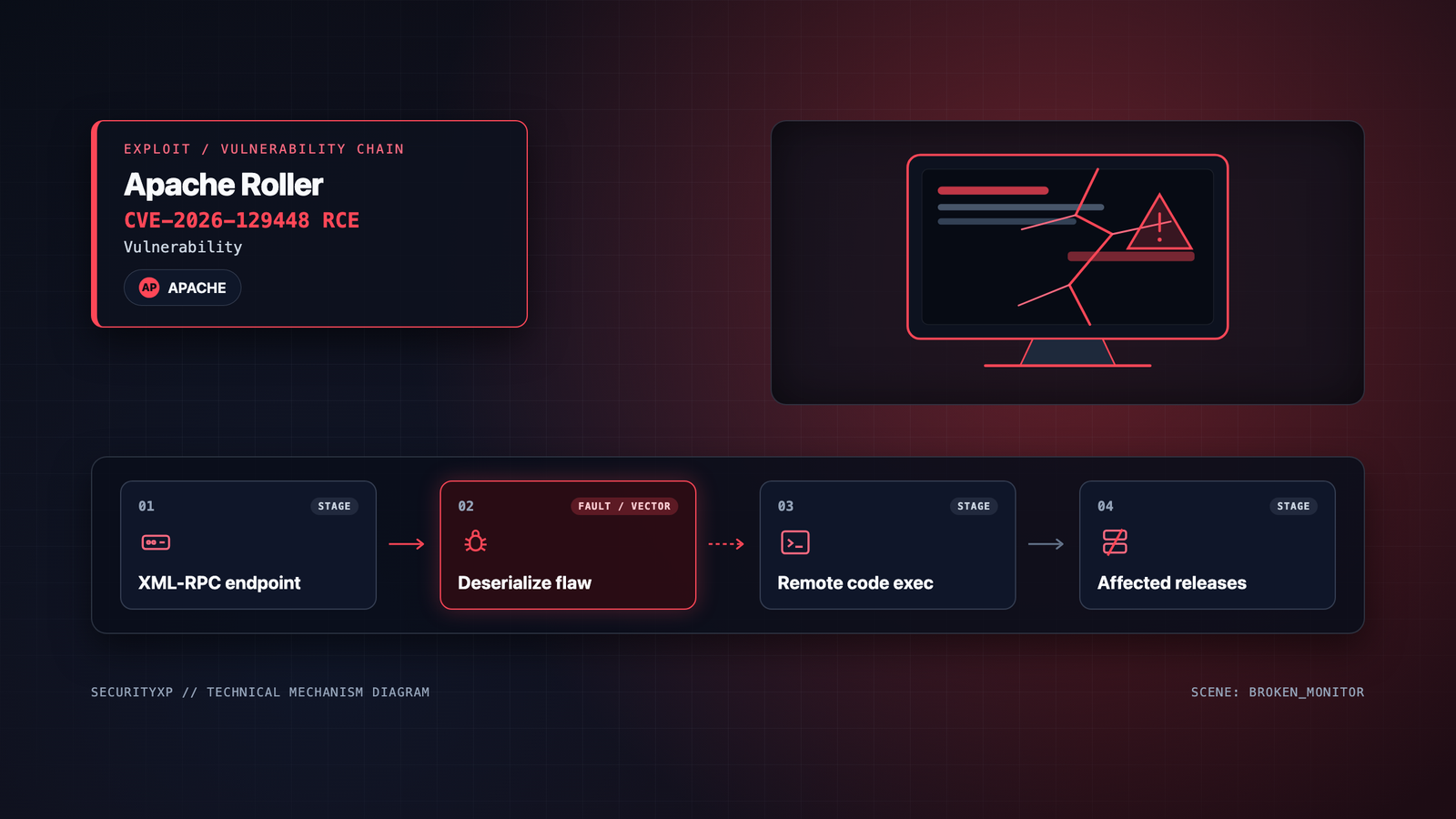
Apache Roller Widens Actively Exploited RCE Flaw to Versions 4.0.0–6.1.4
Apache Roller is an open-source, Java-based blogging platform.
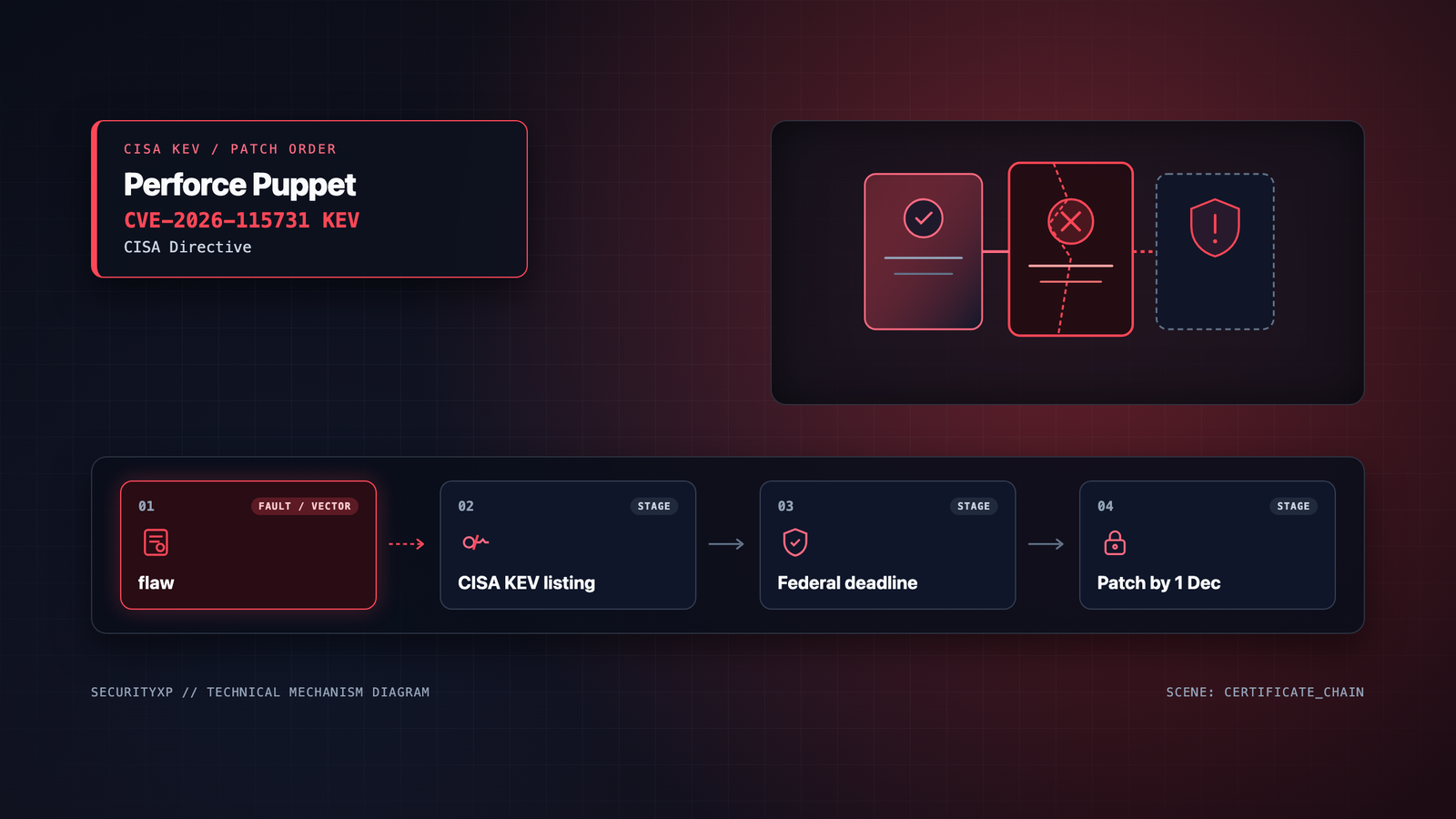
CISA Orders Federal Agencies to Patch Exploited Puppet Enterprise RCE by December 1
On Tuesday, the US Cybersecurity and Infrastructure Security Agency added CVE-2026-115731 to its Known Exploited Vulnerabilities catalog.