
Grizzl-E Smart Charger Flaw Lets Network-Adjacent Attackers Run Code With No Login
Key Facts
- Authentication is not required to exploit this vulnerability.
- ZDI states that since 04/14/26 it made multiple attempts to contact United Chargers to establish a vendor disclosure channel.
- The vulnerability was reported to the vendor on 2026-11-06; the coordinated public release was 2026-11-18, and the advisory was updated the same day.
- The find is credited to Taejin Kim (@_tae3_), Junsu Yeo (@junactually), Sunmin Park (@sunminpark4503), Sungmin Son (@_ssm98), and Hoseok Lee of SKShieldus (@EQSTLab).
What ZDI published
The Zero Day Initiative has published advisory ZDI-26-1035, covering a vulnerability in the United Chargers Grizzl-E Smart 40A, a networked electric-vehicle charger. ZDI files the flaw under a download of code without integrity check, and the consequence it records is remote code execution. In the advisory’s summary, the vulnerability allows network-adjacent attackers to execute arbitrary code on affected installations of the charger. The listing carries both the 0Day and Pwn2Own labels that ZDI attaches to entries in its published advisories.
That is the whole of the technical description made public. What follows is an attempt to read it carefully rather than to add to it.
Two conditions, stacked
ZDI’s designation of network-adjacent describes an attacker positioned on a network from which the device is reachable, rather than one working across the open internet. It is a statement about proximity, not about severity.
The second condition is the one that matters most. Authentication is not required to exploit this vulnerability. No credential, no session, no account. The attacker does not have to be anyone in particular; the attacker has to be somewhere in particular.
Put the two together and the requirement for exploitation reduces to reachability. That is a low bar to describe and a difficult one to design against, because it means the security of the device depends less on what it knows about a caller and more on who is allowed to call at all.
The failure the label names
Download of code without integrity check is a category, not a narrative. As a category, it describes a device that accepts code from somewhere, whether an update, a package, or a file it will later execute, without verifying that what arrived is what was meant to arrive. Verification is the step that would catch substitution. Where that step is missing, whoever can influence the download is, in effect, choosing what runs.
The advisory does not say which code path is involved, and the public summary does not name one. It is worth being explicit about the rest of what the published material leaves out. The advisory does not publish a severity score, a list of affected firmware versions, or a fixed release.
A disclosure that ran long, then short
ZDI notes that since 04/14/26 it made multiple attempts to contact United Chargers to establish a vendor disclosure channel. The vulnerability was reported to the vendor on 2026-11-06. The advisory records a coordinated public release and an update on the same day.
Read as a calendar, the record has two very different rates. Roughly seven months separate the first contact attempts from the formal report. Twelve days separate the report from publication. The end of the process was fast; the beginning was not. Nothing in the published timeline explains why, and it would be a mistake to fill that gap in.
The find is credited to Taejin Kim (@tae3), Junsu Yeo (@junactually), Sunmin Park (@sunminpark4503), Sungmin Son (@_ssm98), and Hoseok Lee of SKShieldus (@EQSTLab).
A boundary instead of a patch
The advisory’s mitigation line is a single sentence: given the nature of the vulnerability, the only salient mitigation strategy is to restrict interaction with the product.
That sentence is doing more work than it first appears to. It does not point to a firmware update, a configuration change, or a workaround inside the device. It points outward, at the set of things that can talk to the charger. Where a vendor fix is not on offer, the boundary becomes the control, and the boundary is drawn by whoever runs the network.
For the operators of these units, the questions that follow are unglamorous. Which network is the charger joined to. What else lives on that network. Who can reach the device, from where, and with what. Restricting interaction is a network and inventory problem before it is anything a security product can solve.
What remains open
Three things are unresolved in the public record as it stands: whether a fix exists, which firmware versions are affected, and what position United Chargers takes. Each of those matters to anyone deciding how urgently to act, and none of them can be answered from the advisory text summarized here.
Until they are answered, the recommendation is the whole of the guidance. Reduce the number of things that can reach the product, and treat the network around it as part of the attack surface rather than as background.
Sources & References
- Published Advisories - TrendAI™ Zero Day Initiative™ (ZDI). Primary vendor advisory. http://www.zerodayinitiative.com/advisories/published/
- Source referenced in coverage http://www.zerodayinitiative.com/advisories/ZDI-26-1035/

SecurityXP delivers cybersecurity news, vulnerability analysis, data breach reports, and threat intelligence.
Security Digest
The most important cybersecurity stories, CVE alerts, and threat intelligence — one concise email. Unsubscribe anytime.
Related Articles
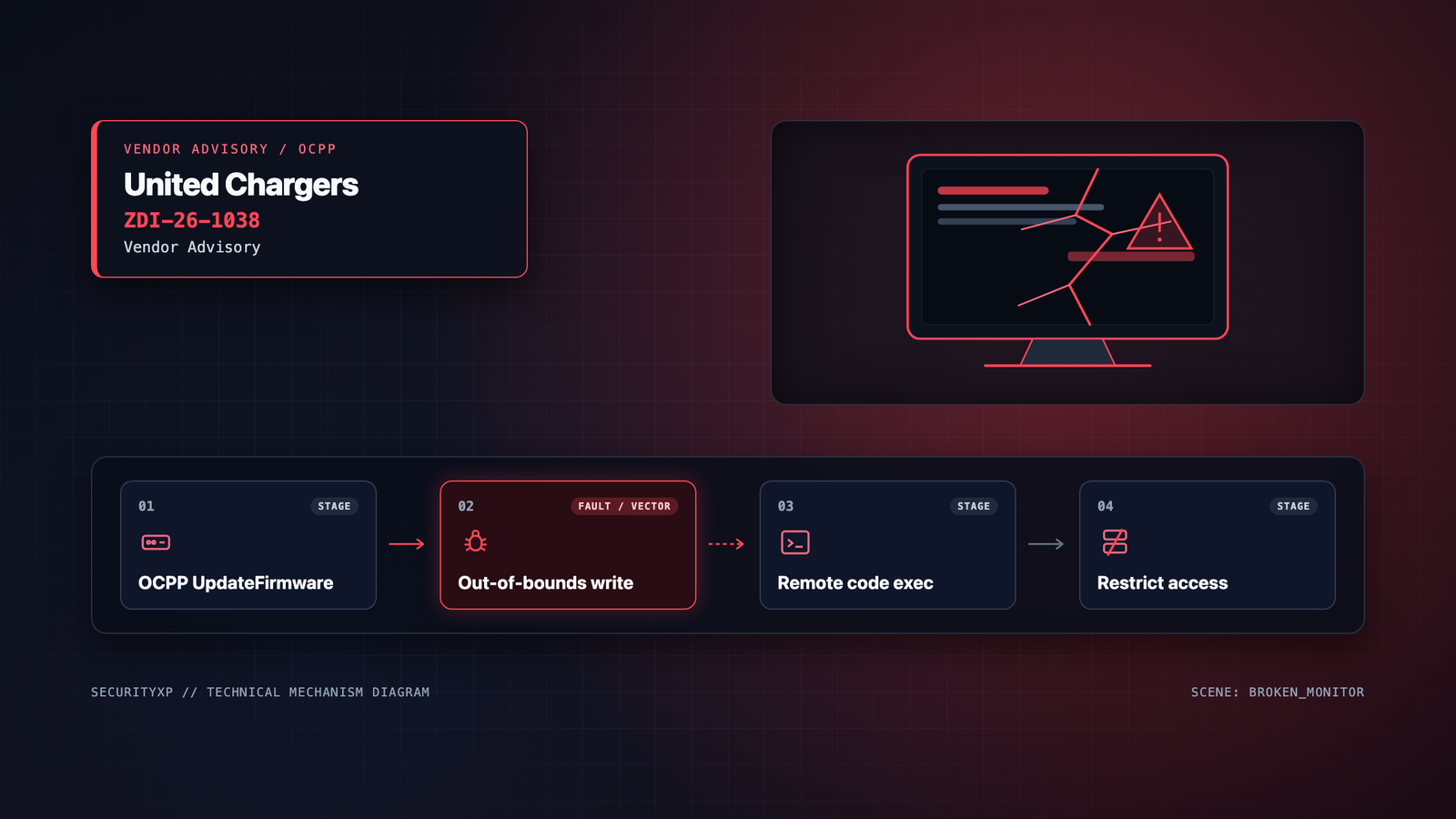
Grizzl-E Smart 40A Charger Flaw Lets a Nearby, Unauthenticated Attacker Run Code
The Zero Day Initiative's advisory on the United Chargers Grizzl-E Smart 40A EV charger is short, and one sentence carries the weight: the vulnerability…
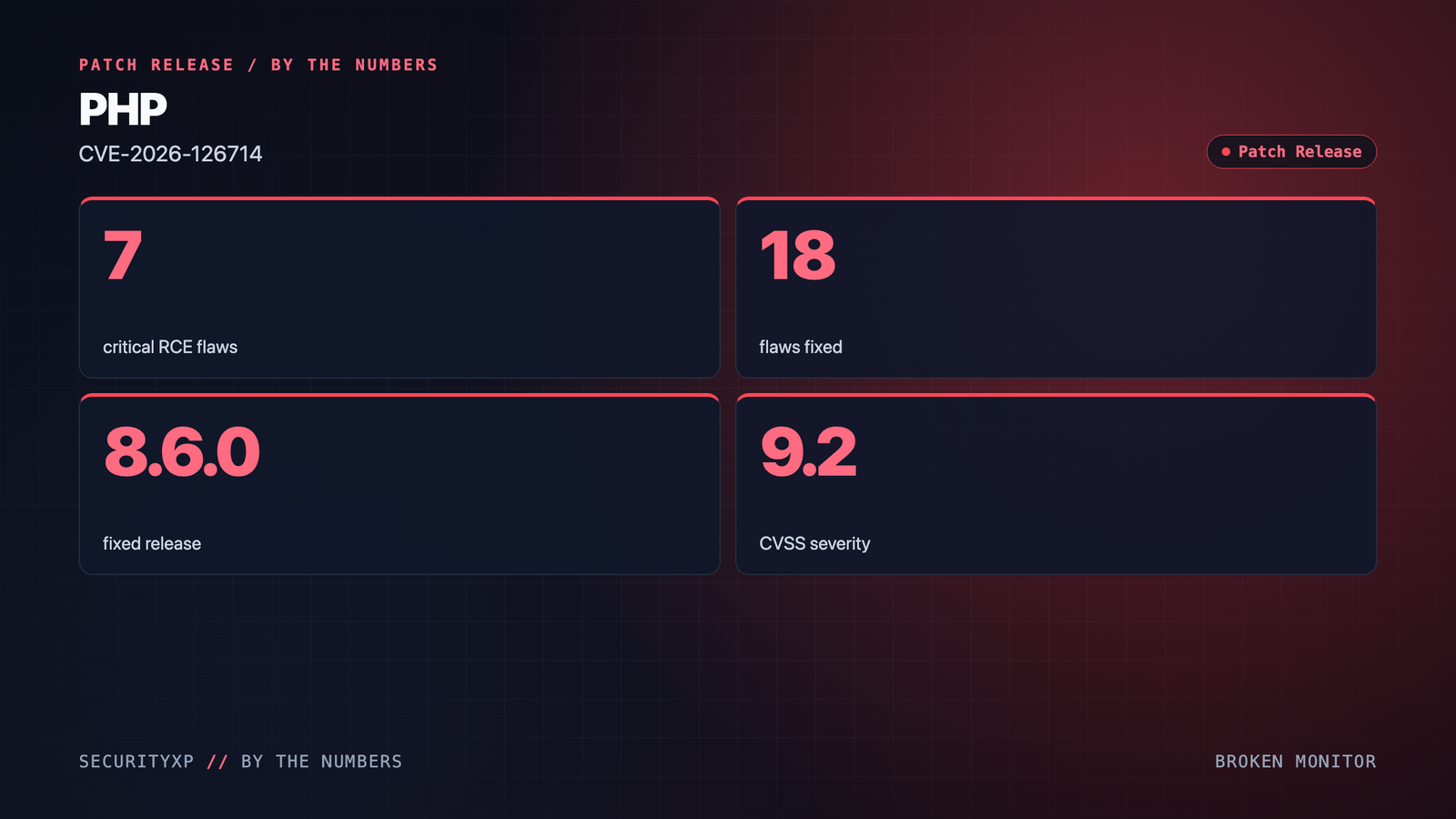
PHP 8.6.0 Carries the Fix for CVE-2026-126714, the 9.2-Rated Flaw October's Releases Left Open
PHP 8.6.0, released today, includes the fix for CVE-2026-126714, a flaw that PHP's maintainers rate 9.2 out of 10 on the CVSS 4.0 scale.
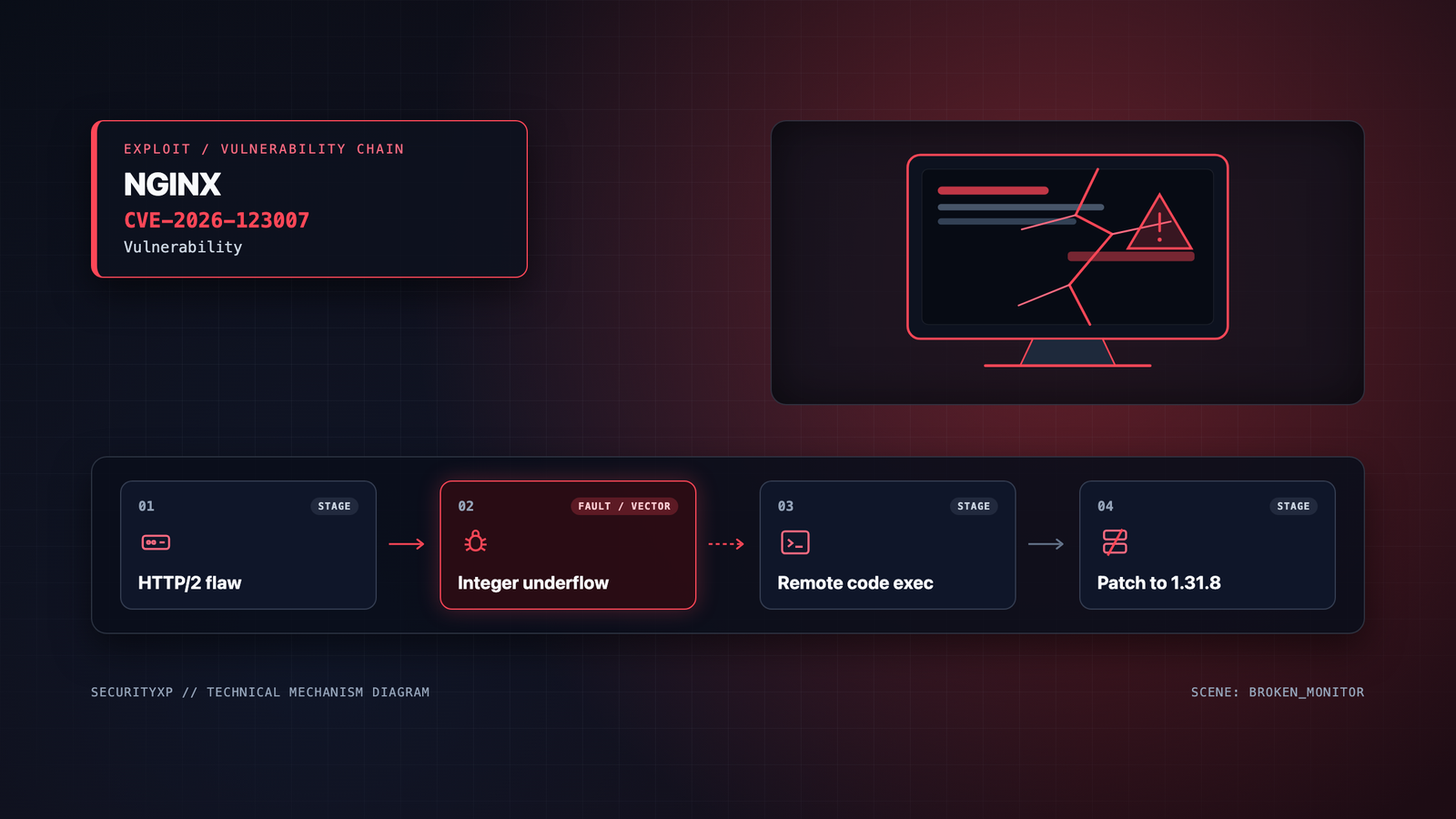
NGINX2Root: Five Critical NGINX RCE Flaws and the Limits of the Public Exploit Record
On November 18, F5 released an out-of-band security update covering 10 vulnerabilities in NGINX Plus and NGINX Open Source.
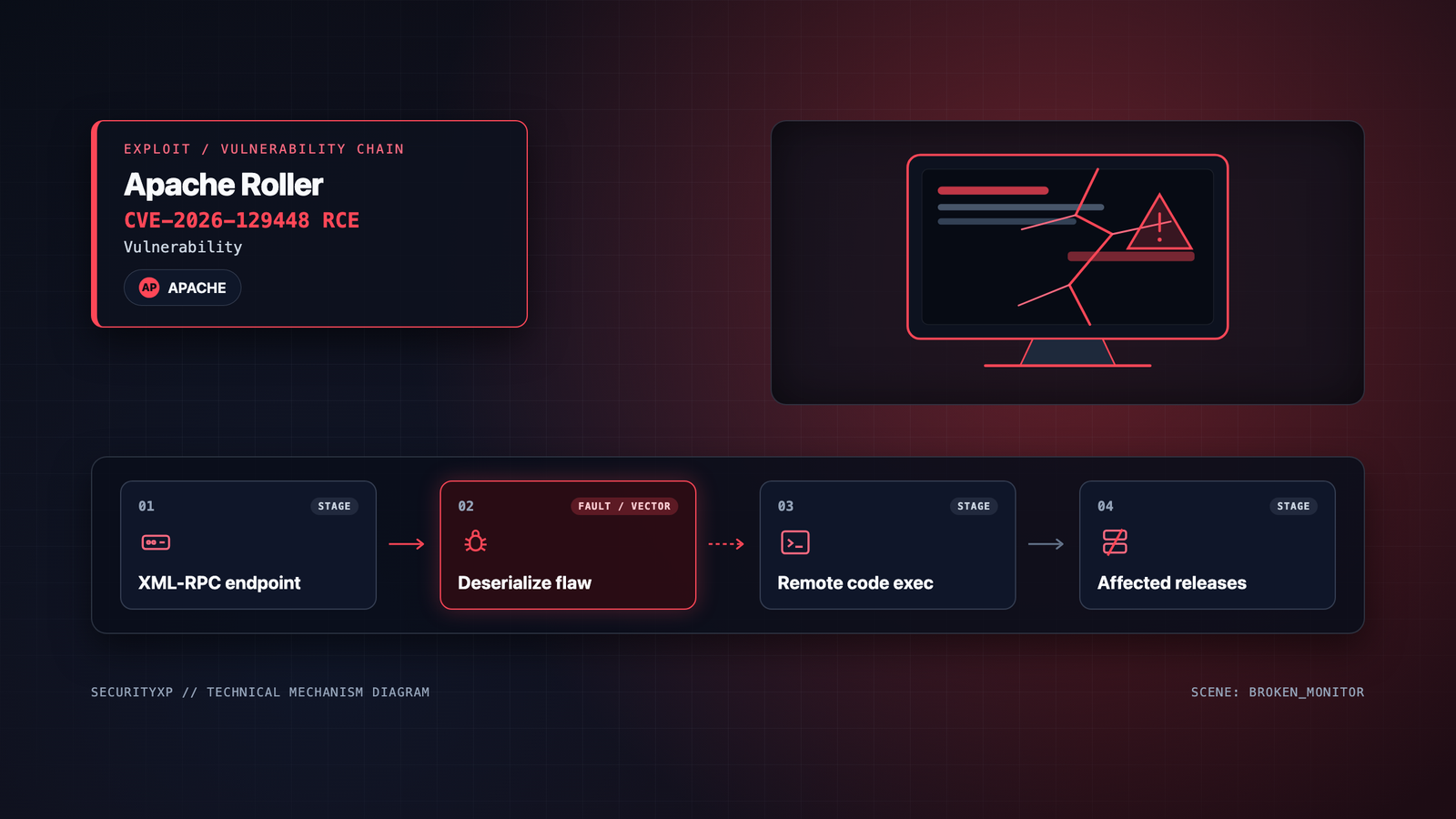
Apache Roller Widens Actively Exploited RCE Flaw to Versions 4.0.0–6.1.4
Apache Roller is an open-source, Java-based blogging platform.