
NGINX2Root: Five Critical NGINX RCE Flaws and the Limits of the Public Exploit Record
Key Facts
- F5 released an out-of-band security update on November 18 covering 10 vulnerabilities in NGINX Plus and NGINX Open Source.
- CVE-2026-123007 has been in the code since HTTP/2 support arrived in 1.9.5 in 2015; the earliest affected version varies by CVE, from 0.5.x for the mail proxy to 1.9.5 for CVE-2026-123007.
- The repository includes a minimal crash-level trigger script and a full unauthenticated remote code execution exploit, demonstrated against NGINX 1.31.8 in a Docker container with HTTP/2 over TLS.
- Wiz confirmed code execution against an NGINX instance serving only static content, with no application logic or additional modules involved.
- No source reviewed reports exploitation in the wild, and the CVEs are not on CISA's Known Exploited Vulnerabilities (KEV) catalog as of November 18.
On November 18, F5 released an out-of-band security update covering 10 vulnerabilities in NGINX Plus and NGINX Open Source. Five of the flaws are critical remote code execution issues, grouped in public discussion as NGINX2Root. The public record around the update is narrow but useful: Wiz published analysis of CVE-2026-123633 and CVE-2026-123007, and a GitHub repository for CVE-2026-123007 includes proof-of-concept code. What follows is an account of the confirmed details, the exploit evidence, and the questions the record does not answer.
The Update and the Affected Code
F5’s release is out-of-band: it arrived outside the usual patch cadence, a signal that the vendor treated the issues as urgent. The update covers NGINX Plus and NGINX Open Source. Across the set, the earliest affected version varies by CVE, from 0.5.x for the mail proxy to 1.9.5 for CVE-2026-123007. That range matters for inventory. An organization cannot assume that only recent deployments are in scope, and it cannot assume that a single version check settles the question for every CVE in the set.
CVE-2026-123007 is described in the GitHub advisory title as an integer underflow in NGINX HTTP/2. The flaw has been in the code since HTTP/2 support arrived in 1.9.5 in 2015. The Wiz analysis addresses CVE-2026-123007 alongside CVE-2026-123633. Together with the other critical RCE flaws in the update, they form the NGINX2Root set.
The version range also complicates the usual patch conversation. A team that tracks only its main web tier may miss the mail proxy. A team that tracks only NGINX Open Source may need to check NGINX Plus separately. The public record reviewed here does not provide a per-CVE version matrix, so the safe reading is the one stated: the earliest affected version varies, and 0.5.x is the low end for the mail proxy while 1.9.5 is the figure attached to CVE-2026-123007.
The Public Exploit Evidence
The GitHub repository for CVE-2026-123007 includes a minimal crash-level trigger script and a full unauthenticated remote code execution exploit. The full exploit was demonstrated against NGINX 1.31.8 in a Docker container with HTTP/2 over TLS. Wiz confirmed code execution against an NGINX instance serving only static content, with no application logic or additional modules involved.
Those details deserve separate treatment. A crash-level trigger is not the same as code execution. It can help defenders test detection and confirm exposure, but it does not by itself establish the full impact. The full exploit is the more serious artifact. The demonstration against NGINX 1.31.8 in a Docker container gives the public a concrete reference point, though a container demonstration is not a field measurement.
The Wiz finding is the part that should adjust assumptions. An NGINX instance serving only static content, with no application logic or additional modules, was enough for confirmed code execution. That removes a common comfort: the idea that a static-only server has little to exploit. The result is specific to the tested configuration, but it shows that static content was not a barrier in that test. The record reviewed does not quantify how many production deployments resemble the tested one.
What the Record Does Not Show
No source reviewed reports exploitation in the wild, and the CVEs are not on CISA’s Known Exploited Vulnerabilities (KEV) catalog as of November 18. That is the state of the public evidence, not a guarantee. A KEV absence means the catalog had not listed the CVEs by that date. It does not mean no one has tried, and it does not predict later additions.
The record also leaves operational questions open. It does not provide a count of exposed internet-facing NGINX instances. It does not identify which configurations beyond the demonstrated HTTP/2 over TLS setup are affected. It does not report whether any vendor product bundles the affected code. Those gaps are normal in early coverage, but they matter for prioritization. Defenders should not fill them with assumptions.
The disclosure does establish a few things clearly. Public exploit code exists for CVE-2026-123007. The code includes both a crash trigger and a full RCE exploit. Wiz confirmed code execution in a static-content deployment. The affected version range reaches back to 0.5.x for the mail proxy and to 1.9.5 for CVE-2026-123007. Those are enough to justify action without requiring a claim of active exploitation.
A Defensive Reading
The first task is inventory. Find NGINX Plus and NGINX Open Source in the estate, including mail proxy deployments that may sit outside the main web tier. The earliest affected version varies by CVE, so a single version check may not settle every case. The second task is to apply F5’s update. The third is to treat the public exploit code as a reason to move faster, not as proof that an intrusion has occurred.
The Wiz result also argues for testing the assumption that static-only services are low priority. The tested instance had no application logic and no additional modules, and code execution was still confirmed. That does not make every static server a critical exposure, but it weakens the reflex to deprioritize one.
Finally, keep the exploitation status current. As of November 18, no source reviewed reported exploitation in the wild, and the CVEs were not on CISA’s KEV catalog. That can change. The useful posture is to patch on the vendor’s timeline, verify exposure, and watch for updated exploitation reporting rather than waiting for a KEV listing to force the issue.
Sources & References
- Unauthenticated Remote Code Execution in NGINX: CVE-2026-123633 and CVE-2026-123007 | Wiz Blog. Primary research blog. https://www.wiz.io/blog/nginx-http2-rce-vulnerabilities
- GitHub - sfewer-r7/CVE-2026-123007: Proof-of-concept (PoC) scripts for CVE-2026-123007, an integer underflow in NGINX HTTP/2. · GitHub. Primary github release. https://github.com/sfewer-r7/CVE-2026-123007
- Cybersecurity Research - CVE & alerts | Tenable®. Primary research blog. https://www.tenable.com/research
- Research Special Operations | Tenable®. Primary research blog. https://www.tenable.com/profile/research-special-operations
- Source referenced in coverage https://www.tenable.com/blog/nginx2root-cve-2026-123007-frequently-asked-questions-about-five-critical-nginx
- CVE-2026-123007 — National Vulnerability Database

SecurityXP delivers cybersecurity news, vulnerability analysis, data breach reports, and threat intelligence.
Security Digest
The most important cybersecurity stories, CVE alerts, and threat intelligence — one concise email. Unsubscribe anytime.
Related Articles
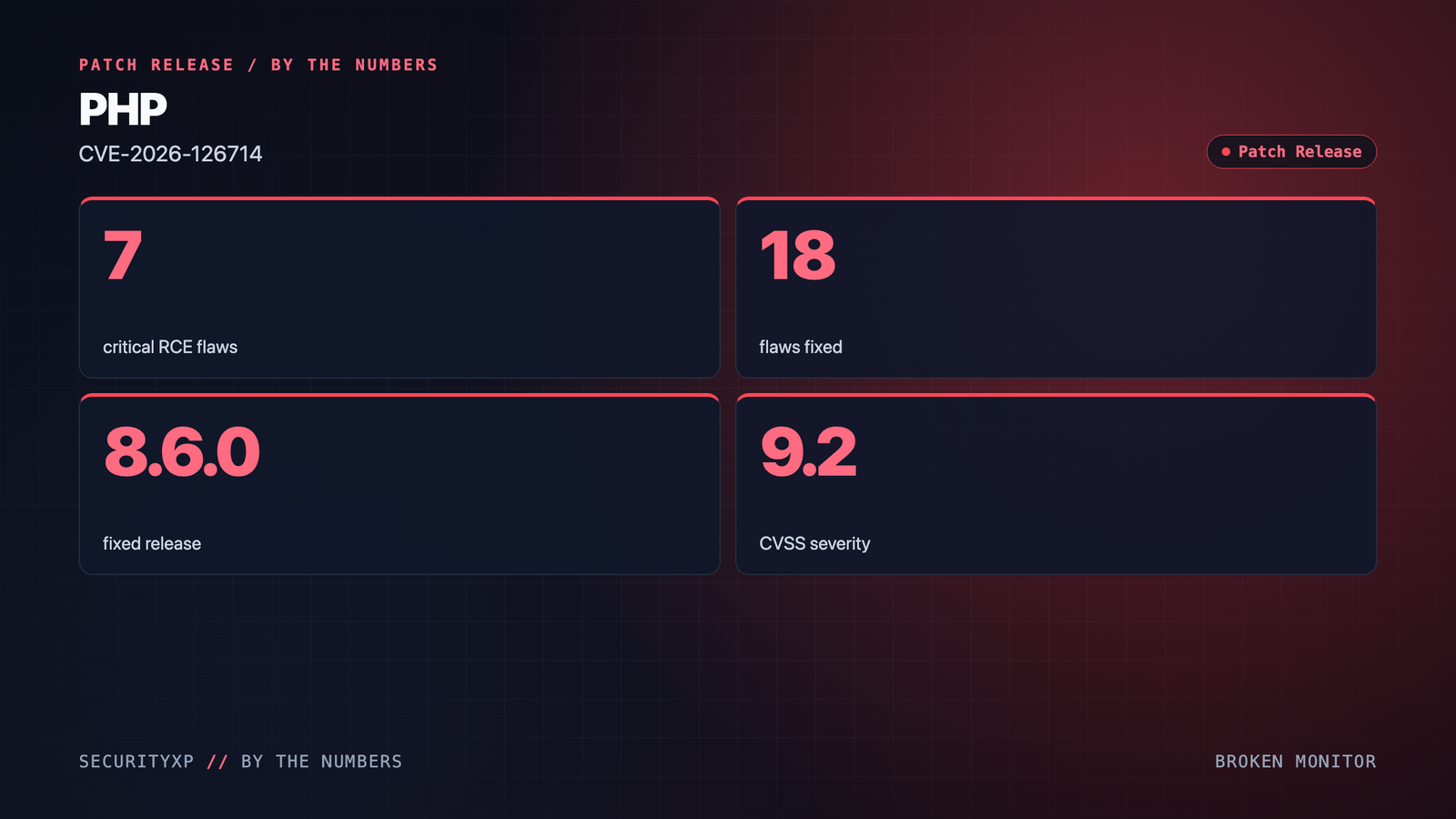
PHP 8.6.0 Carries the Fix for CVE-2026-126714, the 9.2-Rated Flaw October's Releases Left Open
PHP 8.6.0, released today, includes the fix for CVE-2026-126714, a flaw that PHP's maintainers rate 9.2 out of 10 on the CVSS 4.0 scale.
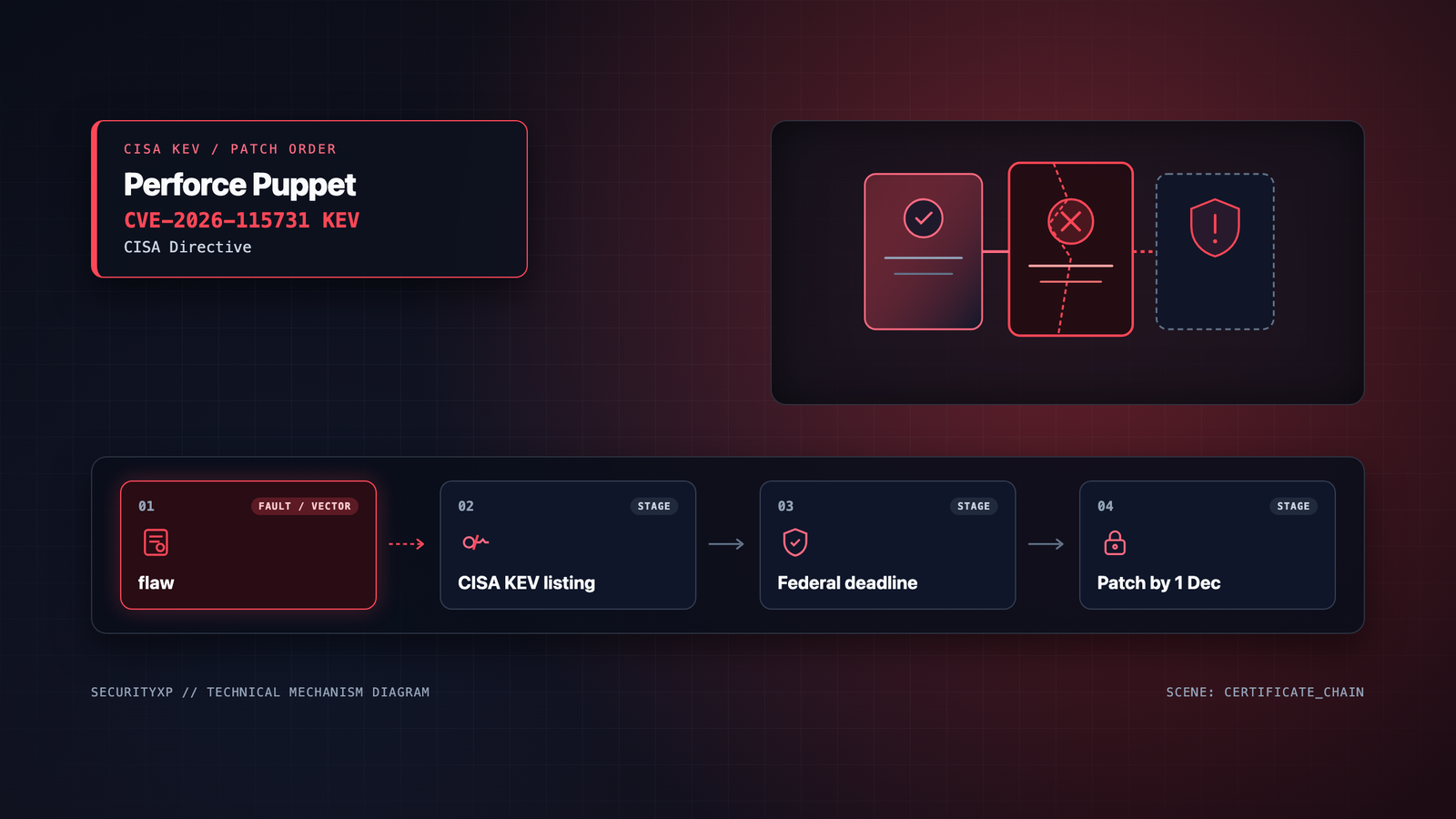
CISA Orders Federal Agencies to Patch Exploited Puppet Enterprise RCE by December 1
On Tuesday, the US Cybersecurity and Infrastructure Security Agency added CVE-2026-115731 to its Known Exploited Vulnerabilities catalog.
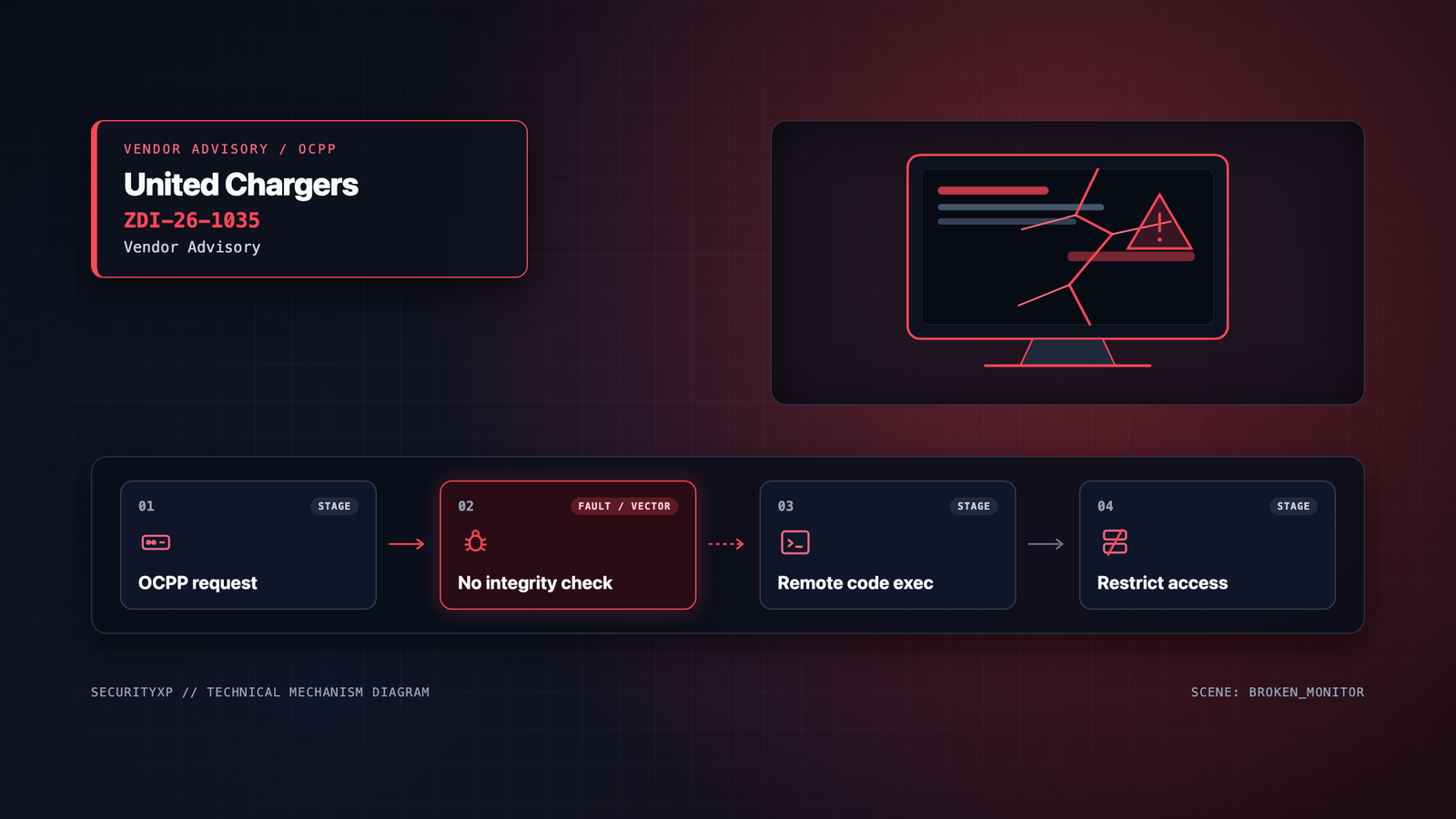
Grizzl-E Smart Charger Flaw Lets Network-Adjacent Attackers Run Code With No Login
The Zero Day Initiative has published advisory ZDI-26-1035, covering a vulnerability in the United Chargers Grizzl-E Smart 40A, a networked…
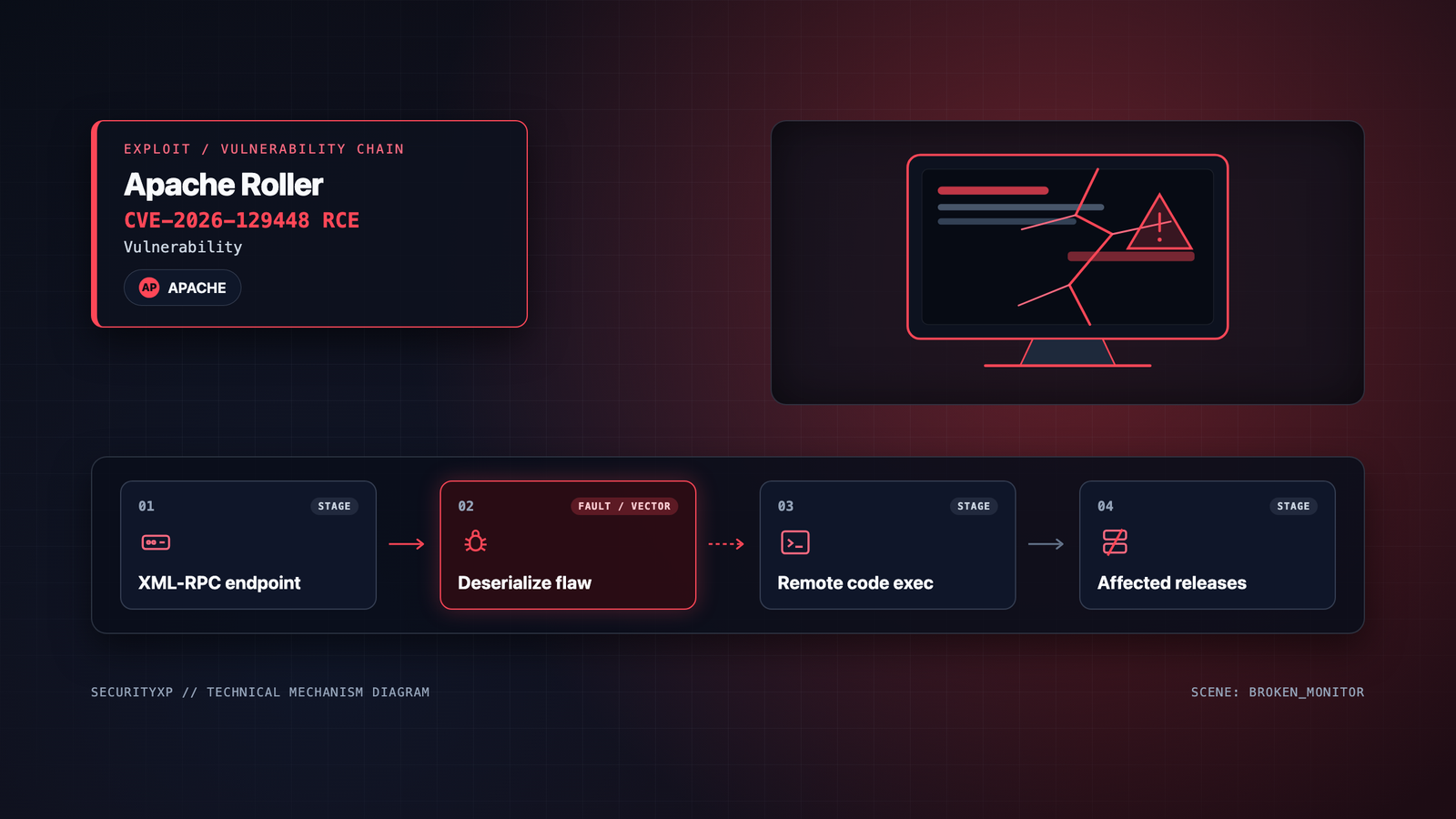
Apache Roller Widens Actively Exploited RCE Flaw to Versions 4.0.0–6.1.4
Apache Roller is an open-source, Java-based blogging platform.