
Critical API authentication bypass affects all Apache Submarine versions
Key Facts
- CVE-2026-129817 is rated critical in the oss-sec notice.
- Affected versions: Apache Submarine: all versions.
- The vulnerability is classified as Improper Authentication and allows API authentication to be bypassed.
- The notice is marked UNSUPPORTED WHEN ASSIGNED and says it only affects products no longer supported by the maintainer.
- From: Arnout Engelen <engelen () apache org>; Date: Fri, 27 Nov 2026 13:32:52 +0000.
What the disclosure establishes
Apache Submarine has a critical improper authentication vulnerability that allows API authentication to be bypassed, according to a disclosure on the oss-sec mailing list. The issue is tracked as CVE-2026-129817. The notice assigns it a severity of critical and lists the affected versions as “Apache Submarine: all versions.”
The mailing-list subject is “Apache Submarine: API authentication can be bypassed.” Its description classifies the issue as an “Improper Authentication vulnerability in Apache Submarine.” Together, those statements identify both the weakness and its consequence. The disclosure concerns whether API requests can pass the authentication check as intended.
The record is direct about the result but brief about the mechanism. It does not explain how the bypass works. That distinction matters: the notice establishes that authentication can be bypassed, while leaving the technical route to that outcome unstated in the supplied material.
The meaning of the affected scope
“Apache Submarine: all versions” is the affected-version entry. It does not identify a bounded release range. For a team reviewing software inventory, the wording means the disclosure does not separate older versions from newer ones and exclude a subset. The stated scope is Apache Submarine as a whole.
That breadth should not be confused with a detailed account of every deployment. The notice does not identify particular API routes, configurations or prerequisites. It also does not provide a reproduction example. “All versions” answers the version question in the notice; it does not, by itself, answer how an individual system would be tested or what conditions would be encountered there.
The distinction is useful when communicating the finding. Saying that only certain releases are affected would narrow the notice without support. Saying that every installation has already been exploited would go beyond it. The defensible statement is the one the disclosure makes: all Apache Submarine versions are within the affected scope.
Why the unsupported label matters
The notice marks the vulnerability “UNSUPPORTED WHEN ASSIGNED.” It accompanies that designation with a note: “This vulnerability only affects products that are no longer supported by the maintainer.” The support qualification is therefore part of the finding, not a separate detail that can be dropped from the summary.
The label does not replace the affected-version entry. The notice presents the critical severity, the all-versions scope and the unsupported status together. It does not give a version cutoff that would make some releases exempt. Readers should preserve all three elements when describing the issue, because each answers a different question: how severe the notice is, what it covers and what support status applied when it was assigned.
For an organization still using the software, the notice does not describe a supported-upgrade path or concrete remediation. That absence should be stated plainly rather than filled with assumptions. The unsupported designation explains the context of the disclosure; it is not a patch, a workaround or evidence that the authentication weakness has been resolved.
Attribution and the published record
The notice was posted by Arnout Engelen <engelen () apache org>. The oss-sec archive records the date as Fri, 27 Nov 2026 13:32:52 +0000. That attribution connects the severity rating, affected scope and unsupported note to a specific mailing-list entry.
The CVE record, the NIST National Vulnerability Database entry and an Apache advisory are also listed as references for CVE-2026-129817. For readers checking the record, keeping the mailing-list attribution attached to the claim helps distinguish the original disclosure from later summaries.
What remains unspecified
The supplied notice gives no concrete remediation or hunting details. It does not describe exploit steps, name indicators or list affected endpoints. It also does not report a compromise of any particular system. The disclosure is enough to identify the vulnerability and its declared scope, but not enough to build a testing procedure or a response procedure from the notice alone.
That boundary is important. A critical severity rating should not be inflated into claims about observed attacks. An all-versions listing should not be turned into an invented release matrix. An unsupported label should not be presented as a remedy. Each of those moves would add information that the notice does not contain.
The clearest reading is therefore a narrow one. CVE-2026-129817 is a critical improper authentication vulnerability in Apache Submarine. API authentication can be bypassed, all versions are listed as affected, and the notice says the product is no longer supported by the maintainer. Those are the established facts. The technical mechanism, exploitation evidence and remediation remain outside the detail provided in the disclosure.
Sources & References
- Open Source Security Mailing List. Primary research blog. https://seclists.org/oss-sec/
- oss-sec: by date. Primary research blog. https://seclists.org/oss-sec/2026/q4/date.html
- oss-sec: by thread. Primary research blog. https://seclists.org/oss-sec/2026/q4/index.html
- oss-sec: CVE-2026-137686: Apache Shiro: Authentication bypass in ActiveDirectoryRealm via empty username (incomplete fix for CVE-2014-0074). Primary research blog. https://seclists.org/oss-sec/2026/q4/903
- Source referenced in coverage https://seclists.org/oss-sec/2026/q4/910
- CVE-2026-129817 — National Vulnerability Database

SecurityXP delivers cybersecurity news, vulnerability analysis, data breach reports, and threat intelligence.
Security Digest
The most important cybersecurity stories, CVE alerts, and threat intelligence — one concise email. Unsubscribe anytime.
Related Articles
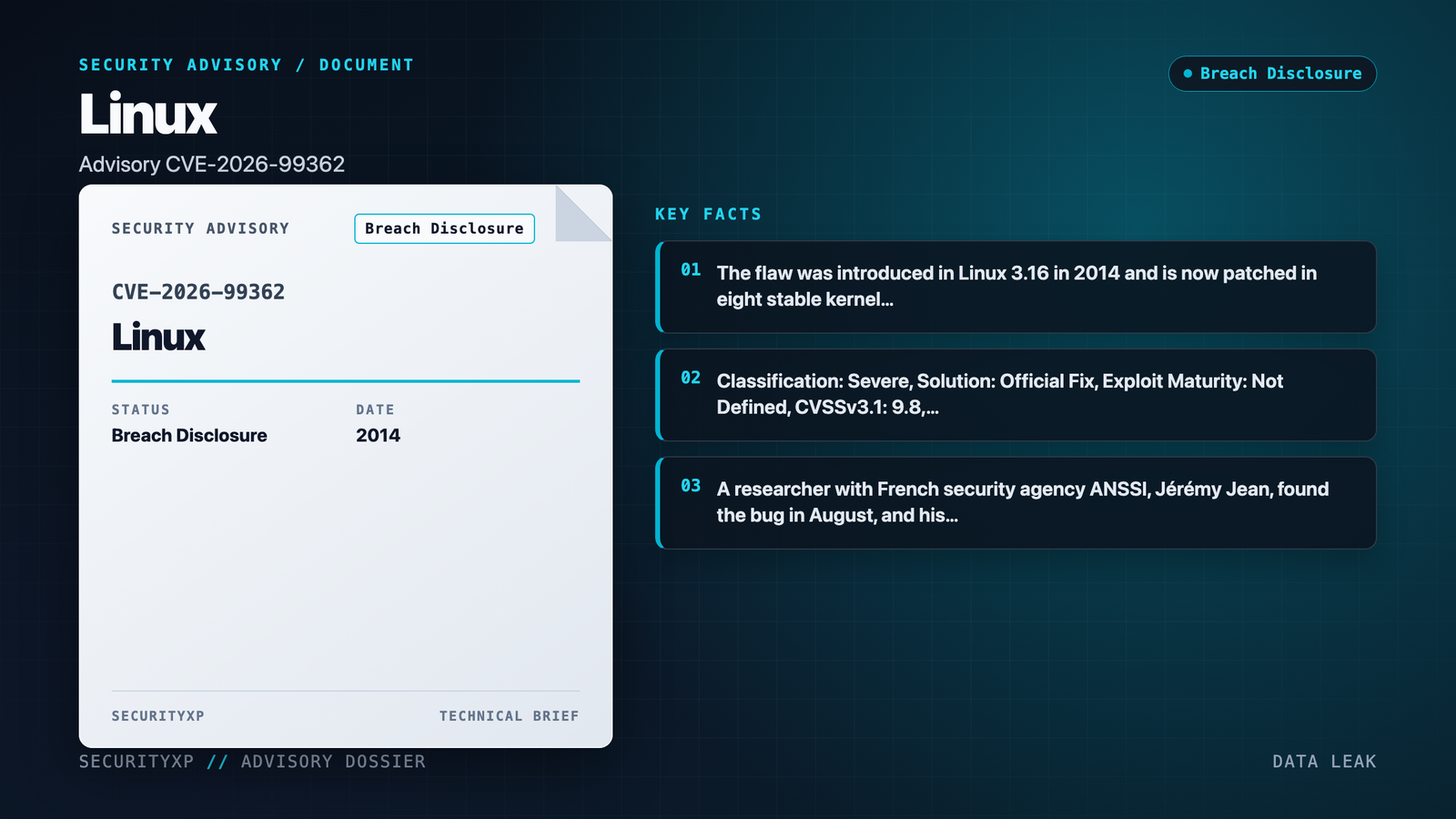
Critical Linux NFS flaw enables unauthenticated root-shell access
CVE-2026-99362 is a critical heap overflow in the Linux kernel’s NFS file-sharing server that allows unauthenticated attackers to obtain a root shell on…
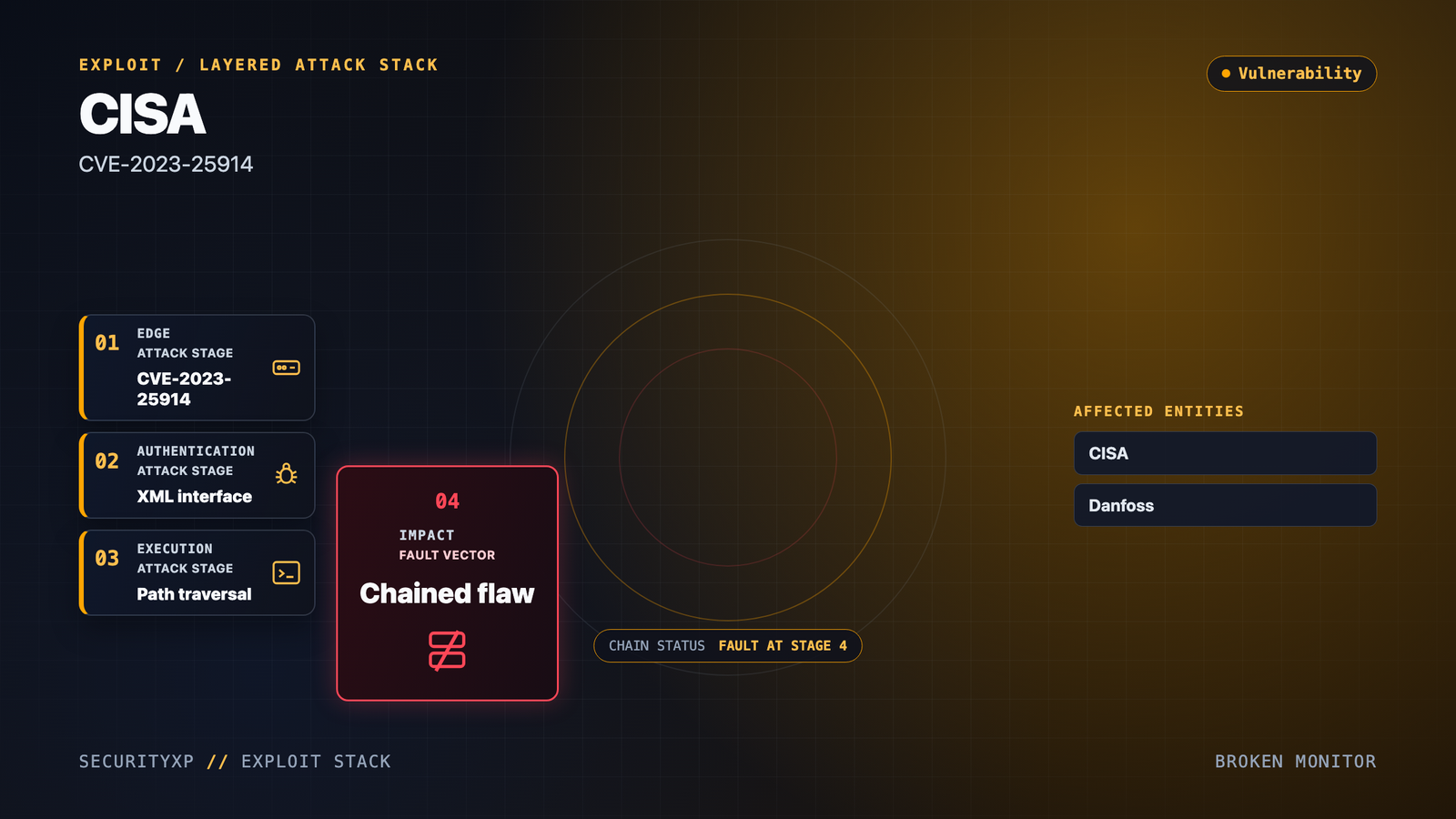
CISA flags actively exploited HPE, Danfoss, Mitel MiCollab and Vates Xen Orchestra flaws
CISA has flagged HPE, Danfoss, Mitel MiCollab and Vates Xen Orchestra flaws as actively exploited, including a Danfoss path traversal issue that chains to…
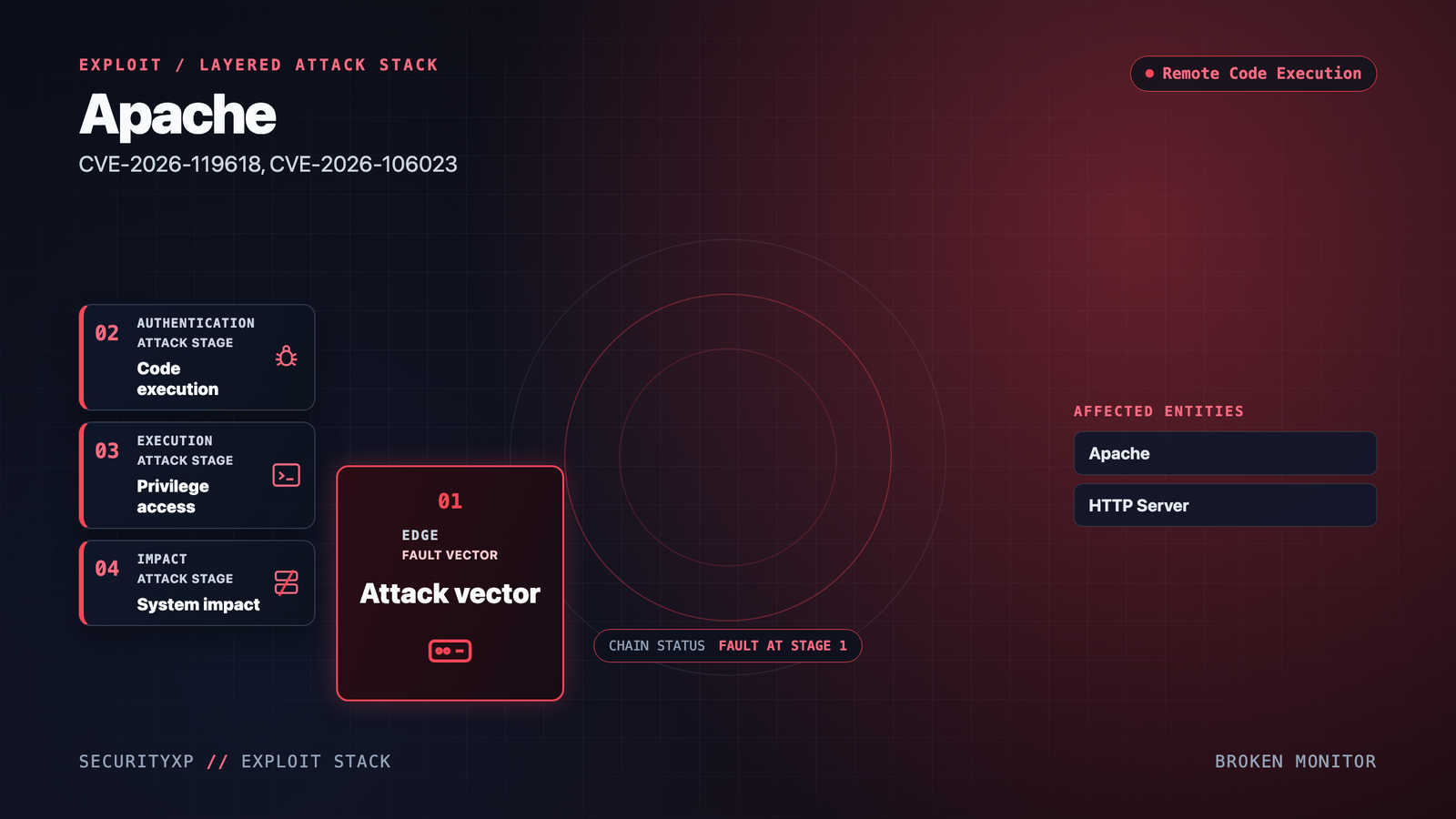
Apache HTTP Server: Critical RCE Vulnerability (CVE-2026-119618)
Apache released HTTP Server 2.4.71 to fix CVE-2026-119618, a heap corruption flaw in mod_http2 that can lead to remote code execution. Affects Apache HTTP Server 2.4.55 through 2.4.70 with HTTP/2 enabled.
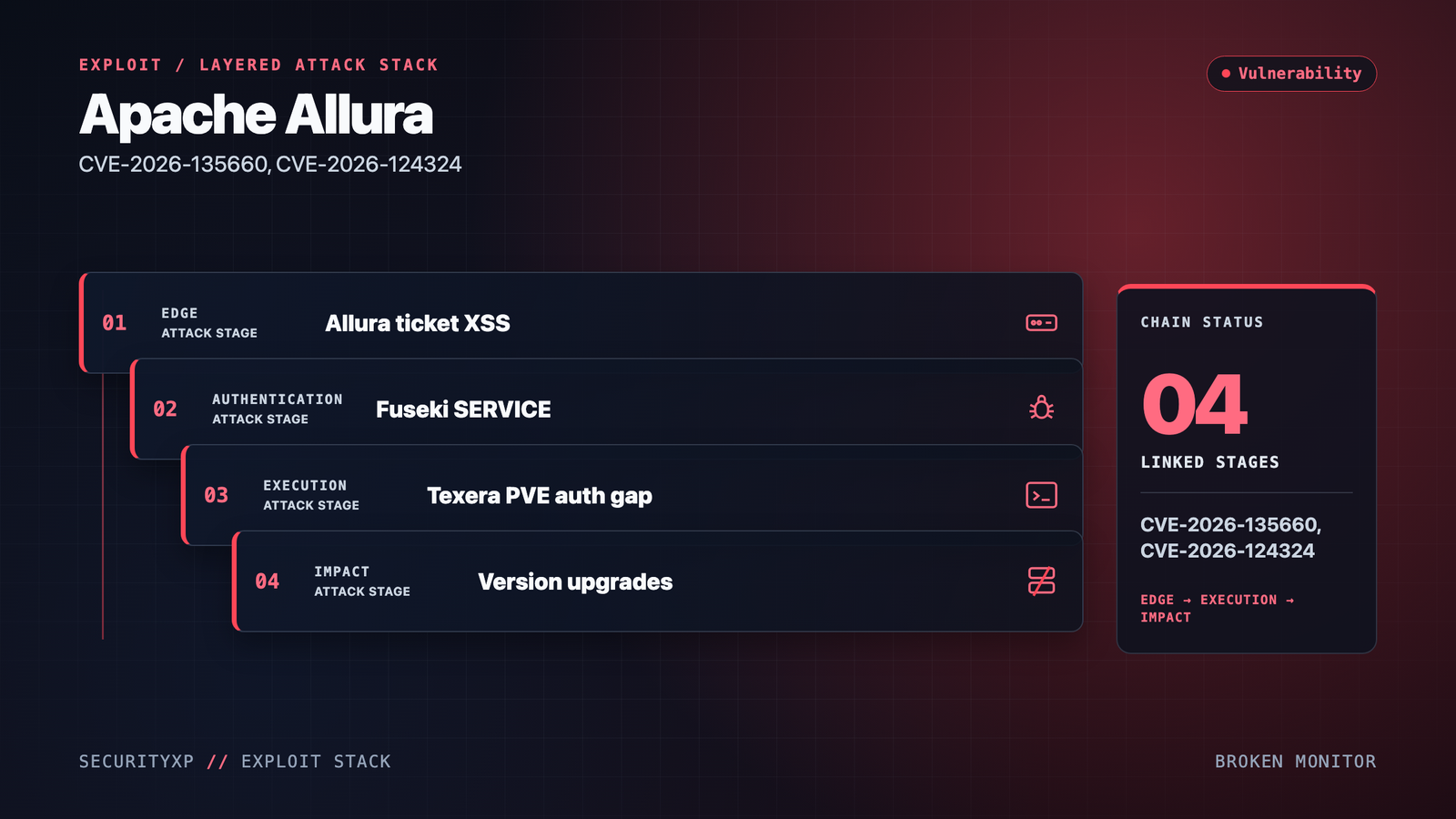
Apache Security Update: Allura XSS, Jena Fuseki SERVICE Bypass and Texera Authentication Flaw
Apache advisories cover critical XSS in Allura, a critical SERVICE bypass in Jena Fuseki and missing authentication in Texera PVE endpoints.