
Remus malware uses fake Google Sheets Chrome extension to steal Gmail messages
Key Facts
- On November 8, the developers of the Remus infostealer began advertising a Gmail “zero-day” that they said gave access to a victim’s mailbox even after they changed their password and signed out of all sessions.
- The feature was advertised as exclusive to their $1,000-a-month Enterprise tier.
- New research from Gen Threat Labs traced the supposed Gmail “zero-day” to a Chrome extension masquerading as Google Sheets.
- The extension can resume stealing unread Gmail messages when the victim signs back in on the infected device.
- Gen Threat Labs’ research describes the supposed “zero-day” as a persistence trick and a marketing pitch, not a Google vulnerability.
On November 8, the developers of the Remus infostealer began advertising a Gmail “zero-day.” They said it gave access to a victim’s mailbox even after they changed their password and signed out of all sessions. The feature was advertised as exclusive to their $1,000-a-month Enterprise tier.
That is a strong promise. It places the supposed flaw after two actions many people would expect to shut down unauthorized access: a password change and a sign-out from every session. But new research from Gen Threat Labs points to a different explanation. The researchers traced the claim to a Chrome extension masquerading as Google Sheets, not to a vulnerability in Google’s service.
What Gen Threat Labs found
Remus installs the extension on the infected device, disguised as Google Sheets. The name gives the component a familiar appearance, but the research connects it to the theft of Gmail messages. In particular, the extension can resume stealing unread Gmail messages when the victim signs back in on the infected device.
The order of events matters. The extension is already on the machine. The victim then returns and signs in. At that point, according to the research, the extension can resume its activity. The documented sequence therefore involves both a return sign-in and an extension already installed on that device.
This is more specific than the broad promise in the advertisement. The research describes unread Gmail messages, an infected device and a return sign-in. Those details define the behavior being reported. They do not describe a new flaw in Gmail, and they should not be read as evidence that Google’s service has been compromised.
Persistence, not a Google vulnerability
Gen Threat Labs’ research describes the supposed “zero-day” as a persistence trick and a marketing pitch, not a Google vulnerability. Persistence is the key idea. In this case, it rests on an extension remaining on an infected device and becoming active again when the victim signs back in.
The distinction is important because the advertisement and the research are talking about different layers of the problem. The advertisement promises mailbox access after an account password change and a global sign-out. The research identifies a local component: a Chrome extension installed on the device and disguised as Google Sheets.
Changing a password and signing out of all sessions do not, by themselves, describe removing that extension. The documented behavior can resume when the victim signs back in on the same infected machine. That is why the finding is about persistence rather than a newly identified flaw in Google’s service.
The commercial framing also deserves attention. Remus’s developers presented the feature as exclusive to their $1,000-a-month Enterprise tier. The price sat alongside a claim of access even after the victim had taken account-level steps to regain control. Gen Threat Labs’ research replaces that broad claim with a concrete mechanism, but the mechanism is still a serious one for an infected user.
What the evidence does and does not show
The research explains how the advertised Gmail access is connected to Remus without supporting the “zero-day” label. It ties the activity to a fake Google Sheets extension, unread messages and a return sign-in on the infected device. That is the finding readers should carry forward.
The limits matter too. The reported behavior concerns unread Gmail messages. It does not establish that every message, or every part of a mailbox, was exposed. The return sign-in is also part of the documented sequence. The claim should not be detached from those conditions and presented as unrestricted access at any time.
At the same time, the narrower description does not make the extension harmless. A component that can resume stealing unread messages after a victim signs back in remains a threat on the infected device. The point is not to minimize that behavior. It is to describe it accurately, without turning a persistence trick into a claim about a Google vulnerability.
What to check after a suspected infection
If you suspect an infection, check your Chrome extensions. The research makes the Google Sheets disguise especially relevant: the extension is not presented under its real purpose. A review of installed extensions is therefore a direct place to look for the component described in the findings.
Secure your Google Account from a clean device as well. The advice addresses the account separately from the infected machine. It also avoids treating a password change or a sign-out from all sessions as a complete answer to a problem that involves an extension already installed on the device.
The practical message is straightforward. Check the browser for the disguised extension, and secure the account from a clean device. Remus’s supposed Gmail “zero-day” is best understood as what Gen Threat Labs’ research describes: a persistence trick and a marketing pitch, not a Google vulnerability.
Sources & References
- Malwarebytes Labs - The Security Blog From Malwarebytes | Malwarebytes Labs. Primary research blog. https://www.malwarebytes.com/blog
- What Is Malware? Definition and Types | Microsoft Security. Primary tier1 news. https://www.microsoft.com/en-us/security/business/security-101/what-is-malware?msockid=15ce2f4ba4f6635f34393754a54d629a
- What Is Malware? Definition and Types | Microsoft Security. Primary tier1 news. https://www.microsoft.com/en-in/security/business/security-101/what-is-malware?msockid=15ce2f4ba4f6635f34393754a54d629a
- Source referenced in coverage https://www.malwarebytes.com/blog/news/2026/11/malware-steals-gmail-messages-using-a-fake-google-sheets-extension
- Source referenced in coverage https://news.google.com/rss/articles/CBMitwFBVV95cUxNLV8yRFZJUjdfM1pUNDdfc0N1Wm5fTk1KZ1FkX2RsNGNGNGpsT2phZEVZOVJPdTVJLUx3eUZUMjlQZkkzUkVOWGQ5UHVDcld5aU9NaE1UN2dhTFExU2ZBNE9BMUdnM0RMODlqWUxtVUQ3Ry1obnJNRFpOOVZCQnZTcDZlQnNMRnpLdWRlNTk3RnozamZJYVQxSHd2UzJDN2dldzRvakFFeXEzcnpQdEFZYVZEMjdHWlU

SecurityXP delivers cybersecurity news, vulnerability analysis, data breach reports, and threat intelligence.
Security Digest
The most important cybersecurity stories, CVE alerts, and threat intelligence — one concise email. Unsubscribe anytime.
Related Articles
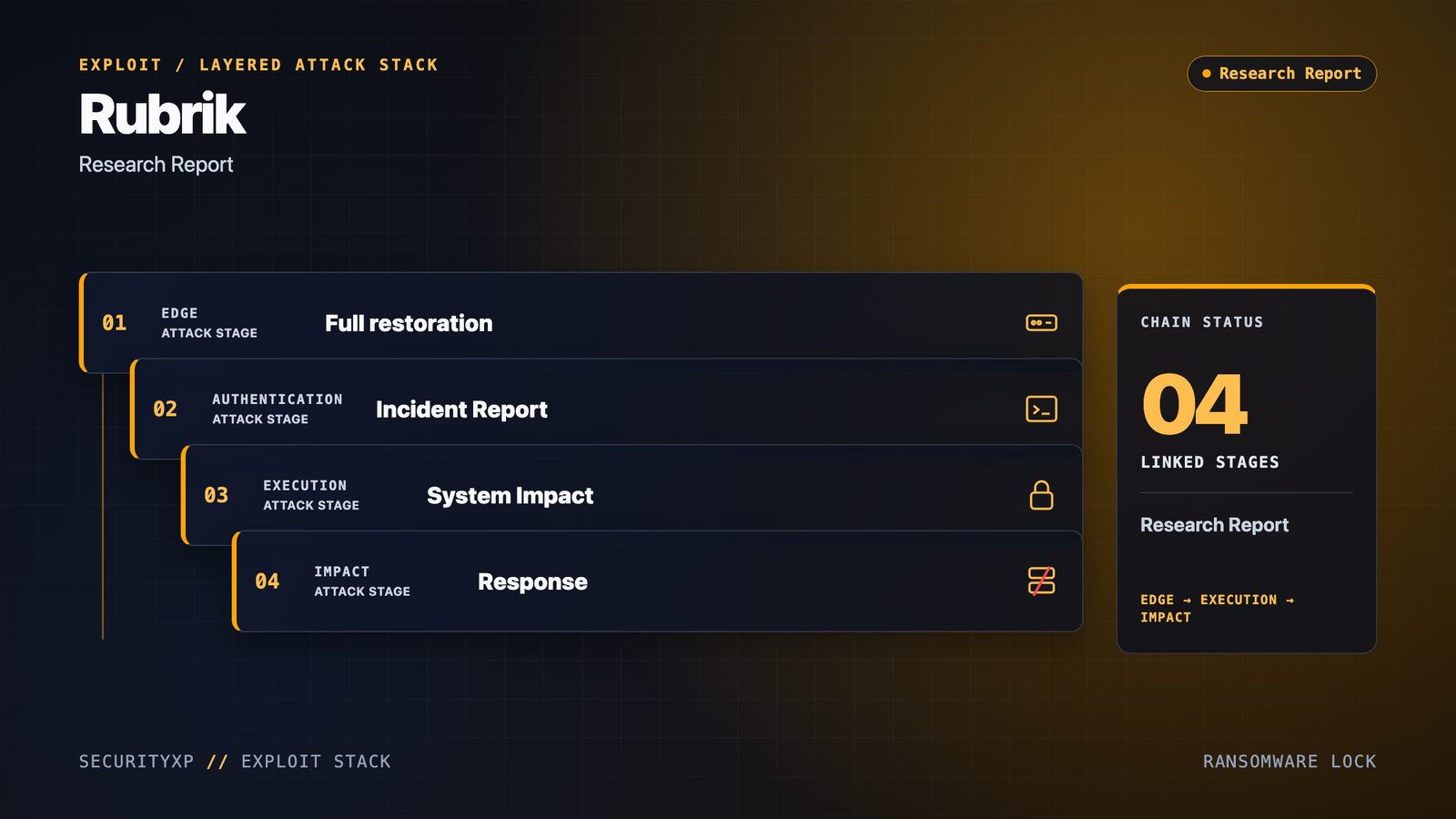
Ransomware Recovery Stretches to a Median of 20 Days as Attackers Push Into the Backup Layer
Organizations hit by ransomware need a median of 20 days to achieve full restoration, and 28% take more than six weeks to return to normal, according to Rubrik's 2026 report.
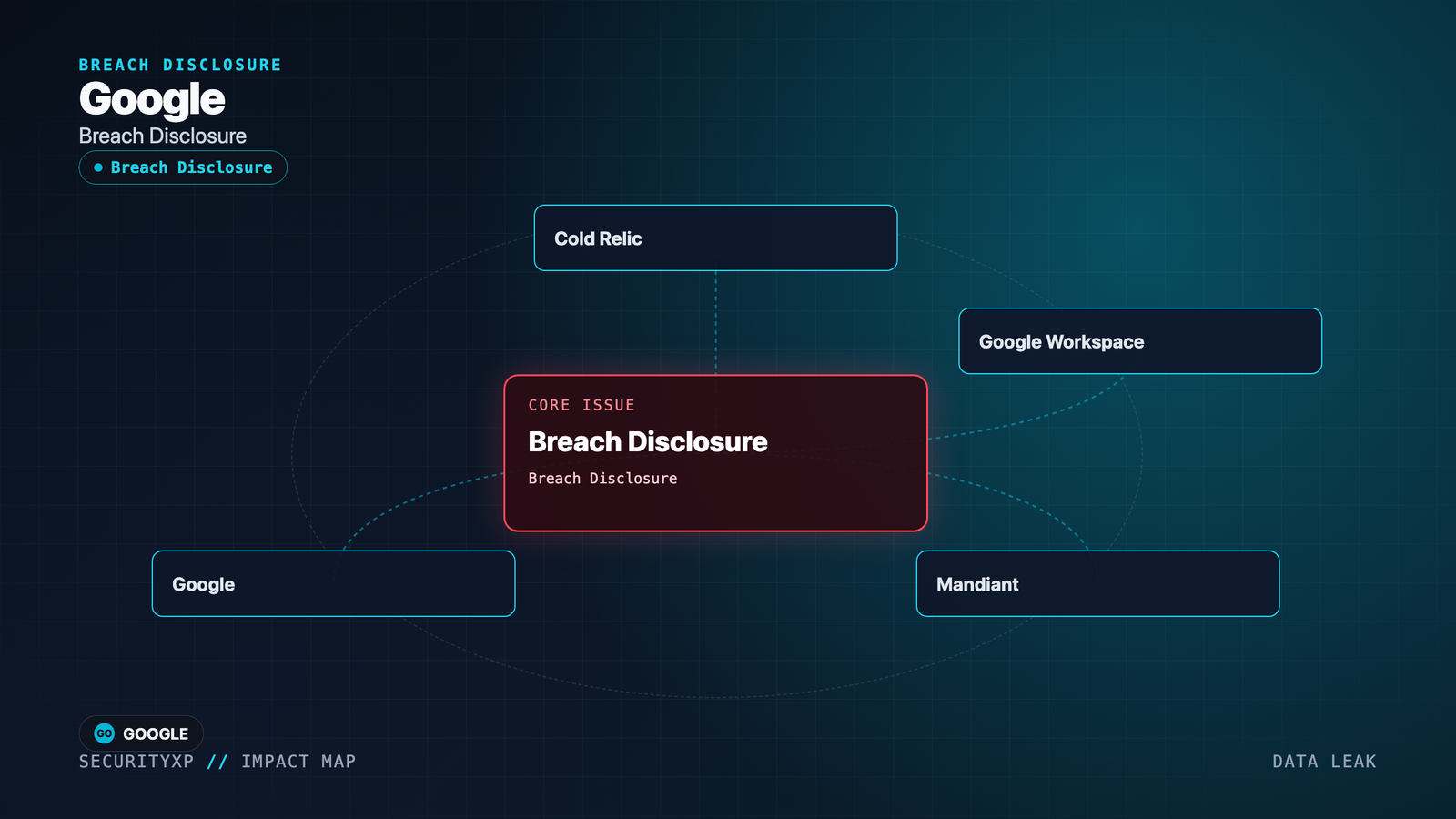
Cold Relic Reused Stolen Google Workspace Data to Breach a Second U.S. Organization
Google says Cold Relic reused stolen identities and Workspace data from an earlier breach to compromise a second U.S. organization.
Google Sues Chinese Cybercrime Network for Using Gemini AI to Target Americans
Google is taking legal action against a Chinese cybercrime network it says abused its Gemini AI agent to send phishing texts and steal data from Americans.
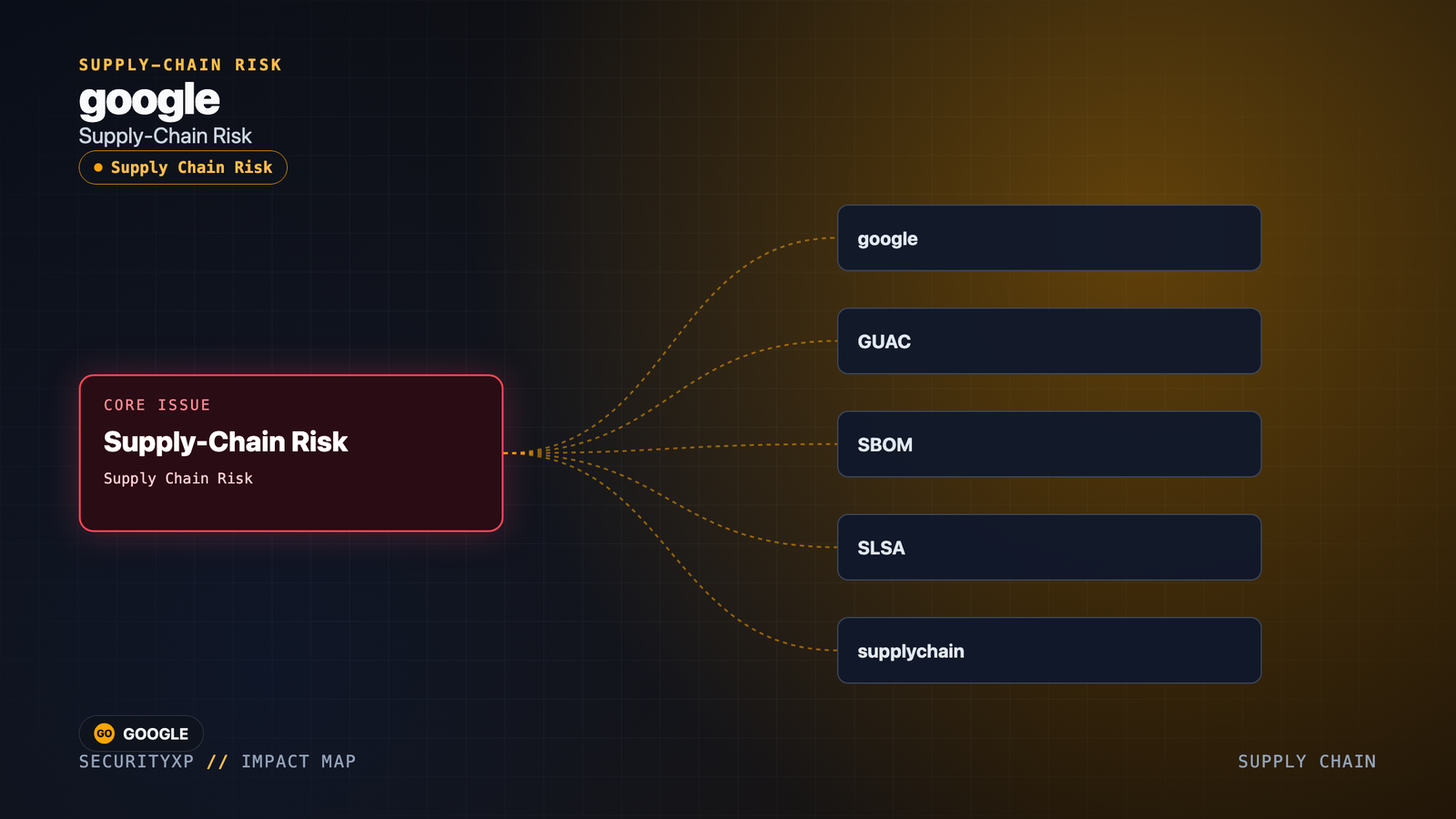
Google Announces GUAC for SLSA & SBOM Pairing
The industry is collectively aware of the importance of supply chain security. Recent events include a sharp increase in software supply chain attacks, a catastrophic severity and breadth Log4j vul...